SOLAS Chapter VII is the international safety framework behind the carriage of dangerous goods by sea. For packaged dangerous goods, it works through the mandatory International Maritime Dangerous Goods Code — the IMDG Code — covering classification, packaging, marking, labelling, placarding, documentation, stowage, segregation and the information needed when something goes wrong onboard.
A dangerous-goods container does not become safe simply because a hazard placard is fixed to its doors. Before that unit reaches the ship, a chain of decisions has already been made: the cargo has been identified, classified, assigned a transport description, packed, marked, labelled, documented and presented for carriage.
The vessel then has to determine whether the shipment can be accepted, where it can be stowed, which other cargoes it must be kept away from, what emergency information must be available and whether the ship and cargo space are suitable for the dangerous goods concerned.
A failure early in that chain can follow the cargo all the way onboard. A wrong declaration can produce the wrong stow. A wrong hazard classification can undermine segregation. A missing subsidiary risk can affect emergency response. That is why dangerous-goods compliance is an operational safety system — not simply a documentation exercise.
This article forms part of Tide Signal’s SOLAS Convention cluster. For the wider rules covering cargo information, stowage, securing, Verified Gross Mass and grain, see SOLAS Chapter VI: Carriage of Cargoes.
What Is SOLAS Chapter VII?
SOLAS Chapter VII is titled “Carriage of dangerous goods”. It is the part of the International Convention for the Safety of Life at Sea that provides the international ship-safety framework for hazardous cargoes carried by sea.
The chapter is much broader than dangerous containers. It addresses several fundamentally different forms of carriage, including dangerous goods in packaged form, dangerous solid bulk cargoes, dangerous liquid chemicals carried in bulk, liquefied gases carried in bulk and certain packaged radioactive materials.
The International Maritime Organization’s SOLAS overview sets out the Chapter VII framework and confirms the mandatory role of the IMDG Code for packaged dangerous goods.
The practical distinction is important: how a dangerous product is carried determines which regulatory framework applies.
A dangerous chemical packed into drums inside a freight container is not treated in the same way as thousands of tonnes of liquid chemical carried directly inside the cargo tanks of a chemical tanker.
How SOLAS Chapter VII Is Structured
Chapter VII is organized into Parts A, A-1, B, C and D, each addressing a different dangerous-goods carriage regime.
| Part | What it covers | Main framework |
|---|---|---|
| Part A | Dangerous goods in packaged form | IMDG Code |
| Part A-1 | Dangerous goods in solid form in bulk | SOLAS Chapter VII and applicable IMSBC provisions |
| Part B | Dangerous liquid chemicals in bulk | IBC Code |
| Part C | Liquefied gases in bulk | IGC Code |
| Part D | Packaged irradiated nuclear fuel, plutonium and high-level radioactive waste | INF Code |
For containerships, ro-ro vessels and many general-cargo operations, Part A and the IMDG Code are the Chapter VII requirements encountered most frequently.
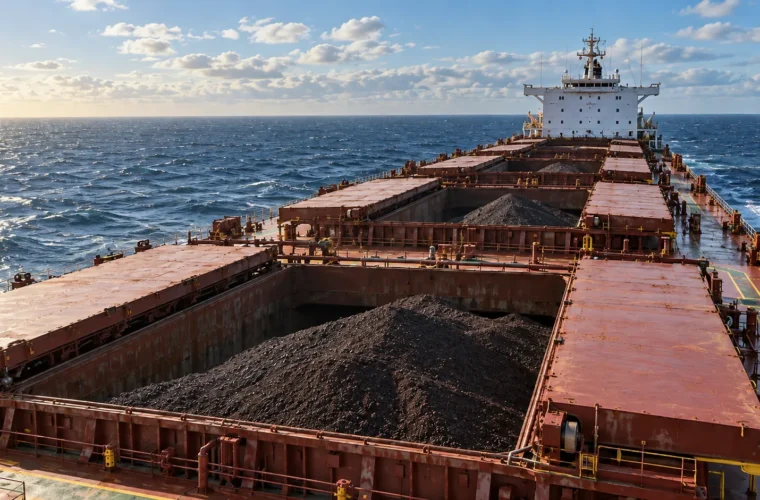
Chapter VII should not, however, be reduced to the IMDG Code alone. The wider chapter also connects dangerous-goods safety with bulk carriers, chemical tankers, gas carriers and specialized ships carrying INF cargo.
What Is the IMDG Code?
The International Maritime Dangerous Goods Code, commonly called the IMDG Code, provides the detailed international framework for dangerous goods transported by sea in packaged form.
IMO describes the Code as an extension of the mandatory provisions contained in SOLAS Chapter VII. It also supports implementation of MARPOL Annex III for harmful substances carried by sea in packaged form.
The official framework is explained in the IMO International Maritime Dangerous Goods Code overview.
In practical terms, the IMDG Code provides the system used to determine:
- what dangerous good is actually being shipped;
- which hazard class or division applies;
- whether subsidiary risks exist;
- which UN entry applies;
- which Proper Shipping Name must be used;
- whether a Packing Group applies;
- which packaging or containment arrangements are permitted;
- which marks and hazard labels are required;
- which placards must be displayed on cargo transport units;
- what must appear in dangerous-goods documentation;
- where the cargo may be stowed onboard;
- which other dangerous goods it must be segregated from;
- which special provisions apply to the individual entry;
- which emergency schedules relate to the cargo.
Which IMDG Code Applies in 2026?
IMO confirms the status of Amendment 42-24 on its IMDG Code publication page.
The Organization also confirmed that the revised Code entered into force from 1 January 2026 in its summary of shipping rules entering into force in 2026.
IMO also lists the 2026 Edition incorporating Amendment 43-26 as the next amendment cycle. For current operations, the important point is not to confuse the availability of a later edition with the amendment mandatory for the shipment being performed.
A useful compliance question is therefore: Which IMDG amendment applies to this shipment on this date?
That question should be controlled across:
- dangerous-goods booking systems;
- shore-side cargo acceptance processes;
- stowage-planning software;
- shipboard publications;
- terminal systems;
- company procedures;
- training material;
- emergency-response references.
The Nine Dangerous-Goods Classes
Dangerous goods are divided into hazard classes according to the nature of their principal hazard. The classification establishes the starting point for packaging, hazard communication, documentation, stowage, segregation and emergency-response decisions.
| Class | Hazard | What it broadly covers |
|---|---|---|
| 1 | Explosives | Explosive substances and articles divided into hazard divisions according to their characteristics and risks. |
| 2 | Gases | Gases presenting flammable, non-flammable/non-toxic or toxic hazards within the applicable classification system. |
| 3 | Flammable liquids | Liquids meeting the applicable criteria for regulated flammability hazards. |
| 4 | Flammable solids and related hazards | Flammable solids, substances liable to spontaneous combustion and substances which emit flammable gas when in contact with water. |
| 5 | Oxidizing substances and organic peroxides | Materials capable of contributing to combustion or presenting organic-peroxide hazards. |
| 6 | Toxic and infectious substances | Substances presenting toxic hazards and infectious substances within the applicable criteria. |
| 7 | Radioactive material | Radioactive materials transported under the applicable international transport regime. |
| 8 | Corrosive substances | Materials capable of causing severe chemical damage to living tissue or other materials. |
| 9 | Miscellaneous dangerous substances and articles | Regulated dangerous substances and articles whose principal hazard is not covered by Classes 1–8. |
Some dangerous goods present more than one hazard. A shipment may therefore have a primary class together with one or more subsidiary risks.
Those subsidiary hazards matter because they may alter labelling, segregation and emergency response.
That is why descriptions such as “chemical”, “paint”, “battery” or “flammable cargo” are not enough by themselves to support a safe shipboard decision.
UN Number, Proper Shipping Name and Packing Group
Three terms appear continuously in dangerous-goods operations: UN number, Proper Shipping Name and Packing Group. They are connected, but they describe different aspects of the cargo.
What Is a UN Number?
A UN number is the four-digit identifier used within the international dangerous-goods transport system for a substance, article or defined group of dangerous goods.
The number connects the cargo with its regulatory transport entry. It is not, by itself, a complete transport description.
What Is the Proper Shipping Name?
The Proper Shipping Name is the standardized transport name associated with the relevant dangerous-goods entry.
A commercial product name can be useful for buying and selling the product but may not communicate the hazard information needed by the maritime transport chain.
Dangerous-goods transport therefore relies on the regulated transport identity rather than marketing terminology alone.
What Is a Packing Group?
Where a Packing Group is assigned, it provides an indication of the relative degree of danger associated with the substance:
- Packing Group I — high danger;
- Packing Group II — medium danger;
- Packing Group III — lower danger.
Packing Groups are not used for every dangerous-goods class or entry. An officer should therefore not assume that a Packing Group must always appear.
Useful commercially, but not necessarily sufficient for dangerous-goods transport compliance.
Provides the standardized transport identity used to connect the shipment with the applicable requirements.
How the IMDG Dangerous Goods List Works
At the centre of practical IMDG work is the Dangerous Goods List.
The list is not simply a catalogue of hazardous chemicals. It connects the individual dangerous-goods entry with the requirements needed to move from classification to safe transport.
Depending on the entry, the information can direct users toward:
- UN number;
- Proper Shipping Name;
- class or division;
- subsidiary risk;
- Packing Group;
- special provisions;
- packing instructions;
- portable-tank or bulk-container provisions where applicable;
- stowage and handling requirements;
- segregation provisions;
- marine-pollutant status;
- emergency schedules.
The entry must therefore be considered as a connected compliance package. Selecting the correct UN number but ignoring the associated stowage, segregation or special provisions does not complete the dangerous-goods assessment.
The Dangerous-Goods Compliance Chain
Safe carriage depends on a sequence of correct decisions made by several parties. The vessel often receives the dangerous cargo near the end of this chain, but shipboard safety depends heavily on the information produced before loading.
The transport process starts with the real substance or article. A vague commercial description is not a substitute for accurate dangerous-goods identification.
The principal class or division and any subsidiary risks must correspond with the actual dangerous good.
The applicable UN number and Proper Shipping Name establish the transport identity used throughout the remaining process.
The cargo must be contained in packaging or another permitted arrangement appropriate for the dangerous good and the quantities involved.
The package and cargo transport unit must communicate the relevant hazards clearly to people handling, stowing and responding to the shipment.
Dangerous-goods transport documentation must correspond with the cargo physically presented for carriage.
The ship must determine where the cargo can be carried and what incompatible cargoes it must be separated from.
Once the dangerous cargo is onboard, the vessel must be able to identify what is being carried, where it is located and what emergency information applies.
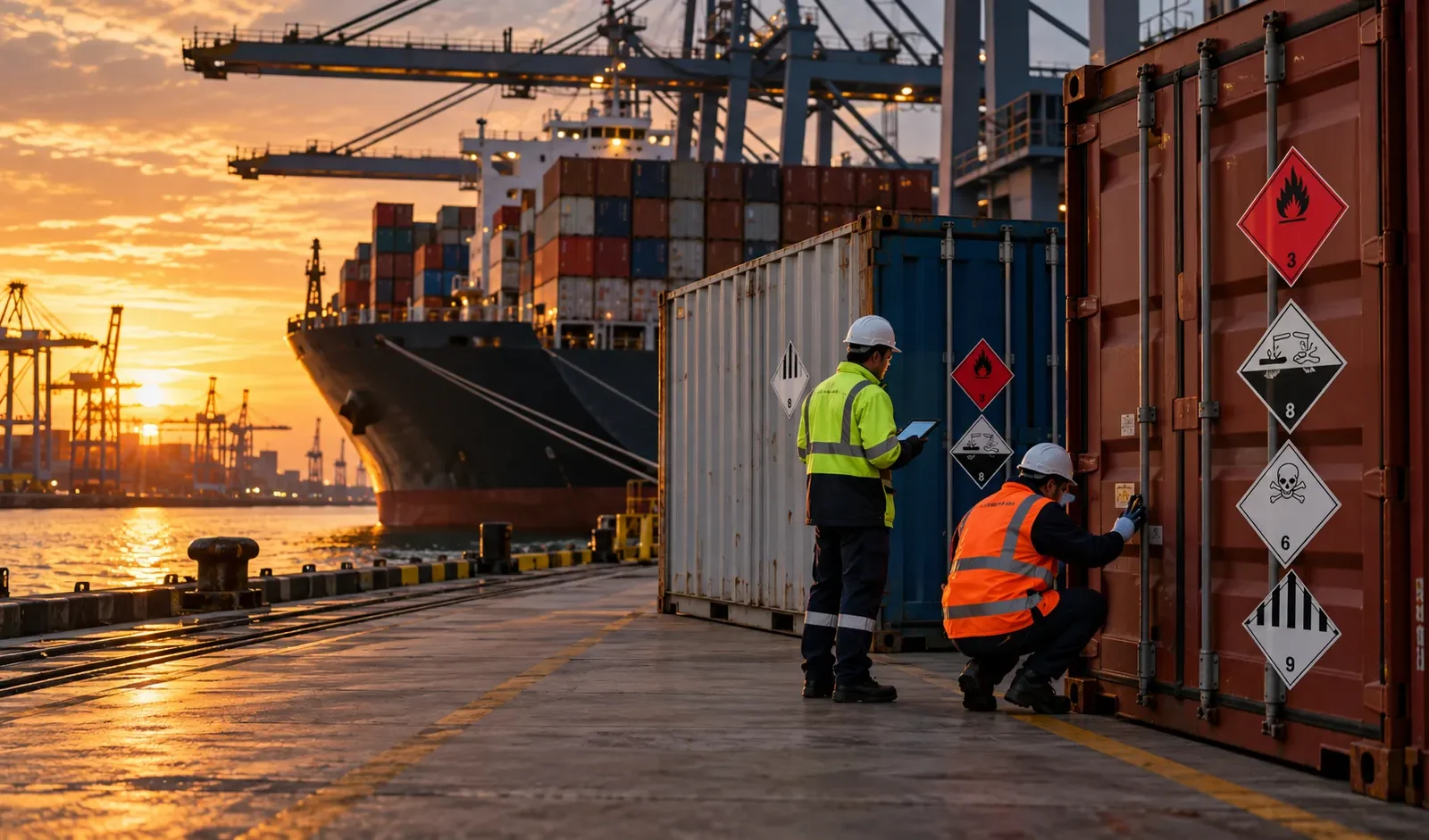
Dangerous-Goods Marks, Labels and Placards
The terms mark, label and placard are sometimes used interchangeably in ordinary conversation, but each performs a specific role within dangerous-goods transport.
| Term | Purpose |
|---|---|
| Mark | Provides required identification or handling information associated with a package or cargo transport unit. |
| Hazard label | Communicates the hazard class or subsidiary risk of a package. |
| Placard | Provides larger hazard identification on cargo transport units such as freight containers where required. |
These markings are not decorative. They allow stevedores, terminal personnel, officers, firefighters and emergency responders to recognize the hazard quickly.
A container with damaged, obscured, missing or inconsistent placarding should therefore trigger investigation rather than being treated merely as a cosmetic defect.
Dangerous-Goods Documentation
The ship needs reliable information about the dangerous goods being carried. Documentation provides the link between the classification work performed ashore and the operational decisions made during acceptance, stowage and the voyage.
Depending on the shipment and applicable requirements, dangerous-goods information can include:
- UN number;
- Proper Shipping Name;
- hazard class or division;
- subsidiary risk where applicable;
- Packing Group where assigned;
- number and type of packages;
- quantity;
- marine-pollutant information where applicable;
- additional information required by the individual dangerous-goods entry.
Dangerous Goods Transport Document
The transport document communicates the regulated description and other required information relating to the shipment.
Its value depends on accuracy, not appearance. A professionally formatted declaration is worthless if the information does not describe the cargo actually inside the package or container.
Container or Vehicle Packing Certificate
Where required, packing certification provides confirmation that the cargo transport unit has been packed in accordance with the applicable dangerous-goods requirements.
This matters because correctly classified cargo can still become unsafe if packages are damaged, incompatible goods are loaded together, securing is poor or the cargo transport unit is unsuitable.
Dangerous-Goods Manifest and Stowage Information
Once dangerous goods are loaded, the vessel needs readily available information identifying what is onboard and where it is stowed.
That becomes particularly important during:
- fire;
- leakage;
- container damage;
- collision;
- grounding;
- cargo shift;
- abandon-ship situations;
- shore-side emergency-response coordination.
IMDG Stowage vs Segregation
Stowage and segregation are closely connected, but they answer two different operational questions.
Stowage requirements determine the permitted location and conditions under which the dangerous good may be transported onboard.
Segregation controls the relationship between dangerous goods that could create a greater hazard if they leak, mix or react.
Why Stowage Matters
The permitted stowage position can depend on the dangerous-goods entry, the ship, cargo transport unit and applicable provisions.
Operational considerations may include:
- exposure to heat;
- ventilation;
- accessibility;
- protection from physical damage;
- on-deck or under-deck restrictions;
- proximity to accommodation or machinery spaces;
- ability to respond effectively if the cargo fails.
Why Segregation Matters
Two dangerous goods may each be safely transportable individually but become much more dangerous if they come into contact.
Segregation reduces the possibility that leakage, package failure or fire allows incompatible substances to react with one another.
The applicable segregation requirement must be determined from the current IMDG provisions and the actual dangerous-goods entries involved — not from memory or an unofficial compatibility table.
Marine Pollutants and MARPOL Annex III
Dangerous goods can create both ship-safety hazards and environmental hazards. This is where SOLAS Chapter VII and the IMDG Code interact with MARPOL Annex III.
MARPOL Annex III covers harmful substances carried by sea in packaged form. IMO identifies marine pollutants through the IMDG framework and provides general requirements concerning packaging, marking, labelling, documentation, stowage, quantity limitations, exceptions and notifications.
For the official framework, see IMO — MARPOL Convention.
For Tide Signal’s complete pollution-prevention reference, see MARPOL Annexes Explained: Complete Guide to Annex I–VI.
A dangerous-goods casualty can therefore involve several hazards simultaneously:
- fire;
- explosion;
- toxic exposure;
- corrosion;
- dangerous chemical reaction;
- radiological exposure;
- marine pollution.
EmS Guide and MFAG: Emergency Response After Loading
Dangerous-goods compliance does not end when the cargo is loaded and correctly segregated. The ship must also be prepared to respond if an incident occurs.
Two important references in that response framework are the EmS Guide and MFAG.
Emergency Response Procedures — EmS Guide
IMO’s Emergency Response Procedures for Ships Carrying Dangerous Goods — EmS Guide provides guidance for cargo-related incidents involving dangerous goods regulated by the IMDG Code.
The Guide supports shipboard response particularly for:
- fires involving dangerous goods;
- spillages and leakages involving dangerous goods.
The EmS procedures need to operate within the vessel’s wider emergency organization and Safety Management System.
Medical First Aid Guide — MFAG
The Medical First Aid Guide for Use in Accidents Involving Dangerous Goods — MFAG provides medical first-aid guidance for accidents and exposure involving dangerous substances.
| Reference | Main operational question |
|---|---|
| IMDG Code | How should the dangerous good be classified, packed, documented, stowed and segregated? |
| EmS Guide | What emergency-response guidance applies if there is a fire or spillage/leakage? |
| MFAG | What medical first-aid guidance applies following dangerous-goods exposure or injury? |
Does SOLAS Chapter VII Cover Dangerous Goods in Bulk?
Yes. SOLAS Chapter VII is wider than the IMDG Code.
Dangerous Goods in Solid Form in Bulk — Part A-1
Part A-1 deals with dangerous goods carried in solid form in bulk and includes requirements relating to documentation, stowage, segregation and incident reporting.
These cargoes also interact with the wider solid-bulk regulatory framework under the IMSBC Code.
For the latest Tide Signal bulk-cargo reference, read IMSBC Code 2027: Amendment 08-25 Explained.
Dangerous Liquid Chemicals in Bulk — Part B
Part B deals with ships carrying dangerous liquid chemicals in bulk and connects Chapter VII with the International Bulk Chemical Code — IBC Code.
The IMO IBC Code overview explains the design, construction and equipment standards intended to minimize risks to the ship, crew and environment.
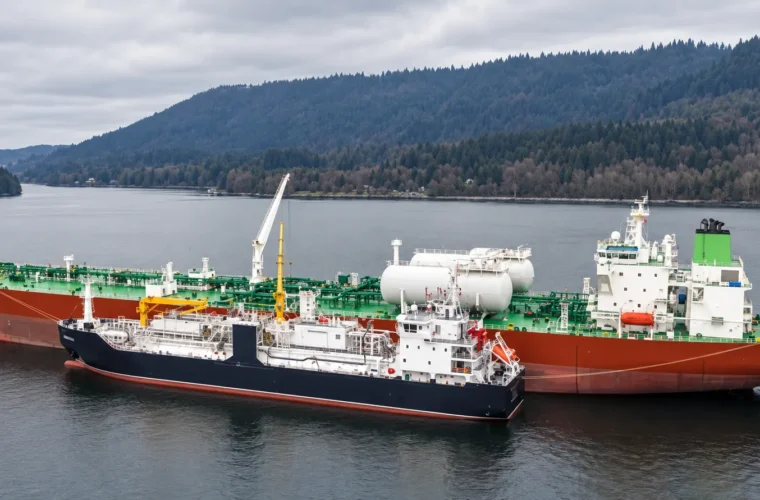
Liquefied Gases in Bulk — Part C
Part C addresses ships carrying liquefied gases in bulk and links Chapter VII with the International Gas Carrier Code — IGC Code.
See the IMO IGC Code reference for the specialist gas-carrier framework.
INF Cargo — Part D
Part D establishes special requirements for ships carrying packaged irradiated nuclear fuel, plutonium and high-level radioactive waste.
These ships must comply with the applicable International Code for the Safe Carriage of Packaged Irradiated Nuclear Fuel, Plutonium and High-Level Radioactive Wastes — INF Code.
What Should the Ship Verify Before Loading Dangerous Goods?
Responsibility for dangerous-goods carriage is distributed across the transport chain. Shippers, packers, carriers, terminals and vessels perform different functions.
From the ship’s operational perspective, officers need sufficiently reliable information to determine whether the cargo can be carried safely.
Typical verification areas include:
- the cargo offered for loading corresponds with the documentation received;
- the UN number is consistent with the declared cargo;
- the Proper Shipping Name is correct;
- primary hazard and subsidiary risks are identified;
- the Packing Group is included where applicable;
- packages and cargo transport units are free from obvious leakage or serious damage;
- required marks are present and legible;
- required hazard labels are present;
- required placards are displayed on the cargo transport unit;
- dangerous-goods documentation has been received and reviewed;
- marine-pollutant information is identified where applicable;
- applicable stowage requirements can be met;
- segregation from incompatible dangerous goods can be maintained;
- the intended location is compatible with the ship’s stowage plan;
- the vessel and cargo space are suitable for the dangerous goods concerned;
- cargo securing arrangements are appropriate;
- dangerous-goods location information remains readily available;
- emergency information can be accessed quickly.
For the wider cargo-information and securing framework, read SOLAS Chapter VI: Cargo Stowage, Securing, VGM and Grain.
Why Misdeclared Dangerous Goods Are So Serious
Misdeclaration is one of the most dangerous weaknesses in the transport chain because the ship can follow its procedures correctly and still reach an unsafe result.
If the declared information does not represent the actual cargo, the vessel may unknowingly:
- stow incompatible dangerous goods together;
- place the shipment in an unsuitable position;
- apply an inappropriate emergency response;
- underestimate fire or explosion risk;
- fail to recognize toxic combustion products;
- miss corrosive or reactive hazards;
- overlook temperature or ventilation considerations;
- mismanage leaking packages;
- carry a marine pollutant without the expected information.
Misdeclaration therefore affects much more than documentation. It can influence stow planners, terminal personnel, deck officers, bridge teams, firefighters and shore-based emergency responders.
Dangerous Goods and SOLAS Fire Safety
SOLAS Chapter VII does not operate separately from the physical safety arrangements of the vessel.
SOLAS Chapter II-2 includes fire-protection requirements relevant to ships and cargo spaces intended for the carriage of dangerous goods.
For the complete Tide Signal fire-safety reference, see SOLAS Chapter II-2: Fire Protection, Detection and Firefighting.
Depending on the ship, cargo and space, dangerous-goods safety can interact with:
- fire detection;
- fire alarm systems;
- fixed firefighting arrangements;
- ventilation;
- electrical equipment;
- personnel protection;
- cargo-space construction;
- access arrangements;
- emergency procedures.
IMDG Training: Why Shore-Side Knowledge Matters
Dangerous-goods safety begins well before the vessel reaches the loading berth. People whose functions affect dangerous-goods transport need training appropriate to the work they perform.
That may include personnel involved in:
- classification;
- packing;
- marking and labelling;
- preparing transport documentation;
- accepting dangerous-goods bookings;
- loading cargo transport units;
- stowage planning;
- segregation;
- terminal handling;
- dangerous-goods compliance systems.
The objective is not identical knowledge for every job. It is function-specific competence.
A person preparing documentation does not need exactly the same knowledge as a vessel stow planner, but either can introduce serious risk if the part of the Code relevant to their work is misunderstood.
SOLAS Chapter VII and Port State Control
Dangerous-goods carriage can also form part of the wider Port State Control assessment of cargo safety, documentation, fire protection and operational readiness.
Areas that may attract attention include:
- dangerous-goods documentation;
- manifest and location information;
- condition of packages and cargo transport units;
- marks, labels and placards;
- stowage;
- segregation;
- cargo securing;
- fire-safety arrangements;
- ship suitability;
- crew familiarity with dangerous cargo onboard.
For the broader inspection framework, see Tide Signal’s Port State Control Inspection: What Ships Must Prepare Before Arrival.
For the current cargo-securing campaign, see Port State Control CIC 2026: Cargo Securing Checklist for Ships.
SOLAS Chapter VII Operational Checklist
| Control | Question |
|---|---|
| Identity | Does the declaration accurately identify what is actually being shipped? |
| UN number | Is the correct UN entry being used? |
| Proper Shipping Name | Does the standardized transport name correspond with the cargo? |
| Classification | Are the principal hazard and subsidiary risks correctly identified? |
| Packing Group | Where applicable, is the appropriate Packing Group stated? |
| Packaging | Is the cargo presented in apparently suitable and sound packaging? |
| CTU condition | Is the container or cargo transport unit free from obvious damage, leakage or contamination? |
| Marks | Are required identification marks present and legible? |
| Labels | Do package labels correspond with the declared hazards? |
| Placards | Are required cargo-transport-unit placards present and consistent? |
| Documentation | Is the dangerous-goods information complete and consistent? |
| Marine pollutant | Has marine-pollutant status been identified where applicable? |
| Stowage | Can all applicable stowage conditions be met? |
| Segregation | Can the shipment be separated correctly from incompatible dangerous goods? |
| Ship suitability | Is the ship and relevant cargo space suitable for the cargo? |
| Securing | Can the package or cargo transport unit be secured safely for the expected voyage? |
| Emergency information | Can officers rapidly identify the cargo, hazard, location and applicable emergency guidance? |
| IMDG edition | Is the amendment being used appropriate for the date of shipment? |
SOLAS Chapter VII Frequently Asked Questions
What is SOLAS Chapter VII?
SOLAS Chapter VII is the chapter of the SOLAS Convention covering the carriage of dangerous goods, including dangerous goods in packaged form, dangerous goods in solid bulk form, dangerous liquid chemicals in bulk, liquefied gases in bulk and specified radioactive cargoes.
Which SOLAS chapter covers dangerous goods?
Dangerous goods are principally covered by SOLAS Chapter VII, although related requirements elsewhere in SOLAS may also apply depending on the vessel, cargo and cargo space.
Does SOLAS Chapter VII make the IMDG Code mandatory?
Yes. For dangerous goods in packaged form within its scope, SOLAS Chapter VII requires compliance with the relevant provisions of the IMDG Code.
Which IMDG Code applies in 2026?
The IMDG Code 2024 Edition incorporating Amendment 42-24 became mandatory on 1 January 2026.
What is IMDG Amendment 43-26?
Amendment 43-26 belongs to the next IMDG amendment cycle and appears in the IMO-listed 2026 Edition. Operators should distinguish the next edition from the amendment applicable to a shipment being performed during the current mandatory cycle.
What are the nine dangerous-goods classes?
They cover explosives; gases; flammable liquids; flammable solids and related hazards; oxidizing substances and organic peroxides; toxic and infectious substances; radioactive material; corrosive substances; and miscellaneous dangerous substances and articles.
What is a UN number?
A UN number is a four-digit identifier used within the international dangerous-goods transport system to identify substances, articles or defined groups of dangerous goods.
What is a Proper Shipping Name?
The Proper Shipping Name is the standardized transport name associated with the relevant dangerous-goods entry and should not simply be replaced by a commercial product or brand name.
What do Packing Groups I, II and III mean?
Where Packing Groups are assigned, Group I indicates high danger, Group II medium danger and Group III lower danger. Packing Groups are not assigned to every dangerous-goods entry.
What is the difference between a label and a placard?
Hazard labels generally communicate hazard information at package level, while placards provide larger hazard identification on cargo transport units such as freight containers where required.
What is dangerous-goods segregation?
Segregation is the separation of incompatible dangerous goods so that a leak, fire, package failure or other casualty does not allow them to interact and create a more severe hazard.
What is the difference between stowage and segregation?
Stowage determines where and under what conditions the dangerous good can be carried. Segregation determines how it must be separated from other incompatible dangerous goods.
Does the IMDG Code apply only to container ships?
No. The IMDG Code applies to dangerous goods carried by sea in packaged form within its scope. Containers are a major application, but packaged dangerous goods are carried on several vessel and cargo-transport-unit types.
What is the difference between SOLAS Chapter VI and Chapter VII?
SOLAS Chapter VI addresses the broader safe carriage of cargoes, including cargo information, stowage, securing, Verified Gross Mass and grain. Chapter VII specifically addresses dangerous goods and their specialist regulatory frameworks.
How does MARPOL Annex III relate to the IMDG Code?
MARPOL Annex III addresses harmful substances carried by sea in packaged form. Marine pollutants are identified through the IMDG framework, adding an environmental-protection dimension alongside the SOLAS safety requirements.
What is the EmS Guide?
The EmS Guide provides emergency-response guidance for shipboard incidents involving dangerous goods, particularly fire and spillage or leakage scenarios.
What is MFAG?
MFAG is the Medical First Aid Guide for Use in Accidents Involving Dangerous Goods and provides medical first-aid guidance following dangerous-goods exposure or injury.
Does SOLAS Chapter VII cover chemical tankers?
Yes. Part B covers the construction and equipment of ships carrying dangerous liquid chemicals in bulk and connects the regime with the IBC Code.
Does SOLAS Chapter VII cover gas carriers?
Yes. Part C covers ships carrying liquefied gases in bulk and connects the regime with the IGC Code.
Why are misdeclared dangerous goods dangerous?
Because incorrect cargo information can result in incorrect stowage, segregation and emergency-response decisions even if the vessel otherwise follows its normal procedures correctly.
Final Operational Perspective
SOLAS Chapter VII is not simply a list of hazardous cargoes. It connects the physical hazard of a substance or article with the way that cargo is identified, packed, communicated, accepted, positioned and managed throughout its maritime transport.
For packaged dangerous goods, the IMDG Code turns that principle into a practical chain:
classification → identification → packaging → marking and labelling → documentation → stowage → segregation → emergency readiness.
Each stage depends on the information produced before it.
A wrong declaration can produce the wrong stow. A wrong classification can undermine segregation. A missing subsidiary risk can affect firefighting or medical response. Poor packaging can turn an otherwise compliant shipment into an immediate onboard hazard.
That is why professional dangerous-goods carriage does not begin when the container crosses the ship’s rail. It begins when the cargo is correctly identified — and continues until it has been transported and delivered safely.
- IMO — International Convention for the Safety of Life at Sea (SOLAS)
- IMO — International Maritime Dangerous Goods Code
- IMO — IMDG Code Editions and Amendments
- IMO — Shipping Rules in Force from 1 January 2026
- IMO — Emergency Response Procedures for Ships Carrying Dangerous Goods (EmS Guide)
- IMO — Medical First Aid Guide for Use in Accidents Involving Dangerous Goods (MFAG)
- IMO — MARPOL Convention and Annex III
- IMO — International Bulk Chemical Code (IBC Code)
- IMO — International Gas Carrier Code (IGC Code)
- IMO — INF Code