IMSBC Code 2027 becomes mandatory on 1 January 2027. Amendment 08-25 introduces 11 new cargo schedules, revises 11 existing schedules and changes important requirements for direct reduced iron, stabilized fish meal, metal borings, segregation and several new bulk commodities.
IMO Resolution MSC.575(110) allows voluntary application of Amendment 08-25 from 1 January 2026 and provides for entry into force on 1 January 2027 following the SOLAS amendment procedure.
The IMSBC Code 2027 update is not a cosmetic edition change. For bulk operators, masters, charterers, shippers and cargo interests, it changes the regulatory reference used to decide whether a solid bulk cargo can be accepted, how it must be declared and documented, and what precautions apply before loading and during carriage.
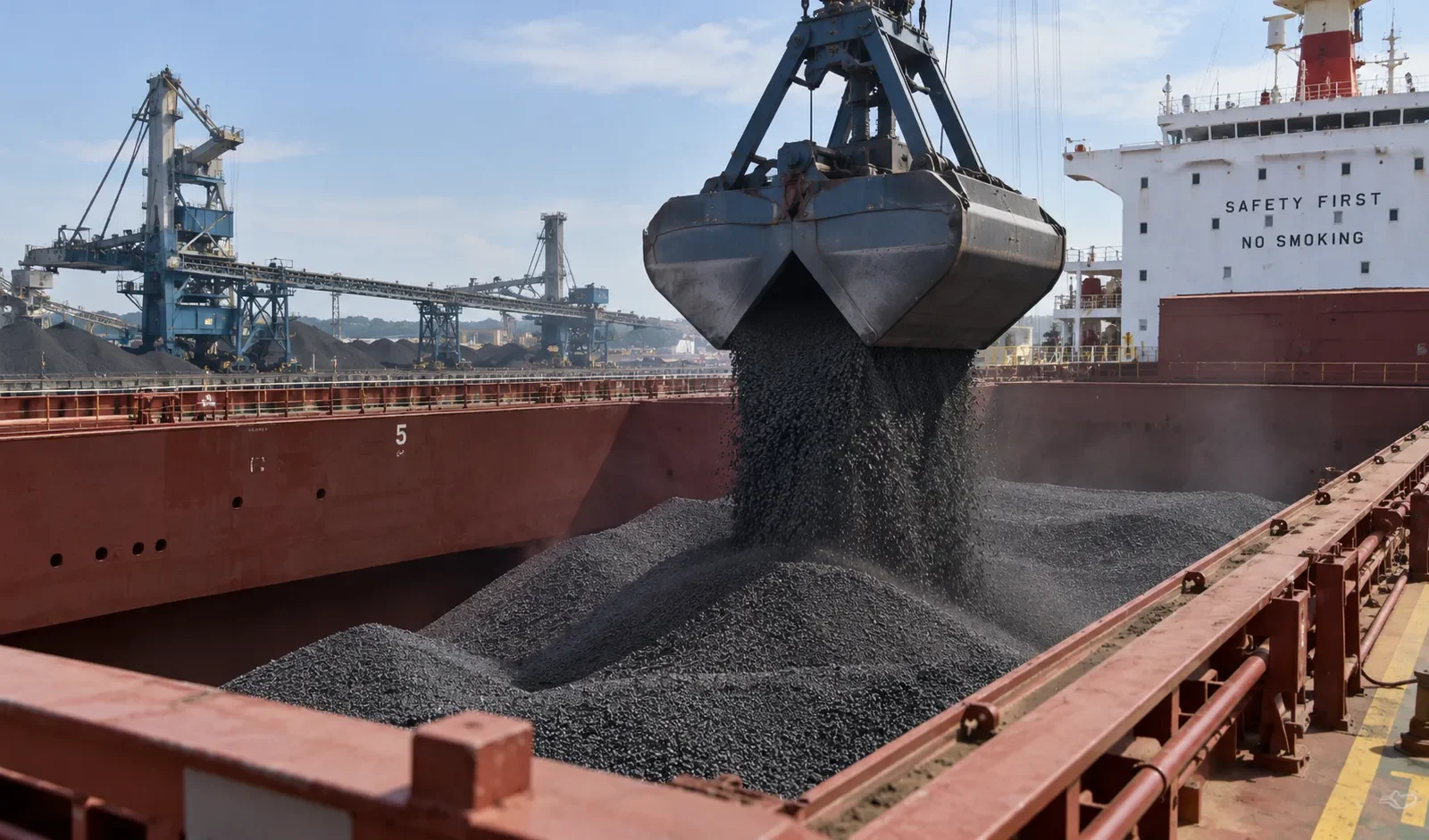
The International Maritime Solid Bulk Cargoes Code is mandatory under SOLAS chapter VI and is the principal IMO framework for the safe carriage of solid bulk cargoes other than grain. It addresses hazards including moisture-related instability, chemical hazards, structural loading, cargo distribution, stowage, segregation, ventilation and cargo-specific carriage precautions.
- When does Amendment 08-25 become mandatory?
- Why the IMSBC Code matters
- Group A, B and C explained
- The 11 new cargo schedules
- The 11 revised schedules
- Major DRI changes
- Fish meal: Class 9 and Group C split
- Ferrous metal borings and hold entry
- Segregation and SCBA changes
- What changes for chartering desks
- What masters and operators should do
- Documents and certification
- Pre-2027 compliance checklist
- IMSBC Code 2027 FAQ
IMSBC Code 2027: When Does Amendment 08-25 Become Mandatory?
The IMO Maritime Safety Committee adopted Amendment 08-25 at MSC 110 through Resolution MSC.575(110) on 26 June 2025.
The resolution provides that the amendments enter into force on 1 January 2027, subject to the normal acceptance mechanism under SOLAS. It also permits Contracting Governments to apply the amendments, in whole or in part, voluntarily from 1 January 2026.
That means operators already have a full year in which the new schedules and requirements can be used before the mandatory date.
| Date | What it means |
|---|---|
| 26 June 2025 | MSC 110 adopts Amendment 08-25 through Resolution MSC.575(110). |
| 1 January 2026 | Voluntary application permitted. |
| 1 July 2026 | Deemed-acceptance point under the resolution, subject to the SOLAS objection threshold. |
| 1 January 2027 | Amendment 08-25 enters into force and becomes the mandatory reference. |
The IMO’s 2025 edition of the IMSBC Code incorporates Amendment 08-25, making it the obvious working reference for companies preparing fleets and procedures for 2027.
Why the IMSBC Code Matters to Bulk Shipping
Solid bulk cargoes can create very different hazards even when two commodities appear operationally similar at the loading terminal.
Some cargoes may lose stability when moisture exceeds a safe limit. Others can self-heat, emit flammable or toxic gases, deplete oxygen, react with water, corrode structures or require separation from incompatible materials. High-density cargoes can also create serious local structural loading if distributed incorrectly.
The IMSBC Code turns those hazards into cargo-specific carriage requirements. Its individual schedules are therefore not merely reference pages. They influence whether a master can accept a cargo, which certificates a shipper must provide, how cargo spaces are prepared, whether ventilation is allowed or required, what monitoring is needed and how the cargo should be handled throughout the voyage.
Group A, Group B and Group C: The Basic IMSBC Classification
Cargoes with a moisture-related hazard that may lead to liquefaction or dynamic separation when shipped above the transportable moisture limit.
Cargoes possessing a chemical hazard capable of creating a dangerous situation on board.
Cargoes classified as neither Group A nor Group B. Group C does not mean that normal loading, structural and operational precautions can be ignored.
A cargo may also be classified as both Group A and Group B where both types of hazard are present. The group determines the safety questions that need to be answered before loading, but the individual cargo schedule remains the controlling operational reference.
The 11 New Cargo Schedules in Amendment 08-25
The headline change is the addition of 11 new individual cargo schedules. They cover both hazardous and non-hazardous cargoes and reduce the need to rely on provisional arrangements for commodities now expressly listed in the Code.
| New cargo schedule | Group | Operational relevance |
|---|---|---|
| Aluminium Sulphate Granular | B | Chemical-hazard cargo with specific precautions. |
| Apatite Concentrate | A | Moisture-related hazard; Group A controls become important. |
| Asphalt Granulates | C | New listed non-A/non-B cargo schedule. |
| Crushed Granodiorite, Coarse | C | New cargo-specific reference. |
| Ferric Sulphate Granular | B | Chemical-hazard cargo with cargo-specific precautions. |
| Fish Meal / Fish Scrap, Stabilized | C | Applies only where the material does not meet dangerous-goods or MHB criteria. |
| Iron Ore Briquettes | C | Separate schedule for cold-agglomerated iron ore briquettes. |
| Pea Protein Concentrate Pellets | C | New listed non-A/non-B commodity. |
| Phosphate Rock Fines (uncalcined) | A | Moisture-related hazard and Group A controls. |
| Tuff, Coarse | C | New cargo-specific schedule. |
| Zinc Slag (coarse) | C | New listed cargo with its own carriage provisions. |
Two of the new schedules — Aluminium Sulphate Granular and Ferric Sulphate Granular — are Group B cargoes. Lloyd’s Register has also highlighted their addition to the IMO list of solid bulk cargoes for which a fixed gas fire-extinguishing system may be exempted, subject to the applicable certification framework.
The two new Group A schedules — Apatite Concentrate and Phosphate Rock Fines (uncalcined) — deserve particular attention because Group A cargoes bring moisture-control, sampling, testing and transportable moisture limit considerations into the pre-loading decision.
Which 11 Existing Cargo Schedules Are Revised?
- Aluminium Ferrosilicon Powder UN 1395
- Aluminium Silicon Powder, Uncoated UN 1398
- Aluminium Smelting By-products / Aluminium Remelting By-products UN 3170
- Castor Beans / Castor Meal / Castor Pomace / Castor Flake UN 2969
- Direct Reduced Iron (A), Briquettes, hot-moulded
- Direct Reduced Iron (B), Lumps, pellets, cold-moulded briquettes
- Ferrosilicon UN 1408 with 30% or more but less than 90% silicon
- Ferrosilicon with at least 25% but less than 30% silicon, or 90% or more silicon
- Ferrous Metal Borings, Shavings, Turnings or Cuttings UN 2793 liable to self-heating
- Fish Meal / Fish Scrap, Stabilized — anti-oxidant treated
- Iron Ore Pellets
For operators, not all 11 revisions are equally consequential. The most operationally important items are the changes around DRI classification and acceptance, stabilized fish meal, ferrous metal borings and the removal or clarification of duplicated breathing-apparatus requirements.
Direct Reduced Iron: One of the Most Important 08-25 Changes
The DRI amendments deserve close attention because the distinction between DRI (A) and DRI (B) directly affects the carriage regime.
For DRI (A), hot-moulded briquettes, Amendment 08-25 introduces apparent density as an explicit safety criterion and tightens the description and loading conditions.
Fines under 6.35 mm ≤ 5% by weight
Moisture ≤ 1.0%
Temperature ≤ 65°C
The revised schedule also defines DRI (A) as hot-moulded briquettes produced from DRI feed material with total iron content of at least 88% by weight and moulded at a temperature above 650°C.
Before loading, the shipper must provide the master with a certificate from a competent person recognized by the competent authority of the loading port confirming that the cargo is suitable for shipment and meets the Code’s stated parameters.
If the material fails the relevant density, fines, moisture or temperature criteria, it cannot simply be loaded as DRI (A) under that schedule.
The schedule also requires loading practices that minimize briquette breakage and the creation or concentration of fines. Adding fines, dust or loose pellets to a homogeneous DRI (A) cargo is prohibited.
What changes for DRI (B)?
The revised DRI (B) description clarifies the boundary. Briquettes with total iron content of at least 88% that are moulded at 650°C or below, or have an apparent density not greater than 5,000 kg/m³, fall within the revised DRI (B) description rather than the DRI (A) definition.
Fish Meal: Why the 2027 Classification Change Matters
Stabilized fish meal is another important amendment because 08-25 creates a clearer split between dangerous material and fish meal that does not meet the dangerous-goods or materials-hazardous-only-in-bulk criteria.
The existing anti-oxidant-treated schedule is amended so that the relevant stabilized fish meal / fish scrap becomes UN 2216, Class 9 under the specified moisture and fat conditions. The schedule also contains revised antioxidant requirements.
Separately, Amendment 08-25 introduces a new Group C schedule for stabilized fish meal or fish scrap that does not meet any of the relevant dangerous-goods or MHB classification criteria.
This distinction matters for cargo acceptance, documentation and ship certification. Lloyd’s Register notes that vessels carrying the Class 9 form will require an appropriate dangerous-goods Document of Compliance.
Ferrous Metal Borings: Hold Entry for Temperature Measurement
The schedule for Ferrous Metal Borings, Shavings, Turnings or Cuttings UN 2793 in a form liable to self-heating is also amended.
The previous alternative wording that contemplated entry into the cargo hold for temperature measurement is removed. Industry guidance describes the practical outcome as prohibiting hold entry for that temperature-measurement purpose under the revised schedule.
This is consistent with the wider safety principle that a cargo space containing self-heating material can also present atmospheric and enclosed-space hazards that make entry a high-risk control measure rather than a routine monitoring technique.
Segregation, SCBA and Other Technical Changes
Segregation table
Amendment 08-25 revises section 9.3.3 of the IMSBC Code dealing with segregation between bulk materials possessing chemical hazards and dangerous goods in packaged form. The changes improve alignment with the IMDG framework and update the table terminology.
Self-contained breathing apparatus
Several cargo schedules are cleaned up to remove duplicate requirements for additional self-contained breathing apparatus where equivalent equipment is already required by SOLAS.
For certain MHB cargoes, additional SCBA requirements remain, but the revised text clarifies when sets carried to meet SOLAS requirements can also satisfy the IMSBC requirement.
Castor cargo naming
The index and multilingual BCSN list are adjusted so that Castor Meal, Castor Pomace and Castor Flake entries are removed from the previous combined naming arrangement, while the revised cargo treatment focuses on the applicable BCSN and classification.
Pesticide references
The amendment updates references to the revised IMO recommendations on the safe use of pesticides in ships, including fumigation of cargo holds.
What IMSBC Code 2027 Means for Chartering Desks
The safest time to discover an IMSBC problem is before the fixture is concluded.
A charterer may be commercially certain that a cargo has been shipped many times before. That does not remove the owner’s obligation to verify that the nominated cargo can be carried under the vessel’s statutory certification, the applicable schedule and the shipper’s supporting documentation.
Before fixing a 2027 cargo, parties should identify:
- the exact commodity and Bulk Cargo Shipping Name;
- the IMSBC group or groups;
- whether Amendment 08-25 has introduced or revised the schedule;
- whether the ship’s certificates cover the cargo;
- whether the shipper must provide moisture, TML, density, temperature or other test data;
- whether dangerous-goods certification is required;
- whether ventilation, gas monitoring, segregation or fire-extinguishing restrictions apply;
- and whether the loading terminal can comply with the schedule.
That due diligence belongs next to the usual commercial questions around laycan, loading rate, demurrage, port restrictions and freight.
For the contractual structure behind the fixture, see Tide Signal’s guide to voyage, time, bareboat and COA charter parties.
What Masters and Operators Should Change Before 1 January 2027
Masters should not be expected to discover the new amendment from a cargo declaration presented after arrival at the loading port.
Companies have several months to build 08-25 into their safety-management and cargo-acceptance process.
- Place the 2025 edition / Amendment 08-25 reference in the company’s controlled publication system.
- Update cargo-acceptance checklists and internal BCSN databases.
- Identify fleet trades that regularly carry any of the 11 revised or 11 new cargoes.
- Update pre-fixture questionnaires for DRI, fish meal and new Group A cargoes.
- Review ship dangerous-goods certification where Class 9 fish meal may be carried.
- Check certification implications for the new Group B cargoes.
- Brief masters, chief mates, marine superintendents and chartering staff.
- Review instructions on enclosed-space entry and cargo temperature monitoring.
- Update standard cargo-document requests sent to shippers and terminals.
- Ensure SMS procedures point to the new schedule where a cargo name has changed or split.
Cargo Documentation: What Should Be Verified?
The IMSBC regime depends heavily on accurate information from the shipper. The master needs enough verified cargo information to determine whether the ship can safely accept the cargo and whether the relevant schedule conditions have been met.
Depending on cargo group and schedule, the documentation may include cargo classification, BCSN, moisture content, transportable moisture limit, dangerous-goods information, certificates issued by competent persons, temperature, density or other schedule-specific parameters.
For Group A cargoes in particular, moisture-related documentation cannot be treated as a formality. The purpose is to establish that the material presented for loading is within the safe carriage conditions defined by the Code.
Where Amendment 08-25 creates a new listed schedule, shippers and operators should also stop relying automatically on old provisional descriptions and ensure the cargo documentation uses the correct new BCSN.
Why the New Group A Cargoes Deserve Early Attention
Apatite Concentrate and Phosphate Rock Fines (uncalcined) are added as Group A cargoes.
Group A status means the cargo possesses a moisture-related hazard capable of leading to liquefaction or dynamic separation if shipped above its transportable moisture limit. That classification changes the pre-loading conversation immediately: representative sampling, testing, moisture content and the applicable TML become safety-critical inputs.
For masters and operators unfamiliar with those commodities, January 2027 is too late to start building the necessary documentation workflow.
What About Iron Ore Briquettes?
The amendment introduces a distinct Group C schedule for Iron Ore Briquettes. The schedule describes hard briquettes produced by cold agglomeration of iron ore with binders such as sodium silicate.
This is important because an iron-ore briquette cargo must not be confused merely from its physical appearance with DRI briquettes. The chemical composition, production process and applicable BCSN determine the regulatory schedule.
What Should Shippers Do?
Shippers need to ensure that commercial product names map correctly to the Code’s BCSN and that test certificates and cargo declarations are updated before the mandatory date.
Where a product now has a dedicated schedule, continuing to provide generic or historic cargo descriptions can create delays because the master and owner still need to establish the correct regulatory identity before loading.
For DRI (A), the new apparent-density criterion is particularly important because a material that does not meet the threshold cannot simply be declared under the DRI (A) schedule.
What Should Ports and Terminals Expect?
Terminals handling affected commodities may receive more detailed requests from ship operators before berthing and loading.
These can include requests for recognized competent-person certificates, cargo test results, confirmation of loading temperatures, information on fines, moisture data and clarification of the precise product manufacturing process.
Terminals should also expect shipboard loading practices to reflect cargo-specific limitations intended to prevent breakage, concentration of fines, uneven loading or tank-top overstress.
IMSBC Code 2027 Compliance Checklist
- Confirm Amendment 08-25 is available in the ship and office controlled-document system.
- Map regular cargoes against the 11 new and 11 revised schedules.
- Update chartering cargo-acceptance templates.
- Review DRI (A)/(B) decision criteria, including apparent density.
- Review fish meal classification and dangerous-goods certification.
- Identify new Group A trades requiring TML/moisture controls.
- Review dangerous-goods and fixed-fire-extinguishing certification for relevant Group B cargoes.
- Update BCSN terminology in standard instructions and cargo declarations.
- Brief vessels on revised hold-entry and temperature-monitoring provisions.
- Check segregation procedures against the revised section 9.3.3 table.
- Review references to fumigation and pesticide guidance.
- Make 08-25 compliance part of pre-fixture and pre-loading review rather than a port-arrival exercise.
IMSBC Code 2027: Frequently Asked Questions
When does IMSBC Amendment 08-25 enter into force?
The amendment is scheduled to enter into force on 1 January 2027 under Resolution MSC.575(110), following the SOLAS acceptance procedure.
Can Amendment 08-25 be used before 2027?
Yes. The IMO resolution allows voluntary application, in whole or in part, from 1 January 2026.
How many new cargo schedules are added?
Amendment 08-25 adds 11 new individual cargo schedules and revises 11 existing schedules.
What are the new Group A cargoes?
Apatite Concentrate and Phosphate Rock Fines (uncalcined) are added as Group A cargoes.
What are the new Group B cargoes?
Aluminium Sulphate Granular and Ferric Sulphate Granular are added as Group B cargoes.
What changes for DRI (A)?
The revised schedule introduces apparent density as a key acceptance criterion. Among the stated limits, apparent density must be greater than 5,000 kg/m³, moisture must not exceed 1.0%, cargo temperature must not exceed 65°C and fines below 6.35 mm must not exceed 5% by weight.
What happens to stabilized fish meal?
The amended hazardous schedule identifies qualifying anti-oxidant-treated stabilized fish meal / fish scrap as UN 2216, Class 9, while a separate Group C schedule is introduced for material that does not meet dangerous-goods or MHB criteria.
Does Amendment 08-25 affect chartering?
Yes. Cargo identification, certification and schedule requirements should be checked before fixture, especially where the cargo has a new schedule or revised classification.
Does the IMSBC Code cover grain?
No. Grain in bulk is covered by the International Grain Code rather than the IMSBC Code.
Who needs to prepare for the change?
Shipowners, managers, masters, charterers, shippers, terminals, surveyors and other parties involved in solid bulk cargo acceptance and carriage should review the amendment before 1 January 2027.
Compliance note: This Tide Signal briefing is intended for maritime information and operational awareness. Cargo acceptance depends on the current mandatory Code, the exact Bulk Cargo Shipping Name, cargo properties, vessel certification, shipper documentation, flag and port requirements and any applicable competent-authority decisions. Masters and companies should verify the final carriage requirements against the official IMSBC Code and applicable statutory guidance.