SOLAS Chapter XII exists because bulk carriers face structural risks that ordinary cargo-ship rules alone were not considered sufficient to address. It adds specific safety requirements covering structural strength, flooding resistance, heavy bulk cargoes, loading information, water-ingress detection, pumping arrangements and restrictions designed to prevent progressive structural failure after damage.
What Is SOLAS Chapter XII?
SOLAS Chapter XII is titled Additional Safety Measures for Bulk Carriers. The IMO Bulk Carrier Safety framework explains why the chapter was introduced and summarizes its principal structural and flooding-safety requirements.
It was introduced following a period in which a significant number of bulk carriers were lost, often rapidly and with severe loss of life.
The safety problem was not associated with one single failure mode.
Investigations and industry reviews highlighted interacting risks such as:
- water ingress into cargo holds;
- progressive flooding;
- corrosion and structural deterioration;
- heavy-density cargoes;
- high local tanktop loads;
- damage to side structures;
- hatch-cover failure;
- bulkhead failure;
- and unsafe loading conditions.
Chapter XII therefore introduced requirements specifically designed around the structural behaviour of bulk carriers.
Chapter VI primarily governs safe carriage, stowage, cargo information and loading/unloading requirements. Chapter XII addresses additional structural safety measures for the bulk carrier itself.
Why Bulk Carriers Required Their Own SOLAS Chapter
A bulk carrier can experience extremely high structural loads.
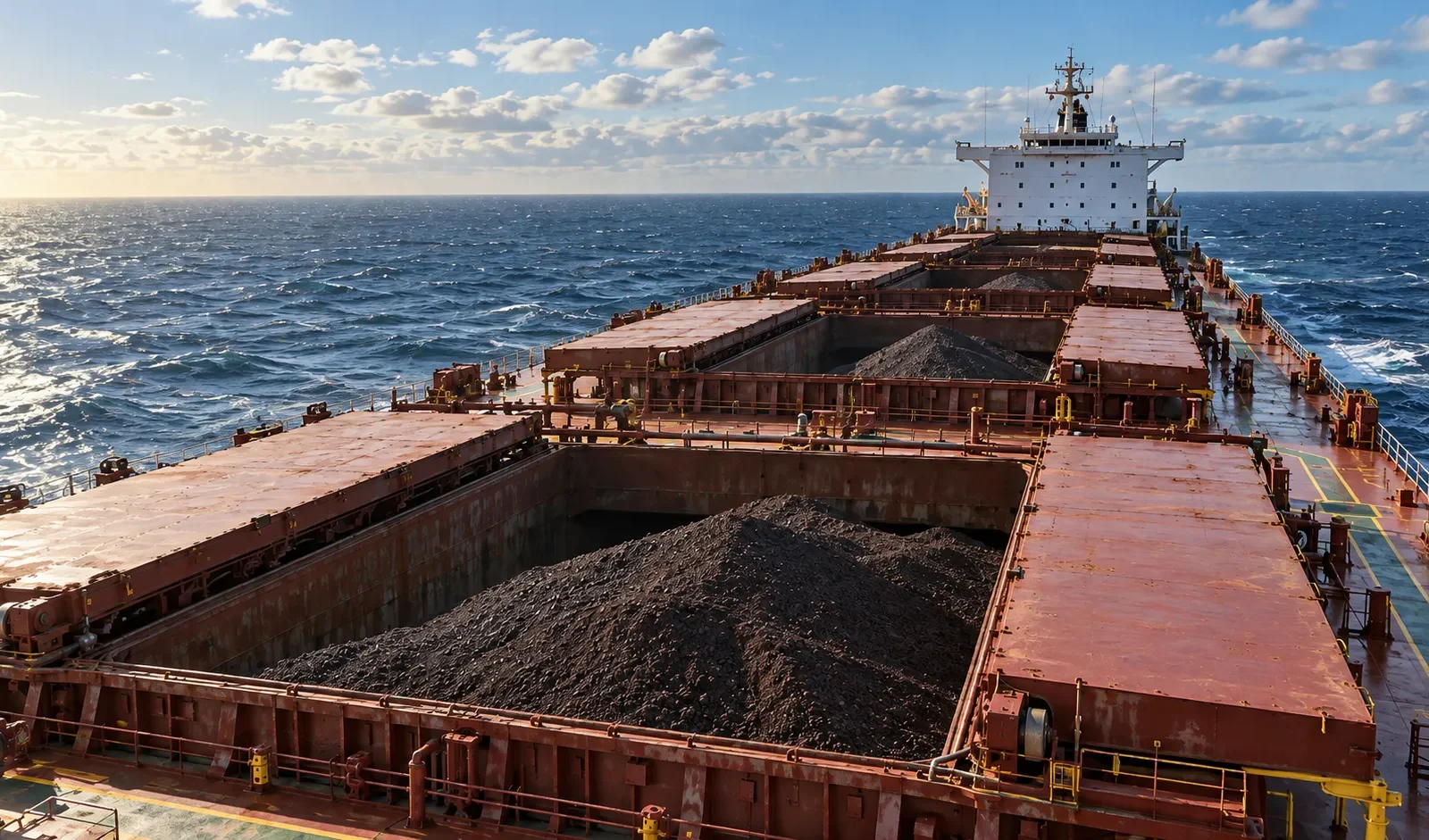
Cargoes such as iron ore have high density and can concentrate very large weights in a relatively small volume.
The ship’s structure must safely distribute those loads through:
- tanktops;
- double-bottom structures;
- side frames;
- transverse bulkheads;
- hopper tanks;
- topside tanks;
- deck structure;
- and the longitudinal hull girder.
At the same time, seawater entering a cargo hold creates a new load that was not part of the intended cargo condition.
+
heavy cargo loading
+
water ingress
+
dynamic sea loads
↓
potential progressive structural failure
The History Behind SOLAS Chapter XII
IMO adopted Chapter XII in November 1997 after a series of serious bulk-carrier casualties during the early 1990s. The official IMO bulk-carrier safety history records the adoption of the chapter and the subsequent review following the Derbyshire investigation.
The chapter entered into force on 1 July 1999.
The loss of the bulk carrier Derbyshire and the subsequent investigation also influenced later work on bulk-carrier structural safety.
Further SOLAS amendments followed in 2002 and 2004.
Those changes introduced or strengthened requirements relating to:
- water-level detection;
- pumping arrangements;
- double-side-skin construction;
- single-side-skin structural standards;
- hatch-cover inspection and maintenance;
- and restrictions on certain loading conditions.
Which Ships Does SOLAS Chapter XII Apply To?
Applicability is not determined simply by calling a ship a “bulk carrier”.
The individual Chapter XII regulation must be checked against factors such as:
- construction date;
- ship length;
- single- or double-side-skin construction;
- cargo density;
- structural arrangement;
- and the specific requirement concerned.
Many of the principal structural provisions focus on bulk carriers of 150 metres in length and above.
New Bulk Carriers and Flooded-Hold Strength
One of the core principles introduced by Chapter XII concerns the ability of the ship to survive flooding of a cargo hold.
For new bulk carriers of 150 metres or more within the defined scope and carrying solid bulk cargoes with a density of 1,000 kg/m³ or above, the ship must have sufficient structural strength to withstand flooding of a cargo hold under the applicable conditions.
The calculation must account for the effects of water entering the hold.
That matters because seawater adds:
- additional weight;
- hydrostatic pressure;
- dynamic loading;
- free-surface effects;
- and forces on transverse and bottom structures.
Why Cargo Density Matters
Bulk cargo density has a direct relationship with structural loading.
A high-density cargo can reach a vessel’s permissible structural limits long before the cargo hold is physically full.
Heavy cargoes can create high loads on:
- tanktop plating;
- double-bottom structure;
- bulkheads;
- local supporting members;
- and the overall hull girder.
This is why cargo quantity cannot safely be distributed simply by dividing the total tonnes equally between holds.
The loading condition must remain inside the vessel’s approved structural limits.
The 1,780 kg/m³ Heavy-Cargo Threshold
Chapter XII historically applies additional requirements to certain existing bulk carriers carrying particularly dense cargoes.
IMO identifies cargoes at or above approximately 1,780 kg/m³ as important within these older heavy-cargo provisions.
Examples cited by IMO include:
- iron ore;
- pig iron;
- steel;
- bauxite;
- and cement.
For defined existing ships, the structural strength of the forward transverse bulkhead and double bottom in way of the foremost cargo hold became an important safety focus.
Why the Foremost Cargo Hold Is Critical
The forward part of a bulk carrier is exposed to severe sea loading.
If the foremost hold is flooded, the vessel can experience:
- rapid additional weight forward;
- increased trim by the bow;
- large pressure on the transverse bulkhead;
- high loading on the double bottom;
- reduced freeboard;
- and increased risk of progressive flooding.
The concern is not just the first flooded compartment.
The greater danger is failure of the boundary between that compartment and the next.
↓
load on transverse bulkhead increases
↓
bulkhead or structure fails
↓
water enters Hold No. 2
↓
progressive flooding accelerates
Water Ingress: One of the Central Bulk-Carrier Risks
Water entering a cargo hold can be difficult to detect early, particularly during severe weather.
The source may include:
- hatch-cover leakage;
- structural damage;
- side-shell failure;
- damaged piping;
- collision damage;
- or flooding from adjacent spaces.
Once significant water accumulates, the situation can develop very quickly.
SOLAS XII/12: Water-Level Detectors
SOLAS regulation XII/12 introduced requirements for water-level detection and alarm systems on bulk carriers. IMO’s water-level detector performance standard sets the technical functional requirements for these systems.
Their purpose is simple: detect water before flooding becomes catastrophic.
The system can monitor relevant cargo holds and other spaces defined by the regulation.
A typical cargo-hold arrangement uses alarm levels designed to provide warning as water rises.
The bridge must receive clear indication so the crew can identify the affected location and assess the developing condition.
It does not stop flooding. Its safety value is that it can warn the bridge before water reaches a level where structural or stability consequences become uncontrollable.
Why Water Alarms Matter Operationally
An alarm should trigger an investigation, not simply an acknowledgement.
The bridge team may need to assess:
- which compartment is affected;
- whether the indication is genuine;
- rate of water rise;
- weather and sea state;
- ship heading and speed;
- ballast condition;
- structural integrity;
- pumping capability;
- stability;
- and whether distress or urgency communication is required.
SOLAS XII/13: Pumping Arrangements
Detection is only part of the flooding response.
Chapter XII also addresses the availability of pumping arrangements for relevant dry spaces and ballast tanks located forward of the collision bulkhead.
The concept is that the crew must be able to operate required drainage or pumping arrangements from an accessible enclosed location rather than having to enter a dangerous flooded area.
Single-Side-Skin vs Double-Side-Skin Bulk Carriers
Bulk-carrier side construction became a major regulatory focus as structural experience accumulated.
A single-side-skin bulk carrier has cargo spaces where the side shell is effectively the principal outer boundary.
A double-side-skin bulk carrier has an additional longitudinal boundary between the cargo hold and the outer shell.
| Feature | Single-side skin | Double-side skin |
|---|---|---|
| Hold boundary | Side shell directly forms cargo-hold boundary in defined areas | Longitudinal internal boundary separates hold from side shell |
| Damage tolerance | Side-shell damage may directly affect cargo space | Additional space can provide separation from outer-shell damage |
| Inspection | Side frames and hold structure are critical survey areas | Double-side spaces create additional inspection and coating requirements |
| Corrosion control | Condition of cargo-hold side structures is critical | Condition of double-side spaces and coatings becomes critical |
Double-Side Skin Is Not a Substitute for Maintenance
Double-side-skin construction can provide structural and damage-separation benefits.
But it introduces enclosed spaces that also require inspection and corrosion control.
Protective-coating standards therefore form another important layer of bulk-carrier structural integrity.
Poor coatings can allow corrosion to develop in ballast and double-side spaces even where the external structure appears satisfactory.
SOLAS XII/14 and Restrictions on Sailing With Holds Empty
The revised Chapter XII introduced requirements addressing certain bulk carriers operating with cargo holds empty under loading patterns that can create high structural loads.
The underlying issue is alternate-hold loading.
Some bulk carriers historically loaded heavy cargo into alternating holds rather than every hold.
That configuration can create severe local loading and large differences between adjacent loaded and empty spaces.
Why Alternate-Hold Loading Can Be Dangerous
Consider neighbouring holds:
one heavily loaded with iron ore and the next empty.
The structure between them is exposed to large load differences.
That can increase:
- transverse bulkhead loading;
- double-bottom stress;
- local structural stress;
- shear-force variation;
- and hull-girder loading.
For this reason, approved loading manuals and loading instruments must be treated as operational limits rather than advisory documents.
SOLAS XII/10: Cargo Density Declaration
Safe structural assessment depends on knowing what is being loaded.
Chapter XII therefore includes requirements connected with declaration of solid bulk cargo density.
The master needs reliable cargo information because density influences:
- cargo distribution;
- tanktop loading;
- hold loading;
- ballast sequence;
- shear force;
- and bending moment.
Incorrect cargo information can therefore become a structural safety problem.
SOLAS XII/11: Loading Instrument
A bulk carrier’s loading instrument allows officers to assess whether proposed and intermediate loading conditions remain within permissible structural limits.
Depending on the vessel and applicable requirements, the system can be used to monitor:
- still-water shear force;
- still-water bending moment;
- local hold loading;
- draft;
- displacement;
- and relevant structural limits.
This is particularly important during high-rate terminal operations.
Loading Rate Can Become a Structural Risk
A terminal may be capable of loading cargo faster than a ship can safely deballast.
If cargo loading runs ahead of the planned ballast sequence, the vessel can temporarily move outside the intended structural condition.
That is why the agreed loading sequence matters.
+
ship deballasting capability
+
hold sequence
↓
intermediate SF / BM condition
↓
safe or unsafe loading stage
Tide Signal’s SOLAS Chapter VI guide covers the cargo-operation side of this process, including the relationship with the BLU Code.
Shear Force and Bending Moment
A bulk carrier behaves structurally like a long beam supported by buoyancy and loaded by cargo, ballast, fuel, machinery and ship structure.
If weights and buoyancy are distributed unevenly, the hull experiences bending and shear loads.
Two fundamental monitoring parameters are:
- shear force;
- bending moment.
Both must remain within the vessel’s approved limits.
A final departure condition may be safe while an intermediate loading stage is not.
The ship does not jump directly from ballast condition to final loaded condition. Every intermediate hold and ballast sequence creates its own structural load case.
Tanktop Limits Matter Too
Global hull-girder strength is not the only structural limitation.
Cargo can also exceed local structural limits.
Tanktop structures have maximum permissible loading values.
A dense cargo concentrated over a small area can create excessive local pressure even where total ship deadweight remains acceptable.
This is particularly important for:
- iron ore;
- steel products;
- heavy concentrates;
- and other high-density cargoes.
Hatch Covers Are Part of Structural Safety
Bulk-carrier hatch covers are the primary barrier between the sea and the cargo hold from above.
Their condition therefore has a direct relationship with flooding risk.
Important items include:
- rubber packing;
- compression bars;
- cleats;
- cross-joint wedges;
- drain channels;
- non-return valves;
- coamings;
- hydraulic systems;
- panel alignment;
- and structural corrosion.
IMO’s bulk-carrier safety work includes mandatory standards for owners’ inspection and maintenance of hatch covers.
Why Minor Hatch Leakage Can Become Major Flooding
A hatch cover does not need to be physically torn away for water to enter.
Poor sealing, damaged drains or loss of compression can allow repeated seawater ingress during heavy weather.
Over time:
↓
water accumulates
↓
cargo condition changes
↓
free water and additional weight increase
↓
structural and stability risk rises
The Enhanced Survey Programme — ESP
Structural safety cannot be maintained only by design.
The ship also needs systematic inspection throughout its operating life.
The 2011 ESP Code establishes enhanced survey requirements for bulk carriers and oil tankers. It was adopted by IMO Resolution A.1049(27) and is maintained through subsequent amendments.
For bulk carriers, survey scope can include:
- overall structural surveys;
- close-up surveys;
- thickness measurements;
- ballast-tank examination;
- cargo-hold structure;
- piping systems;
- and testing of relevant tanks and spaces.
Where substantial corrosion or structural defects are found, survey scope can be expanded.
Why Thickness Measurement Matters
Corrosion reduces steel thickness.
That means the plate or structural member has less material available to resist load.
The concern is not simply visible rust.
Surveyors need to know whether measured thickness remains within allowable limits.
Ultrasonic thickness measurements therefore provide quantitative evidence of structural condition.
What Is Substantial Corrosion?
Classification and ESP survey systems use defined criteria to determine when corrosion has reached a level requiring closer monitoring or action.
The exact acceptance criteria depend on the structural item, approved scantlings, class rules and survey regime.
Operationally, the important point is this:
Bulk-carrier steel condition is controlled through inspection, measurements, approved limits and repair criteria.
Special Surveys Become More Important as Bulk Carriers Age
Older bulk carriers typically require more structural attention because corrosion and fatigue accumulate over time.
Later special surveys may involve increased:
- close-up inspection;
- thickness measurement;
- steel renewal;
- coating repair;
- hatch-cover work;
- ballast-tank work;
- and structural repair.
That links Chapter XII directly with the wider commercial issue of ageing dry-bulk tonnage.
For the fleet-capacity side of the same problem, see Tide Signal’s Ageing Bulker Fleet Could Put Global Repair Yards Under Pressure .
SOLAS Chapter XII vs SOLAS Chapter VI
| Issue | Chapter XII | Chapter VI |
|---|---|---|
| Main focus | Additional structural safety for bulk carriers | Safe carriage of cargoes |
| Flooding strength | Core bulk-carrier requirement | Not primary focus |
| Water ingress alarms | Chapter XII requirement | Not primary focus |
| Cargo declaration | Density relevant to structural requirements | Broader cargo information requirements |
| Loading / unloading | Structural limitations matter | VI/7 + BLU framework |
| IMSBC Code | Related operational safety layer | Main SOLAS link for solid bulk cargo carriage |
SOLAS Chapter XII vs the IMSBC Code
These two instruments address different sides of bulk-carrier risk.
The IMSBC Code focuses primarily on the hazards of individual solid bulk cargoes and provides the mandatory cargo-by-cargo operational framework under SOLAS Chapter VI.
Those hazards include:
- liquefaction;
- moisture;
- chemical hazards;
- self-heating;
- oxygen depletion;
- toxic or flammable gas;
- corrosion;
- and cargo-specific carriage requirements.
Chapter XII focuses more directly on the structural safety of the ship.
Tide Signal’s IMSBC Code 2027 guide covers the cargo-hazard side in detail.
SOLAS Chapter XII and the BLU Code
The BLU Code addresses safe loading and unloading of bulk carriers and is linked to SOLAS regulation VI/7.
It provides guidance to masters, terminals and other parties involved in bulk cargo operations.
The central principle is that cargo operations must not impose unacceptable structural loads on the ship.
The ship and terminal therefore need agreement on:
- loading sequence;
- loading rate;
- ballast sequence;
- hold quantities;
- topping-off;
- draft limits;
- and any pauses required for checking ship condition.
Pre-Stowage Planning Is Part of Structural Risk Control
Before cargo operations begin, officers need to determine how the cargo can be distributed safely.
Commercial requirements alone are not enough.
The plan must account for:
- cargo quantity;
- cargo density;
- stowage factor;
- tanktop limits;
- hold capacity;
- draft;
- trim;
- stability;
- shear force;
- bending moment;
- and ballast capability.
For the operational workflow, see Tide Signal’s Pre-Stowage Planning in Shipping .
What Officers Should Check Before Loading a Bulk Carrier
- Correct cargo declaration — including density and required cargo information.
- Loading computer condition — verify the system is operational and approved data are available.
- Tanktop limits — check individual hold loading restrictions.
- SF/BM limits — verify final and intermediate stages.
- Ballast sequence — confirm deballasting can keep pace with terminal loading.
- Loading rate — agree a maximum rate that the vessel can safely accept.
- Hold condition — inspect structural condition and cleanliness.
- Hatch covers — confirm closing, sealing and drainage arrangements.
- Water-level alarms — confirm system status and defect management.
- Bilge / pumping arrangements — verify availability where applicable.
What Should Be Checked During Loading?
Structural compliance is not completed when the loading plan is signed.
During loading, officers should continue monitoring:
- actual tonnes loaded;
- hold-by-hold distribution;
- draft;
- trim;
- ballast levels;
- loading rate;
- shear force;
- bending moment;
- and deviations from the agreed sequence.
If the terminal deviates from the agreed plan, the ship should reassess the loading condition before continuing.
What Port State Control May Look At
Chapter XII-related deficiencies can appear during Port State Control inspections as part of the vessel’s wider SOLAS compliance.
Possible areas of attention include:
- water ingress alarms;
- loading instrument status;
- structural defects;
- hatch-cover condition;
- survey records;
- cargo documentation;
- crew familiarity;
- and outstanding class conditions.
A defect becomes more serious when the equipment is not working and the crew cannot explain how the risk is being controlled.
For wider PSC preparation, see Tide Signal’s Port State Control Inspection guide .
The 2026 Regulatory Context for Bulk Carriers
Chapter XII itself should not be confused with every new SOLAS requirement affecting bulk carriers.
For example, from 1 January 2026, defined new bulk carriers and containerships of 3,000 GT and above are required under SOLAS Chapter V to carry an electronic inclinometer or equivalent means to determine, display and record roll motion. IMO summarizes this and other 2026 changes in its shipping rules in force from 1 January 2026 briefing.
The change is relevant to bulk-carrier safety but belongs to Chapter V rather than Chapter XII.
The 2026 amendments to the ESP Code also address Administration oversight of firms carrying out hull-thickness measurements. The changes are contained in MSC.553(108) and the January 2026 ESP Code supplement.
Not every rule affecting a bulk carrier belongs to Chapter XII. Modern bulk-carrier safety is spread across SOLAS Chapters II-1, V, VI and XII, the ESP Code, IMSBC Code, Load Line requirements, class rules and other instruments.
Why Structural Safety and Cargo Safety Cannot Be Separated
A cargo can be perfectly acceptable under its IMSBC schedule and still be loaded unsafely.
For example:
- the cargo may be correctly declared;
- its moisture may be below the applicable TML;
- its chemical hazards may be controlled;
yet the ship can still be exposed to unacceptable structural stress if the cargo distribution is wrong.
That is why safe bulk-carrier operation requires both:
+
structural compliance
+
loading discipline
↓
safe bulk-carrier operation
Why Chapter XII Still Matters on Modern Bulk Carriers
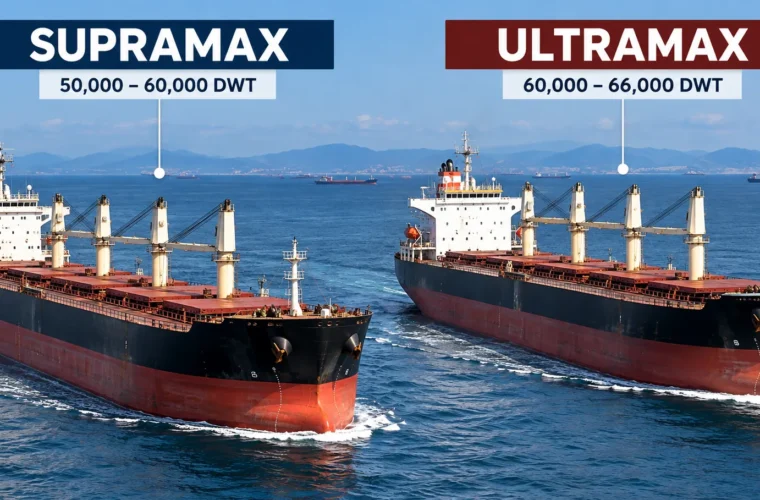
Modern bulk carriers benefit from improved structural design, classification rules, corrosion protection, survey programmes and onboard monitoring. For the vessel-size side of the dry-bulk fleet, Tide Signal’s Panamax vs Kamsarmax and Supramax vs Ultramax guides explain how major geared and gearless bulk-carrier classes differ in DWT, dimensions and trading profile.
But the fundamental loads have not disappeared.
Bulk carriers still:
- carry very dense cargoes;
- operate in heavy weather;
- experience corrosion;
- depend on hatch-cover integrity;
- load at high-capacity terminals;
- and age structurally over decades of trading.
Chapter XII therefore remains part of the core safety framework for the dry-bulk fleet.
Cargo density, loading pattern, corrosion, water ingress, hatch-cover condition, ballast sequence and hull stress interact.
Chapter XII exists because once structural failure and flooding begin on a large bulk carrier, the deterioration can become extremely rapid.
The practical goal is therefore not simply to survive a casualty. It is to prevent one weak barrier from developing into progressive loss of the ship.
SOLAS Chapter XII Checklist for Bulk Carrier Officers
| Area | Operational question |
|---|---|
| Structure | Are there known cracks, wastage, deformation or outstanding class conditions? |
| Hatches | Are hatch covers, cleats, seals and drains in satisfactory condition? |
| Water ingress | Are required water-level alarms operational? |
| Pumping | Are required bilge and forward-space pumping arrangements available? |
| Cargo information | Has correct density and other required information been received? |
| Loading instrument | Is the approved loading instrument operational and correctly configured? |
| Tanktop | Are local tanktop loading limits respected? |
| SF / BM | Are final and intermediate conditions inside approved limits? |
| Ballast | Can ballast operations keep pace with the terminal sequence? |
| ESP | Are survey, thickness-measurement and structural repair records current? |
SOLAS Chapter XII FAQ
What is SOLAS Chapter XII?
SOLAS Chapter XII contains additional safety measures specifically for bulk carriers, with particular emphasis on structural strength, flooding resistance and operational measures intended to prevent progressive structural failure.
When did SOLAS Chapter XII enter into force?
The original chapter entered into force on 1 July 1999.
Does Chapter XII apply only to bulk carriers over 150 metres?
No. Several major structural provisions use the 150-metre threshold, but applicability varies by regulation. Some requirements, including water-ingress detection provisions, have broader application.
What is SOLAS XII/12?
Regulation XII/12 addresses water-level detection systems intended to provide warning of water ingress into specified cargo holds and other spaces on bulk carriers.
What is SOLAS XII/13?
Regulation XII/13 addresses availability of pumping arrangements for specified dry spaces and ballast tanks located forward of the collision bulkhead.
What is the difference between SOLAS Chapter VI and Chapter XII?
Chapter VI governs carriage of cargoes and associated operational requirements, while Chapter XII provides additional structural safety measures specifically for bulk carriers.
What is the ESP Code?
The Enhanced Survey Programme Code establishes enhanced structural survey requirements for bulk carriers and oil tankers, including close-up surveys, thickness measurements and examination of structural spaces.
Why are water ingress alarms required on bulk carriers?
They provide early warning that water is accumulating in a cargo hold or other monitored space, giving the crew time to investigate and respond before flooding becomes more severe.
Why is cargo density important to structural safety?
High-density cargoes can impose severe local and global structural loads. Cargo density therefore affects hold distribution, tanktop loading, shear force, bending moment and the applicability of certain Chapter XII provisions.
- IMO — Bulk Carrier Safety / SOLAS Chapter XII
- IMO — International Convention for the Safety of Life at Sea (SOLAS), 1974
- IMO — MSC.170(79), amendments revising SOLAS Chapter XII
- IMO — MSC.145(77), Performance Standards for Water Level Detectors on Bulk Carriers
- IMO — A.1049(27), 2011 ESP Code
- IMO — MSC.553(108), 2026 amendments to the 2011 ESP Code
- IMO — BLU Code and BLU Manual
- IMO — International Maritime Solid Bulk Cargoes (IMSBC) Code
- IMO — Shipping rules in force from 1 January 2026
Technical note: SOLAS Chapter XII contains requirements with different application dates, ship-length criteria, construction definitions and cargo-density thresholds. This guide explains the regulatory structure for professional education and should be read alongside the current SOLAS text, flag-State instructions, class requirements, approved loading manual, ESP documentation and ship-specific procedures.