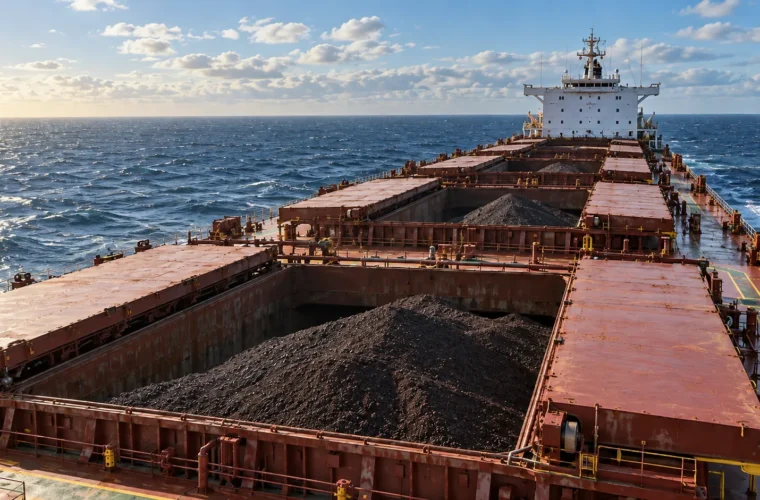
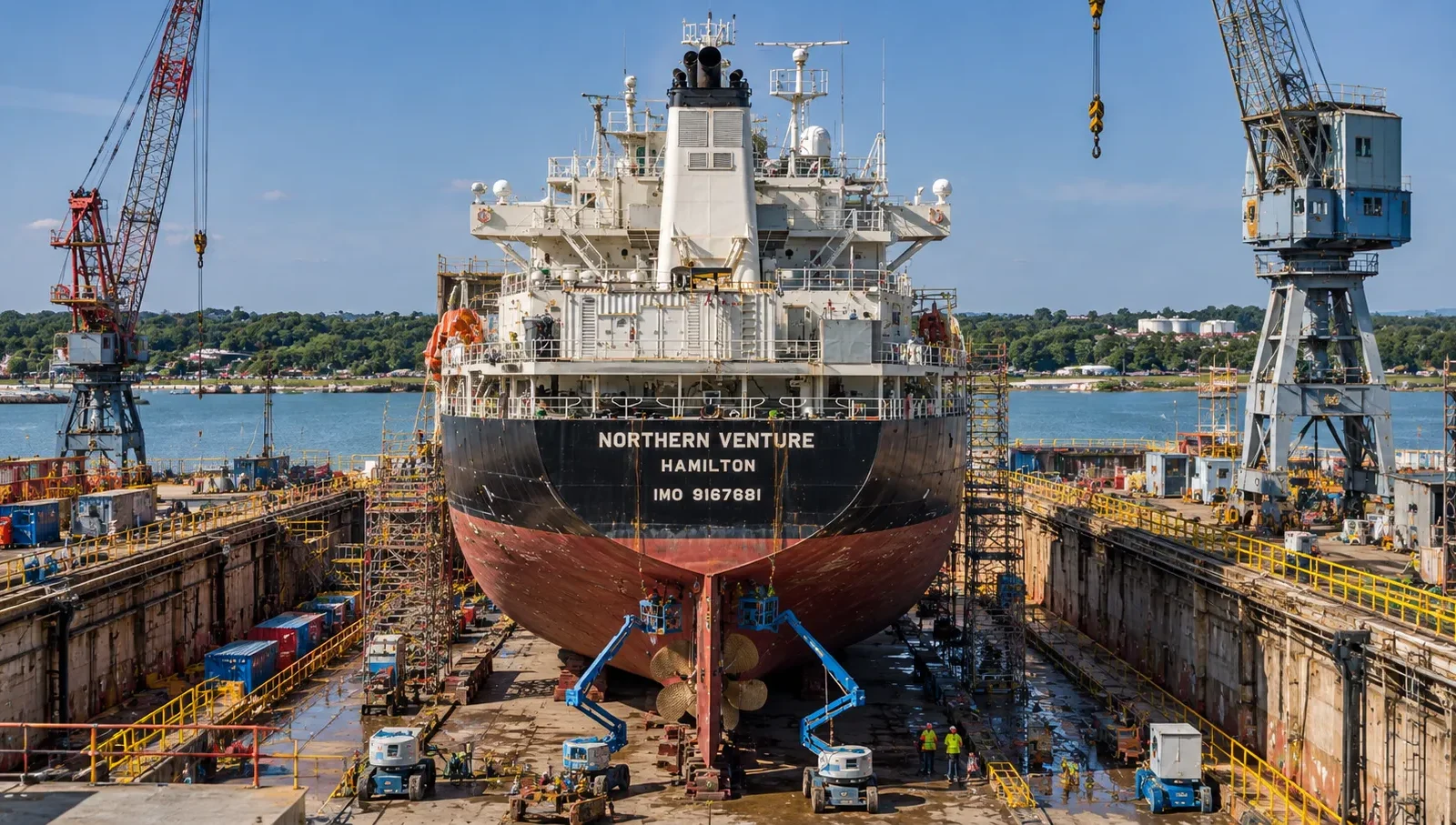
The ageing global bulk-carrier fleet is creating a new supply-side problem for dry bulk shipping: repair capacity. As a larger share of Capesize, Panamax, Supramax and other bulkers move into later special-survey cycles, shipbroker BRS has warned that demand for dry-docking and repair work could increasingly collide with limited yard capacity.
BRS Warns Ageing Bulkers Could Create Repair-Yard Bottlenecks
BRS Shipbrokers has warned that the increasing share of elderly bulk carriers could put additional pressure on global repair yards as the dry-bulk fleet moves deeper into its maintenance cycle.
The problem is not simply that older ships require more work.
It is that multiple forms of demand are increasingly competing for the same shipyard infrastructure:
- scheduled dry-docking;
- special surveys;
- steel renewal;
- machinery repairs;
- coating work;
- propeller and rudder work;
- ballast-water system servicing;
- emissions-related retrofits;
- energy-efficiency upgrades;
- and unscheduled casualty repairs.
As more ships reach later survey cycles, the amount of work required during each yard stay can also increase.
A vessel in drydock still exists in the global fleet, but it cannot carry cargo. If repair periods lengthen across a meaningful number of ships, commercially available tonnage can tighten without any demolition taking place.
Why the Dry-Bulk Fleet Is Becoming Older
Strong freight markets can delay demolition.
When older ships remain profitable, owners have less incentive to sell them for recycling even as maintenance requirements increase.
That can create a self-reinforcing cycle.
↓
Older bulkers remain commercially viable
↓
Demolition slows
↓
Average fleet age rises
↓
Special surveys and repair demand increase
Star Bulk said during its second-quarter 2026 market update that approximately 50% of the current dry-bulk fleet could be more than 15 years old by the end of 2027.
The company also estimated that the growing number of vessels undergoing a third special survey could reduce effective fleet capacity by more than 0.5% per year during 2026 and 2027.
That does not mean every older ship will require the same amount of work.
Maintenance requirements depend on vessel condition, trading history, class findings, steel condition, machinery performance, coating condition and the owner’s maintenance standards.
What Happens During a Special Survey?
Bulk carriers undergo scheduled classification surveys throughout their operating lives.
As vessels age, later special surveys can become increasingly demanding because structural condition becomes a larger focus.
Typical work may include:
- close-up structural inspections;
- ultrasonic thickness measurements;
- cargo-hold inspections;
- ballast-tank inspections;
- steel renewal;
- hatch-cover repairs;
- coating repairs;
- main-engine and auxiliary machinery work;
- tailshaft, rudder and propeller inspections;
- sea-valve servicing;
- and testing required by class or flag.
The scope can expand rapidly if inspections identify corrosion, cracking or steel wastage.
Repair-Yard Capacity Is Not Easily Replaced
A repair yard is not interchangeable with any other shipyard.
The vessel needs a dock that can physically accommodate its:
- length;
- beam;
- draft;
- displacement;
- and block arrangement.
A Capesize bulker therefore cannot simply use the same facilities available to a Handysize ship.
Large dry docks and floating docks capable of taking Panamax, Kamsarmax, Newcastlemax and Capesize vessels are a finite resource.
Regional location also matters.
Sending a ship thousands of miles to another repair region can add:
- ballast days;
- bunker consumption;
- lost earnings;
- crew costs;
- canal charges;
- and schedule disruption.
Repair Demand Is Already Geographically Concentrated
Recent ship-repair activity shows that global capacity is highly regional.
TrustedDocks’ repair-yard data for 2026 has shown particularly heavy activity in the Mediterranean and Black Sea region, with Turkish yards accounting for a large share of vessel calls among the monitored facilities.
China remains another major repair centre, alongside large yards in the Gulf, Southeast Asia and selected European locations.
But the existence of global capacity does not mean every dock is equally suitable for every ship.
A large bulker requires the right combination of:
- dock dimensions;
- steelwork capability;
- labour availability;
- spare parts;
- class attendance;
- contractor availability;
- and voyage positioning.
Shipyards Are Also Competing for Labour and Equipment
Dock space is only one part of the constraint.
A yard can physically accommodate a vessel but still face bottlenecks if it does not have enough:
- welders;
- fitters;
- pipe workers;
- electricians;
- coating teams;
- machinery specialists;
- crane availability;
- steel plate;
- or subcontractors.
That becomes especially important when a routine dry-docking develops into a heavy steel-renewal project.
Repair delays can therefore arise even when a dock berth itself is available.
Why Older Bulkers Can Take Longer in Drydock
The commercial schedule for a yard stay is usually planned before the vessel arrives.
But the final scope is not always known until surveys and thickness measurements are completed.
An older vessel can reveal additional work after docking.
Examples include:
- steel thickness below acceptable limits;
- cracked brackets;
- corroded ballast-tank structures;
- hatch-cover sealing problems;
- pipe renewal;
- valve replacement;
- machinery overhaul;
- or coating breakdown.
Every additional job can extend the vessel’s stay.
When one vessel stays longer, the next booking can be pushed back.
That is how individual maintenance overruns can turn into wider yard congestion.
How Repair Bottlenecks Could Affect Freight Rates
Repair congestion is primarily an operational issue, but it can become a freight-market issue.
Dry-bulk freight depends on the number of ships actually available to load cargo.
Consider two fleets of identical nominal size.
| Fleet | Total vessels | In drydock / repair | Commercially available |
|---|---|---|---|
| Fleet A | 1,000 | 30 | 970 |
| Fleet B | 1,000 | 60 | 940 |
Both fleets contain 1,000 ships.
But Fleet B has substantially less effective capacity available to charterers.
If cargo demand remains unchanged, that reduction can contribute to a tighter position list and stronger freight.
The Effect Will Not Be Equal Across Vessel Classes
Repair capacity differs by vessel size.
A smaller geared bulker has access to a wider range of dry docks than a Newcastlemax or Capesize vessel.
That means congestion risk can become more serious at the larger end of the fleet where suitable facilities are fewer.
The commercial effect can also differ by market.
Capesize and Newcastlemax
The largest bulkers require large docking infrastructure and often carry out significant steel and machinery work during later survey cycles.
Panamax and Kamsarmax
These vessels have access to more repair facilities globally but still compete heavily for major Panamax-capable docks.
Tide Signal’s guide to Panamax vs Kamsarmax explains the physical dimensions that determine why not every yard can accommodate every vessel.
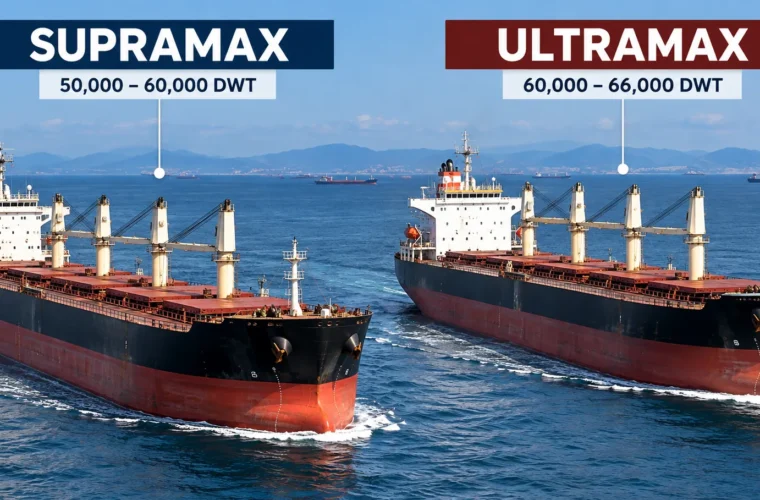
Supramax and Ultramax
Smaller size can provide more flexibility in yard selection, although geared vessels can also have additional crane and cargo-gear maintenance requirements.
New Repair Capacity Is Being Added — But Slowly
Some repair groups are investing in additional infrastructure.
BLRT Repair Yards, for example, began construction in June 2026 on a new floating dock for Western Shiprepair in Klaipėda.
The planned dock will be approximately 200 metres long and 35 metres wide with a lifting capacity of around 15,000 tonnes, expanding the yard’s ability to service larger vessels including Panamax-type ships.
But the dock is scheduled to enter operation in autumn 2027.
Demand for repair slots can increase quickly as ships age, while new dock infrastructure takes years to design, finance and build.
Newbuilding Growth Does Not Immediately Solve the Age Problem
The dry-bulk orderbook is growing.
Xclusiv Shipbrokers estimated in July that the orderbook reached approximately 1,642 vessels against an active fleet of 14,908 ships, equal to around 11% of the fleet.
Star Bulk has cited a somewhat higher orderbook-to-fleet ratio of around 13.9%, reflecting differences in methodology and timing.
The important point is that fleet renewal is happening.
But new vessels take years to deliver.
Until enough older ships leave service, the industry may have to maintain both:
- a growing newbuilding fleet;
- and a large population of older vessels still trading.
That can keep repair demand elevated even while the fleet modernises.
Why Strong Freight Can Make the Repair Problem Worse
High freight earnings create an unusual incentive.
Owners want older ships back in service quickly because every extra day in drydock can mean lost revenue.
But the same strong market can discourage demolition.
↓
Older vessel remains profitable
↓
Owner avoids scrapping
↓
Ship requires another survey cycle
↓
Repair-yard demand increases
This is one reason high freight markets can support both vessel values and repair-yard utilisation at the same time.
What Owners May Do Differently
If repair capacity tightens, owners may increasingly need to treat dry-docking as a strategic scheduling decision rather than a routine technical event.
That may involve:
- booking yards further in advance;
- securing framework agreements with preferred repair groups;
- completing more work afloat before drydock;
- pre-ordering steel and spare parts;
- conducting thickness measurements earlier;
- combining regulatory upgrades with scheduled surveys;
- choosing yards based on the vessel’s next employment;
- and planning charter commitments around survey windows.
Why This Matters to Charterers
Repair-yard congestion is not only an owner’s problem.
Charterers rely on vessel availability.
A ship delayed in a yard may:
- miss a laycan;
- require substitution;
- force the charterer to seek more expensive replacement tonnage;
- change a vessel’s next open position;
- or tighten the regional position list.
When multiple ships are affected simultaneously, those operational delays can become visible in the freight market.
Repair Costs Could Also Rise
Basic economics applies to ship repair.
If demand for dock capacity, skilled labour and steelwork rises faster than available supply, pricing power can move toward repair yards.
Owners may face higher expenditure for:
- dock charges;
- steel renewal;
- labour;
- coatings;
- machinery work;
- subcontractors;
- and urgent repairs.
The ultimate cost depends on location, vessel size, scope, exchange rates and timing.
Fleet supply is usually discussed through deliveries and demolition.
But an ageing fleet introduces a third variable: temporary removal for surveys and repair.
If later special surveys become more frequent at the same time that repair-yard capacity is tight, the market can lose effective vessel days without losing a single ship permanently.
For freight, those lost vessel days can matter just as much as demolition.
What the Dry-Bulk Market Should Watch
- Fleet age: how quickly does the share of 15- and 20-year-old bulkers increase?
- Third special surveys: how many ships enter major survey cycles during 2027?
- Drydock waiting time: do booking lead times increase?
- Steel renewal: do older ships require more extensive structural work?
- Demolition: does stronger scrap activity finally remove older tonnage?
- Freight rates: do high earnings continue to justify life extension?
- Repair prices: do yards gain pricing power?
- New capacity: how quickly can repair groups add suitable docks?
Ageing Bulker Fleet FAQ
Why is the global bulk-carrier fleet getting older?
Strong freight earnings and vessel values can encourage owners to keep older ships trading rather than sell them for demolition, while newbuilding replacements take several years to deliver.
Why do older ships need more repair work?
Later survey cycles can involve more extensive structural inspection, steel renewal, machinery overhaul, coatings work and repairs required to maintain class.
Can drydock congestion affect freight rates?
Yes. Ships in repair are temporarily unavailable for cargo employment. If enough vessels are out of service simultaneously, the effective fleet can tighten and support freight rates.
What is a third special survey?
Classification societies require periodic special surveys during a vessel’s operating life. Later surveys on older ships typically involve more extensive structural and machinery inspection than early-life surveys.
Which bulk-carrier sizes face the greatest repair-yard constraints?
Large Capesize and Newcastlemax vessels generally have fewer suitable dry docks than smaller bulkers because they require significantly larger facilities.
Will new bulk-carrier deliveries solve the problem?
Eventually fleet renewal can reduce the average age, but new ships take years to deliver and older vessels may continue trading if freight remains attractive.
- Lloyd’s List — Ageing bulker fleet to put pressure on repair yards, BRS warns, 24 September 2026
- BRS Shipbrokers — Dry Bulk Publications
- Star Bulk Carriers — Q2 2026 market commentary
- Xclusiv Shipbrokers / Breakwave Advisors — Dry Bulk Orderbook Accelerates, July 2026
- BLRT Yards — New floating dock investment at Western Shiprepair
Editorial note: Fleet-age, orderbook and repair-capacity figures can differ between databases depending on vessel definitions, cut-off dates and methodology. Tide Signal separates reported market data from its own analysis of effective vessel supply.