Finance · Tankers · Markets
Volare Shipping gives Trafigura a new route into tanker ownership at a moment when VLCC freight volatility has become a strategic issue for commodity traders, shipowners and investors.
Trafigura launched the dedicated tanker company with six Very Large Crude Carriers already operating and eight VLCC newbuildings on order for delivery between 2026 and 2028. The group is also preparing a roughly $500 million private placement followed by a proposed listing on Euronext Growth Oslo, potentially creating one of the newest publicly traded platforms focused on modern crude-tanker tonnage.
The transaction is more than a capital-markets story. It is also a statement about the economics of crude transportation. When VLCC rates rise sharply, a commodity trader that depends heavily on chartered ships can face much higher transport costs. Owning ships changes that exposure: freight becomes partly an operating and asset-return question rather than purely a chartering cost.
That does not make tanker ownership a free hedge. Ownership introduces capital requirements, asset-price exposure, technical-management obligations and the risk that freight markets weaken. But in a market where VLCC rates, war-risk costs and route lengths have become unusually volatile, a dedicated owned fleet can give a large trader more strategic control over transportation capacity.
What Is Volare Shipping?
Volare Shipping is a newly established international shipping company incorporated in Singapore and majority-owned by Trafigura. Its fleet is commercially managed by Trafigura’s global shipping business.
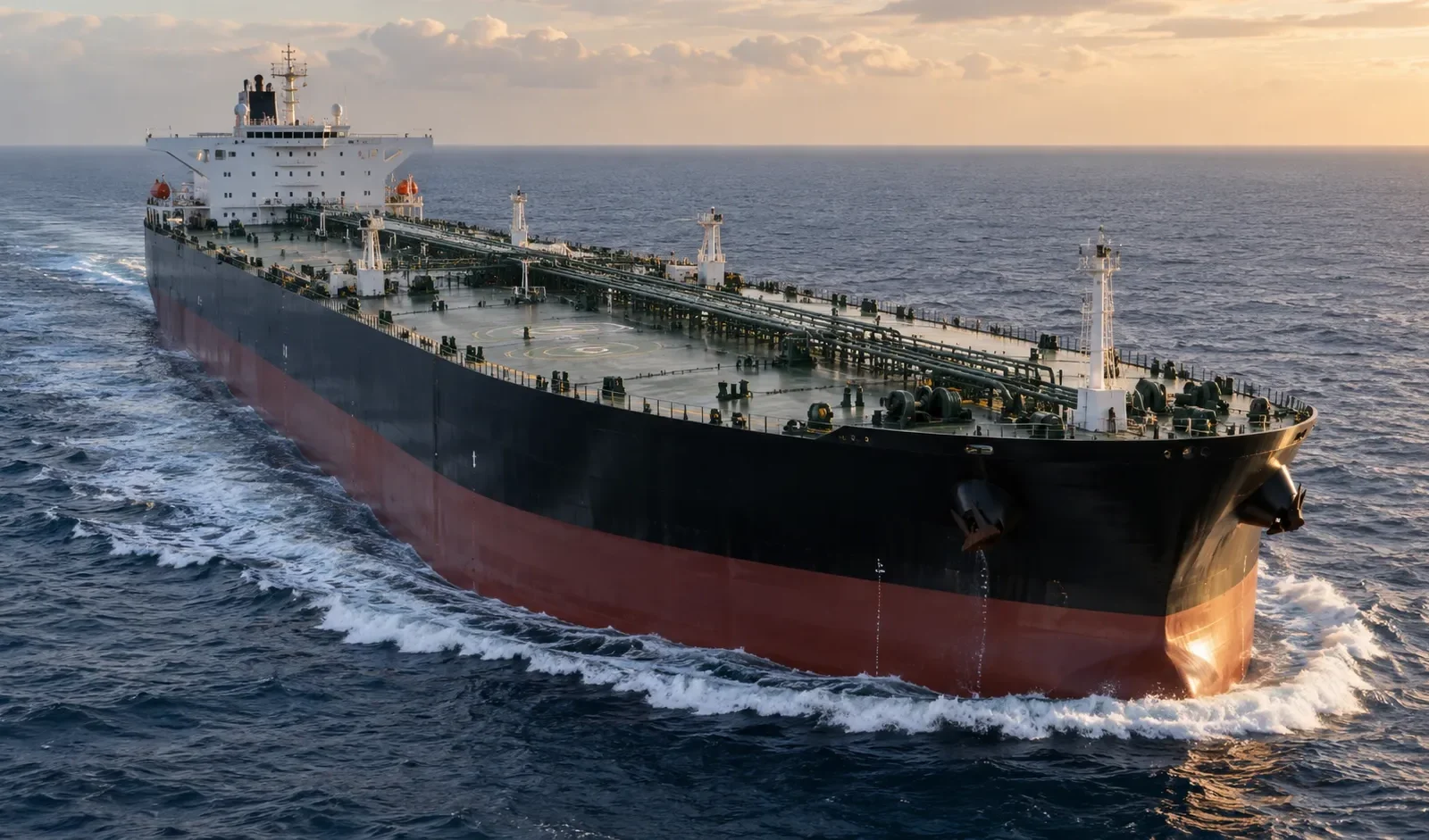
According to Trafigura, Volare currently operates six VLCCs and has another eight newbuildings on order. Those vessels are scheduled to enter the fleet progressively between 2026 and 2028. Once the programme is fully delivered, the company expects to own 14 modern VLCCs.
Trafigura says the completed fleet will have an average age of approximately three years in October 2028, positioning Volare among the younger listed VLCC fleets.
| Volare Shipping | Current position | Why it matters |
|---|---|---|
| Operating fleet | 6 VLCCs | Creates immediate exposure to the crude tanker market rather than a purely future newbuilding story. |
| Newbuildings | 8 VLCCs | Expands the platform to 14 vessels as deliveries arrive through 2028. |
| Commercial manager | Trafigura | Links the fleet directly with a global commodity trading, chartering and analytics platform. |
| Ownership | Majority-owned by Trafigura | Maintains strategic alignment while allowing outside equity participation. |
| Capital raise | Approx. $500m contemplated | Intended to fully fund the existing newbuilding programme, according to the company. |
| Proposed market | Euronext Growth Oslo | Would connect Volare with a specialist investor base familiar with shipping equities. |
The $500 Million Private Placement and Proposed Oslo Listing
Trafigura says Volare is considering a private placement of approximately $500 million, followed by a proposed listing of its shares on Euronext Growth Oslo.
The current target is for trading to begin on or about 5 October 2026 under the ticker VLCC. The timing is conditional. The private placement must be successfully completed and the listing remains subject to approval by Euronext Oslo Børs and other conditions.
The proposed structure is notable because it gives investors direct exposure to a modern VLCC fleet while Trafigura retains majority ownership and commercial-management responsibility.
For Volare, public-market access could provide a financing route beyond the initial newbuilding programme. For Trafigura, it creates a separately visible tanker investment platform that can potentially raise outside equity while continuing to operate inside the trader’s commercial ecosystem.
Why Trafigura Is Moving Deeper Into Tanker Ownership
Commodity trading houses have historically relied heavily on chartering. That model offers flexibility: the trader can secure a vessel for a voyage or period without carrying the full capital cost of ship ownership.
The weakness becomes visible when tanker rates surge.
A trader that is short physical freight capacity must continue moving cargo even when spot and period rates are expensive. In that environment, ownership can provide a degree of natural operational protection. The owner earns tanker-market economics on the vessels it controls while the trading business simultaneously faces freight costs elsewhere in the portfolio.
Reuters reported that Trafigura’s move comes as tanker rates have risen sharply amid disruption linked to Middle East and Ukraine-related conflict. The wider VLCC market has also entered an extraordinary investment phase. Tide Signal recently tracked more than 217 VLCC orders in 2026, representing more than $20 billion in new supertanker investment.
The key strategic point is therefore not that Trafigura has suddenly become a traditional shipowner. It is that freight itself has become important enough to justify a dedicated owned-asset platform.
Ownership changes the freight equation
For a commodity trader, tanker exposure can be thought of in two broad ways:
- Charter exposure: pay the market to secure transportation capacity when required.
- Ownership exposure: commit capital to ships, receive operating earnings and retain exposure to vessel values and the freight cycle.
Neither model is automatically superior. Chartering preserves flexibility and reduces capital intensity. Ownership can provide capacity control and upside when freight rates are strong, but it also exposes the balance sheet to depreciation, drydock costs, financing conditions and cyclical downturns.
Volare appears designed to combine the two: a separately capitalized fleet with Trafigura’s existing chartering, trading and cargo-generation capabilities.
Why the Timing Matters: VLCC Rates Have Become Extreme
The timing of Volare Shipping reflects an unusually disrupted crude-tanker market.
Reuters reported in September that VLCC spot earnings on some routes had moved above $500,000 per day as the US-Iran conflict and other disruptions reshaped crude flows. At the same time, longer-haul sourcing from the Atlantic Basin and restrictions around major chokepoints have increased tonne-mile demand.
Tide Signal has already documented the same structural pressure through the Gulf of Oman–China VLCC market, where Worldscale levels surged to exceptional highs.
For readers less familiar with tanker pricing, Worldscale is the benchmark system used to quote many tanker voyage rates. A sharp rise in WS does not translate one-for-one into daily earnings because bunker costs, port expenses, waiting time, route duration and war-risk charges all affect the voyage result.
That is why the current market creates both opportunity and risk for Volare. High spot rates can produce exceptional cash generation, but entering the public markets at the top of a freight spike also forces investors to decide how much of that earning environment is cyclical and how much is structural.
The 14-Vessel Fleet: Why Quality and Age Matter
Volare’s selling point is not simply the number of vessels. Trafigura is presenting the company as a modern, high-specification fleet.
Once all eight newbuildings are delivered, the fleet is expected to average about three years of age in October 2028. That matters because tanker economics are increasingly affected by technical efficiency, emissions regulation, charterer screening and the widening performance gap between older and newer tonnage.
Modern ships can benefit from improved hull forms, propulsion efficiency, lower fuel consumption and equipment designed around stricter environmental standards. They can also be more attractive to charterers applying technical, vetting and emissions criteria.
For the asset side of the equation, Tide Signal’s VLCC asset-value analysis explains why age, newbuilding prices and secondhand-market timing can materially change an owner’s return even when spot earnings are identical.
Newbuildings with broader cargo capability
Trafigura says the newbuild vessels are larger than standard tankers and include additional internal tank coating and heating systems. Those features are intended to expand the range of cargoes the ships can carry.
This matters commercially because tanker flexibility can create optionality. A vessel that can safely and economically handle a wider cargo range may have more employment choices than a ship optimized for only one narrow trade pattern.
That does not mean every VLCC will routinely switch between very different cargo grades. Commercial employment still depends on vessel specifications, cleanliness standards, charterer requirements, terminal restrictions and the economics of each trade. But added cargo capability can increase the number of potential opportunities available to the fleet.
Ammonia-Ready Dual-Fuel Capability: What It Actually Means
Trafigura states that Volare’s vessels have ammonia-ready dual-fuel capability.
That phrase needs careful interpretation. “Ammonia-ready” is not the same as saying the ships are currently operating on ammonia. It generally signals that the vessel design incorporates provisions intended to make future conversion or adoption easier than it would be on a conventional ship, subject to the final fuel system, class, regulatory approval, safety requirements and commercial availability of the fuel.
For investors, the significance is mainly about future optionality and regulatory resilience. Tankers ordered today may remain in service well into the 2040s. Owners therefore have to think about future carbon constraints long before fuel infrastructure is fully mature.
Tide Signal’s shipping finance and carbon-risk guide examines why fuel strategy, efficiency and regulatory exposure are becoming increasingly relevant to asset finance and vessel valuation.
Trafigura Already Operates at Massive Shipping Scale
Volare Shipping does not start from zero operational experience.
Trafigura says its global shipping business currently manages approximately 500 vessels across multiple segments, including around 250 oil tankers.
That scale gives the new company access to cargo intelligence, chartering expertise, counterparties and global trade flows that a standalone start-up shipowner would need years to build.
Commercial management by Trafigura can potentially improve vessel utilization because the group sees cargo demand across a very large trading portfolio. A vessel can be evaluated not only against the open freight market but also against the trader’s own physical flows and customer requirements.
The relationship can also raise governance questions that investors will examine closely: related-party transactions, chartering terms, commercial-management fees, allocation of cargoes and the balance between Volare shareholder interests and the wider Trafigura group.
Those questions are normal for a listed vehicle connected to a powerful sponsor. They do not imply a problem, but they are important when assessing the quality and transparency of future earnings.
Why Oslo Is Still Central to Shipping Equity
Oslo remains one of the world’s most important capital-market centres for shipping.
Euronext Growth Oslo provides access to investors who are unusually familiar with asset-heavy, cyclical maritime businesses. That matters because tanker companies are often valued differently from conventional industrial companies. Investors watch net asset value, fleet age, debt, cash break-even levels, charter exposure, spot-market earnings and dividend capacity.
The market has already seen major tanker activity in 2026. In March, Capital Tankers Corp. raised roughly $500 million before listing on Euronext Growth Oslo with a fleet of crude and product tankers, including a large newbuilding programme.
Volare’s contemplated transaction therefore arrives in a market where investors have already demonstrated appetite for modern tanker platforms — but also after freight rates and newbuilding activity have moved to exceptional levels.
Volare Shipping vs a Traditional Listed Tanker Owner
| Factor | Volare Shipping structure | Typical independent tanker owner |
|---|---|---|
| Commercial ecosystem | Integrated with Trafigura’s trading and chartering platform | Relies more heavily on third-party charterers, pools or commercial managers |
| Cargo visibility | Potential access to a large commodity-trading flow network | Depends on market fixtures, contracts and customer relationships |
| Sponsor | Majority-owned by Trafigura | Often controlled by founders, public shareholders or shipping groups |
| Fleet profile | 14 modern VLCCs after current newbuild deliveries | Can range from single-segment fleets to diversified tanker portfolios |
| Capital strategy | Proposed $500m placement + Euronext Growth Oslo listing | Equity, bank debt, bonds, leasing and retained cash depending on company |
| Key investor question | How effectively can Trafigura’s platform convert cargo access into superior fleet economics? | How efficiently can management deploy capital across the tanker cycle? |
What the $500 Million Raise Is Expected to Fund
Volare CEO Alexandre Duff said the contemplated private placement is expected to fully fund the company’s current newbuilding programme.
That is an important detail. Newbuilding programmes can create a financing gap between contract signing, yard instalments, final delivery payments and the time when vessels begin earning revenue. Raising equity before final deliveries can reduce reliance on additional debt and provide balance-sheet flexibility.
Investors will still want to understand the final capital structure after the placement: debt per vessel, cash break-even levels, remaining yard commitments, interest costs and the amount of liquidity available for future fleet growth.
For tanker companies, leverage can amplify returns in strong markets — and losses when rates collapse. A young fleet with manageable financial break-even levels generally has more ability to survive a weak part of the cycle without being forced into distressed asset sales.
The Bigger Market Signal: Traders Want More Control Over Ships
Volare fits a wider trend in which commodity producers and traders are paying more attention to physical transportation capacity.
When freight is cheap and ships are plentiful, chartering capacity can feel almost interchangeable. When war risk, chokepoint disruption and tonne-mile expansion tighten the market, access to the right vessel at the right time becomes strategically important.
The Strait of Hormuz has been a clear example. Reduced transit confidence, military risk and alternative routing have changed the economics of Gulf crude movement. Tide Signal’s Strait of Hormuz shipping hub tracks the operational picture, while the war-risk premiums guide explains how conflict changes voyage economics beyond the headline freight rate.
Ship-to-ship transfer activity has also become more important as producers and traders adapt export chains. Tide Signal’s STS operations guide explains the operational and risk-control framework behind tanker transfers.
In that environment, controlling modern tonnage is not simply an investment thesis. It can become part of supply-chain resilience.
But Is Volare Being Launched at the Top of the Tanker Cycle?
This is the central investment question.
Strong VLCC earnings and record ordering create a powerful near-term story, but shipping cycles are defined by what happens after high rates trigger new supply.
The 2026 orderbook is already very large. More than 217 VLCCs had been ordered by mid-September, according to Reuters, with deliveries extending toward the end of the decade.
That future fleet growth can eventually pressure rates if vessel supply expands faster than crude tonne-mile demand. Owners therefore need to balance two competing realities:
- today’s market is exceptionally strong and strategically tight;
- today’s ordering boom is creating tomorrow’s fleet supply.
Volare’s advantage is fleet youth. Even if the overall market softens, newer vessels can retain advantages in fuel efficiency, charterer preference, vetting performance and regulatory compliance. But modern tonnage is not immune to a freight downturn.
What Investors Should Watch After the Listing
If the private placement and Oslo listing proceed, Tide Signal would watch six variables closely.
- Final placement valuation. The equity value determines how much tanker-market optimism is already priced into the shares.
- Net debt and cash break-even. A modern fleet can still become financially stressed if leverage is too aggressive.
- Spot versus period exposure. Spot exposure captures market upside but creates earnings volatility. Read Tide Signal’s VLCC spot vs period guide.
- Newbuilding delivery timing. Delays alter cash-flow timing and can change exposure to the rate cycle.
- Related-party economics. Investors will need transparency on how commercial management and Trafigura-linked employment are priced.
- Fleet expansion beyond the current 14 vessels. Access to public equity can become a growth tool, but only if additional ships are acquired at disciplined prices.
What Volare Means for the VLCC Market
Fourteen vessels are not enough on their own to change global VLCC supply. The significance of Volare is therefore less about fleet size and more about what the platform represents.
A major commodity trader is putting equity capital behind a dedicated shipowning company during one of the strongest and most disrupted crude-tanker markets in years.
That signals confidence in the strategic importance of tanker capacity — but it also reinforces the investment wave already visible in the orderbook.
For shipowners, Volare adds another well-capitalized competitor for modern tonnage and future cargo employment. For charterers, it shows how large cargo interests are responding to extreme freight volatility. For investors, it creates another route to direct VLCC exposure. And for shipyards, it confirms that tanker demand is now coming from a wider set of capital sources than traditional independent owners alone.
Frequently Asked Questions
What is Volare Shipping?
Volare Shipping is a Singapore-incorporated tanker company established and majority-owned by Trafigura. It currently operates six VLCCs and has eight VLCC newbuildings on order.
How many ships will Volare Shipping own?
Volare is expected to own 14 VLCCs after its current newbuilding programme is fully delivered: six vessels already operating and eight newbuildings scheduled for delivery between 2026 and 2028.
Is Volare Shipping already listed in Oslo?
No. Trafigura announced a contemplated $500 million private placement followed by a proposed Euronext Growth Oslo listing. Trading is currently expected on or about 5 October 2026, subject to completion of the placement, exchange approval and other conditions.
What ticker will Volare Shipping use?
If the proposed listing is completed as announced, Volare Shipping is expected to trade under the ticker VLCC.
Who will commercially manage Volare’s vessels?
Trafigura’s global shipping business will commercially manage the Volare fleet.
Why is Trafigura investing in VLCC ownership?
The structure gives Trafigura direct exposure to tanker earnings and more control over transportation capacity at a time when VLCC freight rates have become highly volatile. It also creates a separately capitalized platform that can bring in outside investors.
Are Volare’s new VLCCs ammonia-fuelled?
Trafigura describes the vessels as having ammonia-ready dual-fuel capability. That should not be interpreted as meaning the ships are currently operating on ammonia; it indicates design provisions intended to support future fuel flexibility subject to conversion, regulation, class and fuel availability.
Key Takeaways
- Volare Shipping starts with six operating VLCCs and eight newbuildings, giving it a planned 14-vessel fleet.
- Trafigura is considering a roughly $500 million private placement to fully fund the current newbuilding programme.
- A subsequent Euronext Growth Oslo listing is targeted for around 5 October 2026, subject to conditions and approval.
- Trafigura will remain the majority owner and will commercially manage the fleet.
- The fleet is expected to average roughly three years of age once fully delivered in October 2028.
- The newbuildings are designed with additional cargo-flexibility features and ammonia-ready dual-fuel capability.
- The launch comes during an extraordinary VLCC cycle marked by extreme spot rates, geopolitical disruption and record newbuilding orders.
- The investment thesis depends not only on today’s freight strength, but also on future fleet supply, leverage, vessel values and Trafigura’s ability to convert its cargo network into efficient fleet employment.
Sources and Further Reading
- Trafigura — Trafigura launches Volare Shipping, 21 September 2026
- Reuters — Trafigura launches Volare tanker arm, plans Oslo listing, 21 September 2026
- Euronext — Capital Tankers Corp. lists on Euronext Growth, 17 March 2026
- Reuters — US-Iran conflict helps drive wave of supertanker orders, 17 September 2026
Editorial status: Updated 22 September 2026. The proposed Volare Shipping private placement and Oslo listing remain subject to completion and approval. Tide Signal will update the article as transaction terms and listing status develop.