Finance / Markets
War Risk Premiums: The Hidden Cost Behind High-Risk Voyages
War risk premiums are not just an insurance detail. When a route becomes politically sensitive or commercially uncertain, they can change the real economics of a voyage before the vessel even sails.
In shipping, risk rarely appears as one clean number. It moves through freight, insurance, bunkers, waiting time, charterparty terms, owner approvals and crew considerations.
War risk premiums are one of the clearest examples. They may sit inside the insurance discussion, but their effect can spread across the whole voyage calculation. A route that looks workable on distance and freight can become much less attractive once war risk cost, security uncertainty and operational restrictions are included.
This is why war risk premiums in shipping matter. They are not only about protecting the vessel. They are about pricing uncertainty into the voyage.
War Risk Premium Snapshot
- Main issue: Additional insurance cost for vessels trading through high-risk or conflict-sensitive areas.
- Who is affected: Owners, charterers, cargo interests, insurers, brokers, masters and operators.
- Commercial impact: Freight negotiations, voyage margins, charterparty clauses, route approvals and cargo timing.
- Why it matters now: Geopolitical disruption can keep risk pricing elevated even after headlines suggest that a route is reopening.
What Are War Risk Premiums?
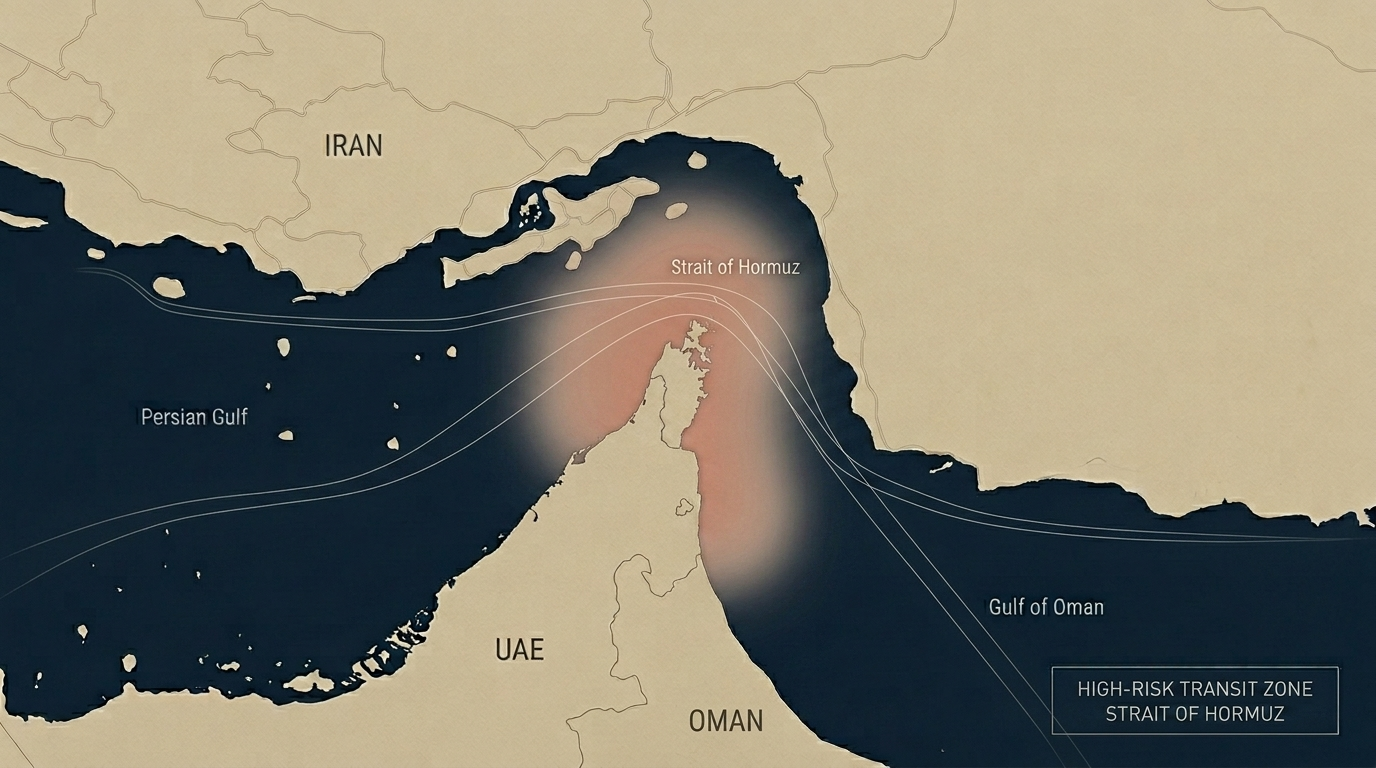
A war risk premium is an additional insurance cost connected with trading in areas where vessels face increased exposure to war, conflict, terrorism, piracy, seizure, mines, missile attacks or other extraordinary risks.
In simple terms, the vessel can still be insured, but the price of that cover may change sharply when the route becomes sensitive.
The important point is that war risk is not always priced like normal marine risk. It can move quickly. A political event, a security warning, a listed area update or an attack on commercial shipping can change the way underwriters, owners and charterers view the voyage.
Why the Cost Matters Commercially
In a quiet market, war risk premium may look like a technical insurance line. In a tense market, it becomes a commercial variable.
If the additional cost is small, it may be absorbed into the voyage calculation. If it rises sharply, it can change the discussion between owner and charterer. The owner may want compensation. The charterer may challenge the route. The broker may need to rework the economics. The operator may need fresh approval before fixing or performing the voyage.
This is where war risk premiums become more than insurance. They become part of freight pricing and voyage strategy.
Where the Cost Appears in the Voyage
The premium itself is only one part of the wider picture. A high-risk voyage may also bring slower routing, security instructions, convoy requirements, deviation risk, port delays, crew concerns and charterparty disputes.
That means the real cost of war risk is not always limited to the invoice from the insurer. It can appear in the time, uncertainty and operational friction around the voyage.
| Cost Area | How War Risk Can Affect It |
|---|---|
| Insurance | Additional premium may be required for trading through listed or high-risk areas. |
| Freight | Owners may seek higher freight or compensation for accepting the voyage risk. |
| Charterparty terms | War risk clauses, deviation rights and cost allocation become more important. |
| Voyage margin | Additional cost can reduce the expected profit of the voyage. |
| Operations | Security routing, waiting time or transit restrictions may affect schedule reliability. |
| Crew risk | Owners must consider safety, communication and operational confidence onboard. |
The Chartering Question: Who Pays?
One of the most practical questions is simple: who pays for the extra cost?
The answer depends on the charterparty, the voyage order, the timing of the risk, the trading area and the clauses agreed between the parties. In some cases, the cost may be for the charterer. In others, it may sit with the owner or become part of a wider negotiation.
This is why war risk cannot be treated casually during fixture discussions. If the route may pass through a sensitive area, the cost allocation should be clear before the vessel is committed.
A weak clause or unclear agreement can turn an insurance issue into a commercial dispute.
War risk is not only a question of whether a vessel can pass. It is a question of who carries the uncertainty, who pays for it and whether the voyage still makes commercial sense.
Why Reopening Does Not Always Mean Normal Pricing
Shipping markets often react quickly to political headlines. A route may be described as open, tensions may appear lower and commodity prices may start to adjust.
For the latest market context, see Tide Signal’s LNG Prices Surge to $26 as Asia Imports Hit 8-Year Low.
But insurance does not always reset at the same speed. Underwriters, owners and charterers usually look for something more practical: safe transit, stable instructions, credible security conditions and confidence that the route will remain workable.
This is why war risk premiums can stay relevant even after the first positive announcements. The market may move from crisis to caution, but caution still has a price.
Owner Approval Becomes More Important
For owners, accepting a high-risk voyage is not only a pricing decision. It is also a risk management decision.
The vessel may be valuable, the cargo may be sensitive, the crew must be protected and the owner’s reputation may be exposed if something goes wrong. Even when insurance is available, the owner may still decide that the voyage requires board approval, special instructions or additional safeguards.
This is especially important for tankers, LNG carriers and other vessels linked to energy flows. The commercial value of the voyage can be high, but the exposure can also be high.
For the latest market context, see Tide Signal’s China fuel exports.
Why Charterers Watch War Risk Closely
Charterers also have reasons to watch war risk premiums carefully. A higher insurance cost can affect freight. A slower or uncertain route can affect cargo timing. A nervous owner may reject the voyage or ask for stronger terms.
For cargo interests, the main issue is not only whether the ship can move. It is whether the cargo can move reliably, at an acceptable cost and without exposing the supply chain to sudden disruption.
In that sense, war risk premiums are part of a wider supply chain signal. They show how the market is pricing danger into physical trade.
The Link With Freight Markets
When risk rises, freight markets may respond before the full cost is visible. Owners may become more selective. Available tonnage may avoid certain routes. Charterers may need to pay more to secure vessels willing to trade in the area.
This can create a gap between headline freight levels and the real cost of moving cargo. The freight rate may be only part of the final picture. Insurance, route risk and waiting time can change the effective cost of transport.
For market watchers, this is important. War risk premiums can act like a hidden layer under freight. They do not always appear in simple rate headlines, but they can influence the behaviour behind those rates.
For the latest market context, see Tide Signal’s shipping week ahead.
What Shipping Companies Need to Check
- Trading area: Is the route inside or near a listed high-risk area?
- Insurance terms: Is additional war risk cover required, and at what cost?
- Charterparty wording: Who pays for additional premiums and related expenses?
- Operational safety: Are there route instructions, security advisories or convoy requirements?
- Crew communication: Has the vessel received clear guidance before transit?
- Voyage margin: Does the voyage still make sense after risk cost and possible delays?
The Data Problem Behind War Risk
War risk pricing is not only emotional. It depends on information: security reports, claims history, vessel type, route, cargo, political developments and underwriter appetite.
But shipping decisions often need to be made before the picture is fully clear. That is the difficult part. A vessel may need to fix, sail or wait while the risk environment is still moving.
This is why high-risk voyages require coordination between operations, chartering, insurance, legal and senior management. No single department has the full picture alone.
The Tide Signal View
War risk premiums are a useful reminder that shipping is not priced only by distance, cargo size and freight market direction. A voyage also carries political, legal, operational and human risk.
When those risks rise, the cost of moving cargo changes. Sometimes the change is visible in the premium. Sometimes it appears in freight negotiations, rejected voyage orders, altered routes or delayed cargo movements.
The most important signal is not only the premium itself. It is what the premium says about market confidence.
Final View
War risk premiums in shipping are not just a technical insurance matter. They are part of the commercial structure of high-risk voyages.
For owners, they affect risk acceptance and vessel approval. For charterers, they affect freight and cargo planning. For insurers, they reflect the changing probability of loss. For crews, they relate directly to the safety of the voyage.
In a more unstable trading environment, the real question is not simply whether a route is open. The real question is whether the market trusts it enough to price, insure and perform the voyage with confidence.
Sources and Further Reading
- Reuters — Maritime insurance premiums surge as Iran conflict widens
- Reuters — India plans sovereign guarantees for insurers as Iran war heightens shipping risks
- Lloyd’s Market Association — Safety concerns and vessel traffic in the Strait of Hormuz
- Lloyd’s Market Association — Joint War Committee
- International Union of Marine Insurance — Maritime security and piracy