Guides / Chartering
What Is a Charterparty in Shipping?
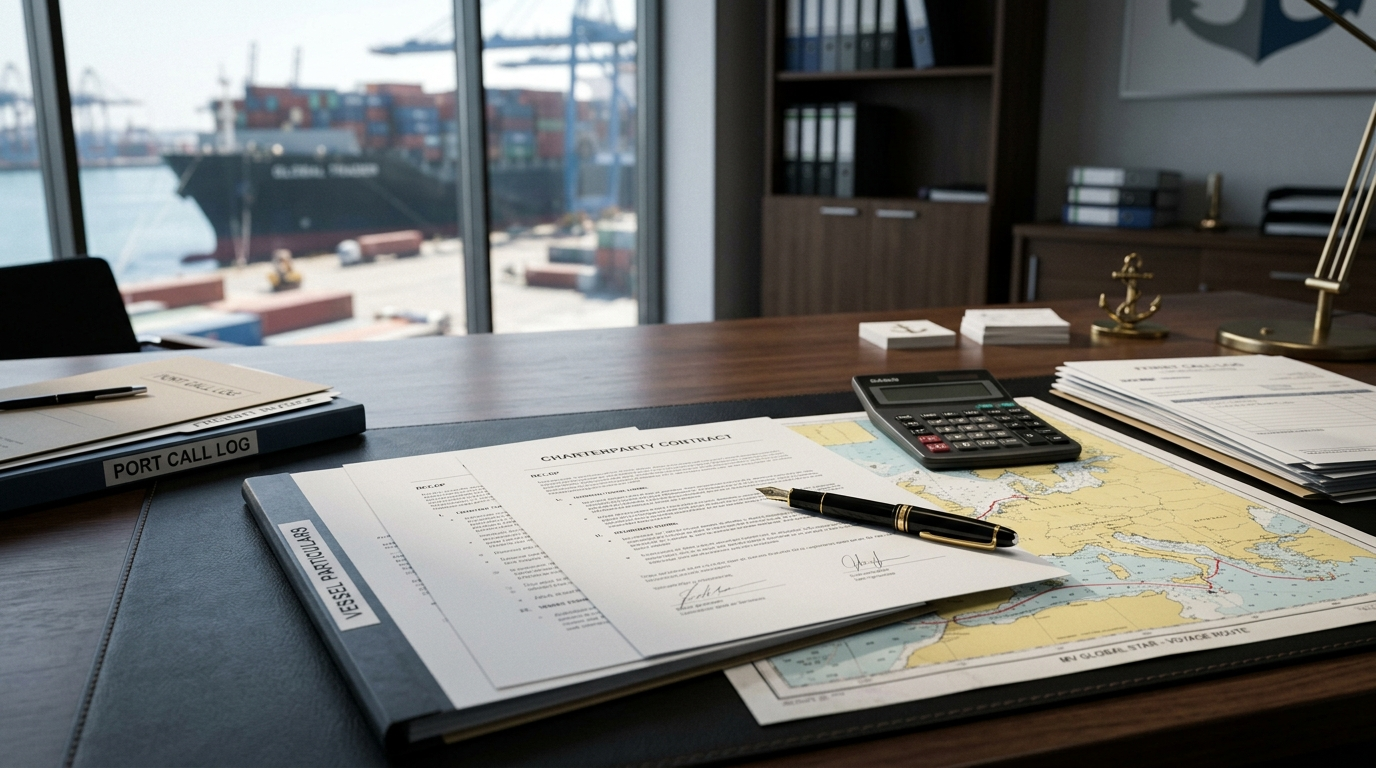
A charterparty is one of the most important contracts in commercial shipping. It defines how a vessel is employed, who carries which responsibilities and how freight, time, cargo and risk are allocated between shipowner and charterer.
A charterparty in shipping is the contract that governs the commercial use of a vessel. It sets out the agreed terms between the shipowner and the charterer, including the vessel’s employment, cargo, voyage, payment, risk allocation and operational responsibilities.
In practice, a charterparty is not just paperwork. It is the commercial framework behind a voyage or period of employment. It can determine who pays for fuel, who controls the vessel’s commercial route, when demurrage applies, what happens if the vessel is delayed, and how disputes are handled.
For shipowners, charterers, brokers, operators and insurers, understanding the charterparty is essential. A small clause can have a large financial impact when markets move, ports are congested, cargo is delayed or operational conditions change.
Quick View: Charterparty in Shipping
- A charterparty is a contract between a shipowner and a charterer.
- It defines how the vessel will be used commercially.
- The main types are voyage charter, time charter and bareboat charter.
- It can allocate freight, hire, fuel, port costs, loading time, risk and liability.
- Charterparty clauses can strongly affect voyage economics and disputes.
- For commercial shipping, the charterparty is one of the most important documents after the vessel itself.
What Does a Charterparty Mean?
A charterparty is the agreement under which a ship is hired for a specific commercial purpose. The owner provides the vessel, while the charterer uses the vessel according to the agreed terms.
The agreement may cover a single voyage, a period of time, or a longer arrangement where the charterer takes much wider control of the vessel. The exact structure depends on the type of charter and the commercial deal behind it.
This is why the word “charterparty” should not be understood as a single standard document. In shipping, it is a family of contracts. Each form can create different rights, obligations and risks.
Main Types of Charterparty
The three main types of charterparty are voyage charter, time charter and bareboat charter. Each one changes the balance between owner control and charterer control.
| Type | Basic meaning | Commercial focus |
|---|---|---|
| Voyage charter | The vessel is hired for a specific voyage or cargo movement. | Freight, cargo quantity, loading/discharging, laytime and demurrage. |
| Time charter | The vessel is hired for a period of time. | Hire, fuel, trading orders, speed, performance and off-hire. |
| Bareboat charter | The charterer takes wider control of the vessel for a longer period. | Long-term vessel use, crewing, maintenance and owner-like responsibilities. |
Voyage Charterparty
In a voyage charterparty, the vessel is employed to carry cargo from one place to another. The owner usually earns freight for completing the agreed cargo movement.
Voyage charterparties are common in bulk trades, where cargoes such as coal, grain, iron ore, bauxite, fertilisers or other commodities are moved in large parcels.
The key commercial questions in a voyage charter are usually: what cargo is being carried, where it is loaded, where it is discharged, how much time is allowed in port and what happens if loading or discharging takes longer than agreed.
Common Voyage Charter Issues
- Freight: the amount paid for the carriage of cargo.
- Laytime: the agreed time allowed for loading and discharging.
- Demurrage: compensation when allowed laytime is exceeded.
- Despatch: payment sometimes made if cargo operations finish early.
- Safe port: whether the nominated port is safe for the vessel.
- Cargo responsibility: duties around cargo readiness, loading and documentation.
Time Charterparty
In a time charterparty, the charterer hires the vessel for an agreed period. The owner continues to manage the vessel technically, while the charterer normally gives commercial orders about employment within the limits of the contract.
This creates a different risk structure. The owner remains responsible for the vessel, crew and maintenance, but the charterer may control where the vessel trades, what cargoes it carries and how it is commercially used.
Time charterparties often focus on hire, vessel performance, speed and consumption, off-hire, bunkers, trading limits and orders. In a volatile market, these clauses can become highly important.
Bareboat Charterparty
A bareboat charterparty, sometimes called a demise charter, gives the charterer much wider control of the vessel. The charterer may take responsibility for crewing, maintenance and operation during the charter period.
This structure can resemble a long-term lease. It is different from ordinary time or voyage chartering because the charterer takes a role much closer to that of an owner during the charter period.
Bareboat charters are therefore more significant from a legal, insurance and operational responsibility perspective. They are not simply another way to book a voyage.
Why Charterparties Matter Commercially
The charterparty matters because it turns a commercial agreement into enforceable terms. It defines the economic balance between the parties.
If the vessel is delayed, the charterparty helps decide who bears the cost. If the cargo is not ready, the charterparty may determine whether time counts. If a port is unsafe, the contract may shape responsibility. If fuel prices rise, the structure of the charter can decide which party is exposed.
This is why charterparty wording is not a technical detail. In shipping, contract wording often becomes money.
Key Clauses in a Charterparty
Charterparty clauses vary depending on the form used and the negotiation between the parties. However, several areas appear repeatedly in commercial shipping contracts.
Important Charterparty Clauses
- Vessel description: name, type, capacity, class, speed and consumption.
- Cargo: type, quantity, loading condition and exclusions.
- Freight or hire: payment structure and timing.
- Laytime and demurrage: time allowed in port and cost of delay.
- Safe port and safe berth: obligations around port safety.
- Trading limits: geographical or cargo restrictions.
- Off-hire: when hire may stop under a time charter.
- Performance: speed and fuel consumption warranties.
- War risk: trading risk in dangerous areas.
- Dispute resolution: law, arbitration and jurisdiction.
Charterparty and Freight Risk
Charterparties are closely linked to freight market risk. In a strong market, a shipowner may prefer shorter commitments to capture higher rates. In a weak market, longer employment may offer protection.
Charterers also use charterparties to manage exposure. A voyage charter may suit a single cargo movement, while a time charter may give more flexibility during a period of cargo demand or market uncertainty.
This is why chartering decisions connect directly with market conditions. Freight benchmarks such as the Baltic Dry Index can provide useful context for dry bulk market sentiment, but the charterparty determines the actual commercial agreement between the parties.
For the latest market context, see Tide Signal’s Baltic Dry Index.
Charterparty and Voyage Costs
A charterparty also affects voyage cost allocation. Depending on the structure, costs such as bunkers, port expenses, canal dues, cargo operations, emissions costs and waiting time may fall on different parties.
This has become more important as fuel prices, carbon costs and regulatory exposure become more visible. A commercial fixture is not only about the headline freight or hire rate. It is also about who carries the cost risk behind the voyage.
For this reason, charterparties are increasingly relevant to wider financial analysis. They can influence voyage margin, cash flow and the risk profile of vessel employment.
Charterparty and Decarbonisation
Decarbonisation is adding new pressure to charterparty discussions. Regulations and efficiency measures can affect speed, fuel choice, voyage cost and emissions responsibility.
For example, CII in shipping connects vessel operation with annual carbon-intensity performance. Under a time charter, the charterer may give employment instructions, while the owner remains exposed to the vessel’s long-term rating and compliance position.
Similarly, carbon pricing and fuel regulation can raise questions about who pays, who reports, who controls the operational decision and how the commercial risk is allocated.
Owner and Charterer Responsibilities
The owner and charterer do not carry the same responsibilities in every charterparty. The structure of the contract matters.
In broad terms, the owner is usually responsible for providing the vessel in the agreed condition, maintaining seaworthiness and ensuring the ship can perform the contracted service. The charterer is usually responsible for using the vessel within the contract limits and fulfilling commercial obligations such as cargo nomination, payment and orders.
However, the details can be complex. That is why standard forms, negotiated clauses and legal review remain important in commercial shipping.
Why Standard Forms Matter
Many charterparties are based on standard forms that have developed through long use in the shipping industry. These forms give parties a familiar structure and reduce uncertainty, but they are often amended through rider clauses.
The problem is that amendments can change the balance of the contract. A small rider clause may override or reshape the printed form. Parties should therefore read the charterparty as a complete document, not as isolated clauses.
In shipping disputes, the details matter. The same commercial situation may produce different outcomes depending on the exact wording agreed by the parties.
Common Charterparty Disputes
Charterparty disputes often arise when market conditions, operational delays or unexpected events create financial pressure. When money is at stake, wording becomes important.
Common Dispute Areas
- Demurrage and laytime calculations.
- Off-hire under time charterparties.
- Speed and consumption claims.
- Unsafe port or unsafe berth allegations.
- Cargo damage and responsibility allocation.
- Late payment of hire or freight.
- War risk, sanctions or trading restrictions.
- Back-to-back charterparty issues in charter chains.
Charterparty Chains and Back-to-Back Risk
Modern shipping often involves chains of contracts. A head owner may fix a vessel to a charterer, who then sub-charters the vessel to another party. In theory, these contracts may be arranged back-to-back. In practice, the terms do not always match perfectly.
This creates risk. If one contract contains a clause that is not mirrored in the next contract, a party in the middle may be exposed. The commercial assumption that two contracts are back-to-back may not be enough if the wording is different.
For this reason, charterparty chains require careful checking. Commercial speed should not replace contractual accuracy.
Why Charterparties Matter for Ship Finance
Charterparties can also matter in shipping finance. A vessel with strong charter coverage may be easier to finance because it offers clearer cash flow. However, lenders will still look at the quality of the charterer, the charter period, the rate, termination rights and market conditions.
The charterparty can therefore support or weaken the financing story. A strong rate may look attractive, but unclear risk allocation or weak counterparty quality can reduce confidence.
As carbon exposure, fuel costs and regulatory risk become more visible, lenders and investors may also pay closer attention to how charterparties allocate emissions-related costs and responsibilities.
Final View
A charterparty is one of the core documents of commercial shipping. It defines the relationship between shipowner and charterer and determines how the vessel is used, paid for and exposed to risk.
For shipowners, it protects vessel employment and revenue. For charterers, it secures transport capacity and commercial flexibility. For brokers, operators, insurers and financiers, it is a key document for understanding risk.
The practical lesson is simple: in shipping, the fixture is not complete when the rate is agreed. The real commercial position is found in the charterparty.
Sources and Further Reading
For official and industry reference, readers may consult BIMCO charterparty clauses, Gard guidance on charterer categories, UK P&I Club charterers’ liability cover, and Steamship Mutual guidance on back-to-back charterparties.