Guides / Chartering
Laytime in Shipping: Meaning, NOR and Demurrage
Laytime is where port operations become commercial risk. In voyage chartering, the way time is counted at the load port or discharge port can decide whether a voyage stays profitable, whether a demurrage claim is valid and whether a delay belongs to the owner or the charterer.
Laytime in shipping is the period of time agreed in a voyage charterparty during which the shipowner makes the vessel available for loading or discharging without extra payment beyond the freight. Once that agreed time is used, the vessel may go on demurrage, depending on the charterparty terms and the facts of the port call.
This is why laytime is not a small technical detail. It sits at the centre of voyage chartering. A vessel may be delayed by berth congestion, weather, terminal readiness, cargo documents, free pratique, strikes, shifting, inspections or slow cargo operations. The commercial question is always the same: does that time count?
In a market shaped by port congestion, canal disruption, rerouting, tighter schedules and higher operational uncertainty, laytime remains one of the most practical risk-control tools in shipping. It affects dry bulk voyages, tanker fixtures, project cargoes and many other contracts where port time has a price.
Editorial view: Laytime is not just a post-fixture calculation after the vessel sails. It should be understood before the fixture is agreed, monitored during the port stay and documented properly before any claim is raised.
What Laytime Means in Practical Terms
In simple language, laytime is the amount of time the charterer is allowed to use the vessel for cargo operations. The shipowner has agreed to carry the cargo for a freight payment. The charterer is given a defined period to load or discharge that cargo. If the charterer uses more time than agreed, the owner may be entitled to demurrage.
BIMCO’s Laytime Definitions for Charter Parties 2013 were developed to give the market a clearer set of meanings for common laytime expressions. That matters because chartering is often concluded quickly through recap messages, amendments and standard forms. A small wording difference can create a large financial difference later.
Laytime therefore turns operational events into contractual consequences. A rain stoppage, a late berth, a missing document, a slow crane rate or a delay in obtaining clearance may all matter. The answer depends on the charterparty wording, the timing of the event and the quality of the records.
Why Laytime Still Matters in 2026
Shipping in 2026 is not operating in a calm environment. Port congestion, rerouting, security risk, longer voyage planning windows and unstable supply chains continue to affect vessel schedules. When ships arrive late, wait longer or lose berth windows, the legal and commercial handling of time becomes more important.
The wider market has also become more sensitive to time. Higher financing costs, volatile bunker prices, carbon-related costs and uncertain freight rates mean that a few additional days in port can affect the real voyage result. For owners, delay reduces vessel availability. For charterers, delay can increase transport cost and disrupt cargo plans.
This is why laytime belongs in the same commercial conversation as freight rates, port performance and voyage economics. It is not only a legal clause. It is a mechanism for allocating time risk.
Why it matters now
- Port congestion can increase waiting time before or during cargo operations.
- Rerouting and schedule disruption can make berth windows harder to manage.
- Higher daily vessel earnings can make every delayed day more expensive.
- Carbon and fuel exposure make voyage time more commercially sensitive.
- Poor documentation can weaken otherwise valid demurrage claims.
The Three Conditions Before Laytime Usually Starts
Laytime does not normally start just because the vessel is near the port. In many voyage charterparties, three broad conditions must be satisfied. The vessel must be an arrived ship, she must be ready to load or discharge, and a valid Notice of Readiness must be tendered.
This is the reason the Notice of Readiness, usually called NOR, is so important. Gard notes that many voyage charterparties make commencement of laytime conditional on a valid NOR. If the NOR is invalid and there is no waiver or special contractual provision, laytime may not start at all.
In practice, NOR is where many disputes begin. Was the vessel at the correct place? Were the holds clean? Were the tanks ready? Was free pratique required? Were all documents in order? Was the vessel legally and physically ready? Was the notice tendered to the correct party at the correct time?
Arrival
The vessel reaches the contractually relevant place: berth, port, anchorage or waiting area, depending on the charterparty.
Readiness
The vessel must be ready in a real sense, not only geographically present. Physical and legal readiness may both matter.
Notice of Readiness
The master or agent tenders NOR in the required form, to the required party, at the permitted time.
Commencement of Laytime
Laytime begins according to the notice period, exceptions and wording agreed in the charterparty.
Laytime, Demurrage and Despatch
Laytime is the agreed time allowance. Demurrage is the amount payable when that allowance has been exceeded and the vessel remains delayed. Despatch is the opposite concept: a payment by the owner to the charterer if cargo operations finish before the allowed laytime is fully used, where the charterparty provides for it.
The Shipowners Club describes laytime and demurrage as fundamental principles of voyage charterparties. Their importance is easy to understand: a ship delayed beyond the agreed time loses earning opportunity. Demurrage is the contractual price for that additional detention of the vessel.
Despatch should not be assumed. Some contracts include it, some exclude it, and others calculate it only in specific ways. Many fixtures use despatch at half the demurrage rate, but the final answer is always in the charterparty.
| Term | Practical Meaning | Commercial Effect |
|---|---|---|
| Laytime | The agreed time allowed for loading or discharging cargo. | Sets the free cargo-handling time under the voyage charter. |
| Demurrage | Compensation payable when laytime has expired and delay continues. | Protects the owner from additional port delay after the agreed allowance. |
| Despatch | Payment for completing cargo operations before laytime is fully used, if agreed. | Rewards faster cargo operations where the charterparty allows it. |
| Detention | A possible claim for delay outside the demurrage regime, depending on facts and law. | Can become relevant where delay occurs before laytime starts or outside agreed demurrage terms. |
A Simple Laytime Calculation Example
Assume a bulk carrier is fixed to load 60,000 tonnes of cargo. The charterparty allows loading at 12,000 tonnes per weather working day. On a basic calculation, the allowed laytime for loading would be five weather working days.
That does not mean the claim is complete. The calculation must still consider when NOR was validly tendered, when laytime started, whether weather stopped time, whether holidays were excluded, whether shifting counted, and whether any special clauses changed the result.
Example: Basic Loading Allowance
The final claim depends on the contract wording, port records, weather interruptions, NOR validity and any agreed exceptions.
Clauses That Can Change the Result
The real difficulty in laytime is not the arithmetic. It is the wording. A fixture may look straightforward, but a single phrase can shift the risk of waiting time from owner to charterer or from charterer to owner.
Clauses such as “whether in berth or not”, “whether in port or not”, “time lost waiting for berth to count”, “weather working days”, “SHEX”, “SHINC”, “reachable on arrival” and “always accessible” can completely change the commercial outcome of a port delay.
Steamship Mutual and other P&I / FD&D sources regularly highlight how NOR and wording issues can create disputes. The lesson for operators is simple: do not wait until the demurrage claim stage to understand the clause.
WIBON
“Whether in berth or not” may allow laytime to start even if the vessel is waiting for a berth, subject to the full charterparty wording.
WIPON
“Whether in port or not” can become important where anchorage, waiting areas or port limits are disputed.
WWD
“Weather working day” means weather can affect whether time counts, especially in bulk cargo operations.
SHEX / SHINC
Sundays and holidays may be excluded or included depending on the abbreviation and surrounding wording.
Always Accessible
This may affect responsibility where a berth cannot be reached or used when the vessel arrives.
Time Lost Waiting
This wording can move congestion risk toward the charterer even before physical berthing.
Port Congestion and Modern Demurrage Exposure
Port congestion is one of the most practical reasons laytime remains commercially important. When a vessel cannot berth, cargo cannot start, terminal schedules slip and the voyage plan becomes uncertain. Whether that waiting time counts depends on the charterparty structure.
In recent years, congestion has been driven by different causes: supply chain disruption, labour issues, weather events, canal delays, security risk, berth productivity and cargo bunching. For chartering teams, the important point is not only why the delay occurred. The important point is whether the contract allocates that delay clearly.
This also connects with the broader freight market. When vessel supply is tight, delay has a higher opportunity cost. When freight is weak, demurrage can still protect the owner from absorbing port inefficiency. Either way, laytime is part of the economics behind why shipping costs rise and fall.
Dry Bulk: Why Laytime Is Especially Visible
Laytime is especially visible in dry bulk because cargo quantities are large, terminal productivity can vary and weather may affect open cargo operations. A Capesize loading iron ore, a Panamax discharging grain or a Supramax handling minor bulks can lose significant time through berth waiting, rain stoppages, shore equipment issues or cargo documentation delays.
This is why dry bulk participants follow both freight indicators and operational performance. The Baltic Dry Index can show market direction, but the real result of a voyage is still affected by port time, bunker consumption and the laytime balance.
In dry bulk, the statement of facts is not a formality. It is a commercial record. It may determine whether several days are counted as laytime, excluded from laytime, or charged as demurrage.
Tankers and Terminal Readiness
In tanker trades, laytime can raise different practical questions. Terminal readiness, inspections, hoses, pumping performance, documentation, berth safety and port restrictions may all affect the timeline. Delay may occur before loading, during cargo operations or after completion while documentation is finalised.
Pumping clauses and pressure requirements can become important. If discharge is slow, the question may be whether the vessel or terminal caused the delay. Again, the answer depends on records, logs, terminal statements and the charterparty wording.
Tanker laytime disputes can therefore become highly technical. They are not only about arrival and departure times. They can involve cargo systems, pressure logs, shore restrictions and operational evidence.
The Documents That Decide the Claim
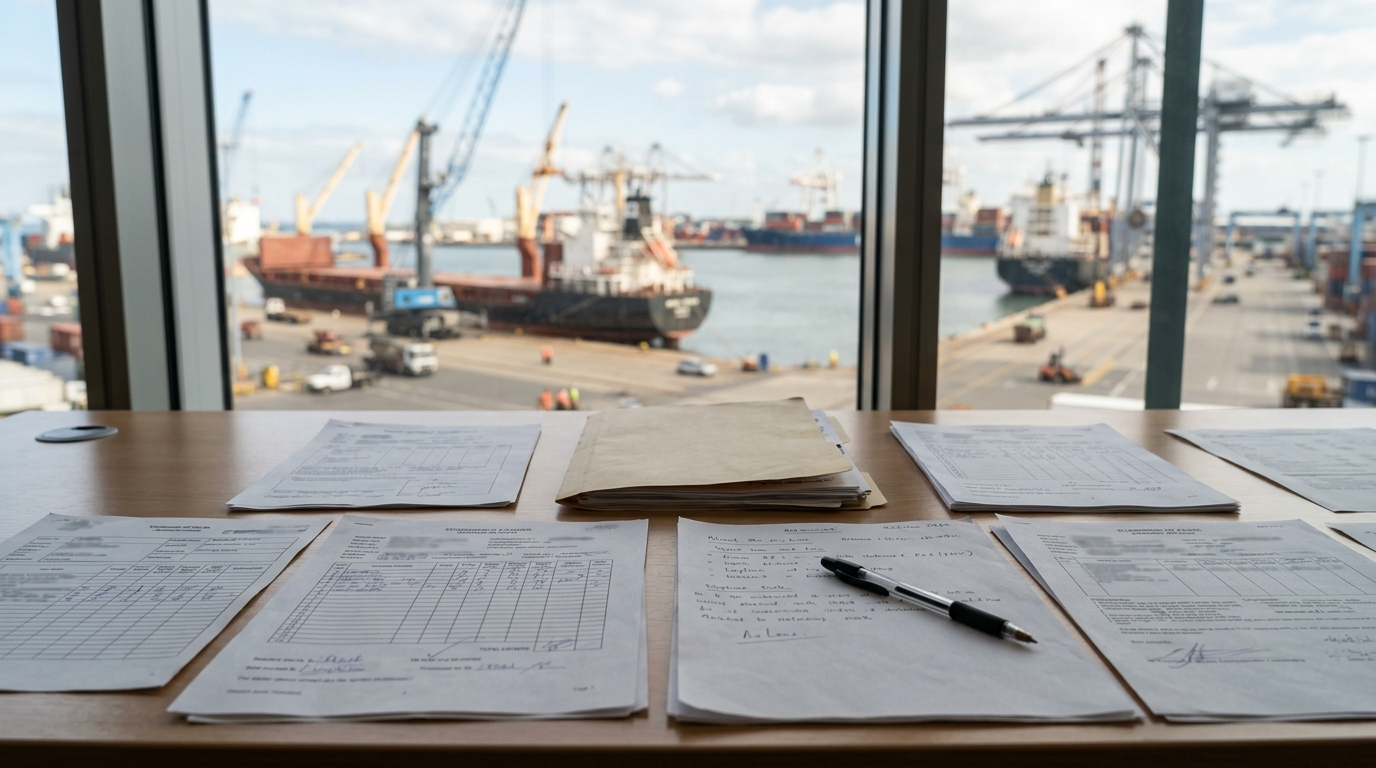
A laytime or demurrage claim is built on documents. The strongest argument can fail if the records are incomplete, inconsistent or late. The statement of facts is usually the central document, but it is not the only one.
Operators should collect and check the full chain of evidence: the charterparty, recap, NOR, statement of facts, port log, weather reports, stoppage records, letters of protest, terminal documents, agents’ messages and cargo operation logs.
Documents to keep clean
- Charterparty and fixture recap
- Notice of Readiness and evidence of tendering
- Statement of Facts signed or commented by relevant parties
- Port log and deck log extracts
- Weather stoppage records
- Letters of protest
- Terminal and cargo operation statements
- Laytime statement and final demurrage calculation
Common Reasons Laytime Claims Are Disputed
Laytime disputes usually come from one of four areas: invalid NOR, unclear arrival status, disagreement over exceptions, or poor records. The charterer may argue that laytime never started. The owner may argue that waiting time counts. The terminal may record stoppages differently from the vessel. The agent may issue a statement of facts that does not match the vessel’s records.
Many disputes are not caused by one dramatic event. They are caused by small inconsistencies that accumulate. A missing time, a vague weather note, an unsigned protest, a late email or a poorly drafted clause can all weaken the position.
For this reason, laytime discipline should be part of daily operations. The master, chief officer, agent, operator and broker should understand that the port timeline is not only operational history. It is financial evidence.
Where claims often go wrong
Invalid NOR: the vessel was not ready, not at the right place or notice was tendered incorrectly.
Weak Statement of Facts: key times are missing, unclear or inconsistent with other documents.
Weather ambiguity: rain or wind stoppages are not recorded with enough precision.
Clause misunderstanding: the team assumes a delay counts without checking the fixture wording.
Late claim preparation: documents are reviewed weeks later, when evidence is harder to correct.
How Owners and Charterers See Laytime Differently
Owners and charterers often look at the same port delay from different commercial angles. The owner wants the vessel released quickly or compensated for extra time. The charterer wants cargo operations completed without unnecessary additional cost.
Neither position is automatically wrong. Laytime exists because both sides need a predictable rule. The owner should not bear unlimited delay caused by cargo operations. The charterer should not pay for time that the contract excludes or for delay caused by the vessel’s own lack of readiness.
A well-drafted charterparty does not remove all disputes, but it reduces uncertainty. Clear terms, clean records and disciplined communication make the commercial relationship easier to manage.
Operational Checklist Before Arrival
Good laytime management begins before the vessel reaches the load or discharge port. The operations team should not wait for a demurrage dispute to check the terms. They should know the relevant clause before the port call begins.
Before arrival, confirm:
- Is this a berth charter, port charter or wording with special arrival provisions?
- Where can NOR be tendered?
- Who must receive NOR?
- When does laytime start after valid NOR?
- Are Sundays, holidays and weather delays excluded or included?
- Does time lost waiting for berth count?
- What is the demurrage rate?
- Is despatch payable?
- What documents are required for the final claim?
Laytime and the Bigger Shipping Market
Laytime may sound like a technical post-fixture subject, but it is connected to the wider shipping market. When freight markets are strong, owners become more sensitive to delays because the vessel could be earning elsewhere. When markets are weak, charterers may push harder on disputed time because every dollar of voyage cost matters.
This is also why laytime links naturally with charterparty terms, freight rate movements and market analysis. Port time is not isolated from market economics. It is one of the ways market pressure appears inside a single voyage.
For companies managing several voyages at once, small improvements in laytime control can become meaningful. Faster document review, stronger NOR discipline and better post-fixture workflows can reduce leakage across the fleet.
Final View
Laytime in shipping is where law, operations and commercial judgement meet. It defines how much time the charterer may use for cargo operations and when additional delay becomes a financial claim.
The subject matters because port time is expensive. A few hours may not seem important during a busy port call, but the final calculation can affect freight income, demurrage recovery, voyage profit and the relationship between owner and charterer.
The practical lesson is simple: understand the charterparty before arrival, tender NOR correctly, record the port timeline carefully and prepare the laytime calculation while the evidence is still fresh. In modern shipping, good laytime management is not paperwork. It is commercial protection.
Sources and Further Reading
For official and industry reference, readers may consult BIMCO’s Laytime Definitions for Charter Parties 2013, Gard’s article on Notice of Readiness and commencement of laytime, The Shipowners’ Club guide to laytime and demurrage, Skuld’s overview of laytime history and NOR issues, Steamship Mutual’s Notice of Readiness FAQs, and Baltic Exchange market information.