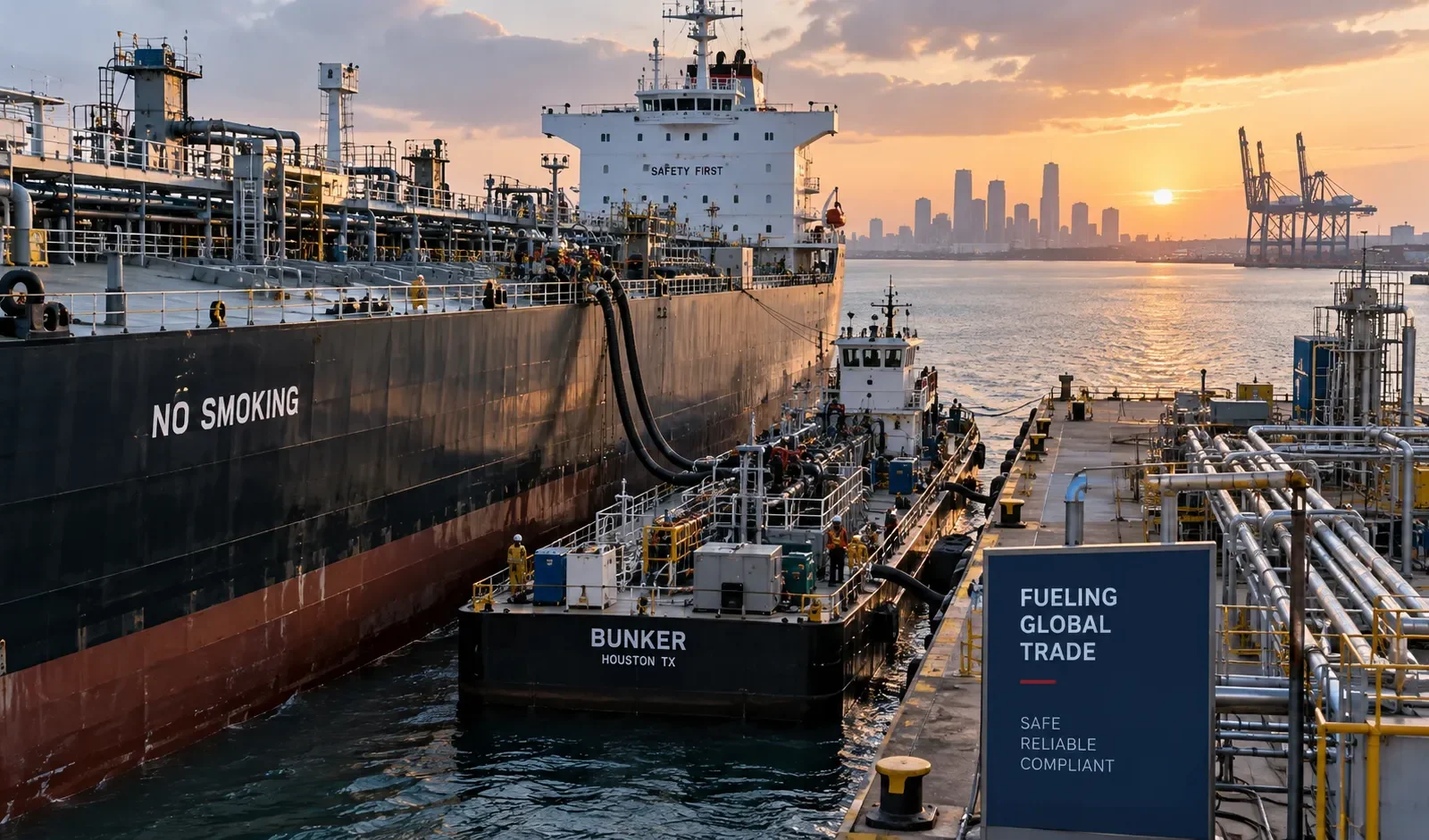
Iran shipping sanctions are tightening again, and the next operational deadline is 23 September 2026. The US Treasury’s Office of Foreign Assets Control (OFAC) has indefinitely suspended a general authorisation that covered certain bunkering, bunkering services and emergency repairs provided in the United States to qualifying non-Iranian carriers transporting passengers or goods to or from Iran.
OFAC’s General License DD provides only a short wind-down window. It expires at 12:01 a.m. Eastern Daylight Time on 23 September 2026 — 04:01 UTC. After that point, transactions that are otherwise prohibited under the Iranian Transactions and Sanctions Regulations can no longer rely on the suspended authorisation or the GL DD wind-down, unless another authorisation applies or OFAC grants a specific licence.
The change matters because sanctions compliance can move directly into voyage planning. A carrier with Iran-linked carriage may still face questions about where it can bunker, where an urgent repair can be arranged, which service providers are willing to participate and whether a planned US call remains commercially workable.
For shipowners, operators, liner companies, charterers, bunker procurement teams and technical managers, the important point is not the headline alone. It is whether a transaction that would previously have relied on 31 CFR § 560.529 still has a valid legal basis after the wind-down expires.
Iran Shipping Sanctions: What Changed on 8 September?
On 8 September, OFAC announced the further indefinite suspension of several Iran-related general licences and licensing provisions under the Iranian Transactions and Sanctions Regulations.
One of them was 31 CFR § 560.529 — “Bunkering and emergency repairs.” That provision had authorised certain goods and services to be supplied in the United States to a non-Iranian carrier transporting passengers or goods to or from Iran, including qualifying bunkers, bunkering services and emergency repairs.
At the same time, OFAC issued General License DD. GL DD allows transactions that are ordinarily incident and necessary to wind down business previously authorised under specified provisions, including § 560.529, through 12:01 a.m. EDT on 23 September.
The official OFAC documents are clear on the sequence:
- 8 September: § 560.529 was suspended indefinitely.
- 8–23 September: GL DD allows a limited wind-down for transactions previously authorised under the suspended provision, subject to its conditions.
- After 23 September: otherwise prohibited transactions can no longer rely on § 560.529 or the GL DD wind-down.
OFAC published the suspension notice and General License DD as part of a broader Iran sanctions action. The agency also updated its Iran-specific licensing policy on 10 September, stating that specific licence applications are generally being considered under a presumption of denial, except where required by law or in certain circumstances such as risk to life, limb or environmental safety.
The 23 September Deadline: What Actually Ends?
The deadline does not mean that every ship that has traded with Iran becomes prohibited from receiving bunkers worldwide.
That would be an inaccurate reading.
The direct legal issue is narrower. The suspended US authorisation concerned certain goods and services provided in the United States to qualifying non-Iranian carriers transporting passengers or goods to or from Iran.
GL DD gives companies a temporary route to wind down transactions that had relied on that authorisation. Once GL DD expires, the old general-authorisation route is no longer available for otherwise prohibited transactions.
| Issue | Before the suspension | 8–23 September | After 23 September |
|---|---|---|---|
| § 560.529 | General authorisation available subject to its terms | Suspended; GL DD permits limited wind-down | No reliance on the suspended general authorisation |
| Bunkering / repairs | Could fall within § 560.529 where all conditions were met | Wind-down only where GL DD applies | Another authorisation or specific licence may be required |
| Operational response | Normal sanctions screening | Identify affected transactions and complete lawful wind-down | Transaction-specific legal and compliance review |
Why the Rule Matters to Ship Operators
A ship does not trade in a legal vacuum. A single voyage can connect cargo owners, charterers, banks, bunker suppliers, port agents, repair contractors, insurers, flag states and technical managers across several jurisdictions.
That is why a narrow sanctions change can create a much wider operational problem.
A vessel may load or discharge cargo connected with Iran and later form part of a multi-leg service that includes the United States. Another ship may need an unexpected technical intervention after its commercial schedule has already been fixed. A liner operator may have vessels rotating through several countries under the same network.
In each case, the relevant question becomes:
Can the planned US service still be lawfully provided, and if not, what alternative authorisation or operational arrangement is available?
For companies trading around the Gulf, this sanctions layer sits on top of an already difficult operating environment. Tide Signal’s live Strait of Hormuz shipping status shows how physical passage, insurance, vessel availability and compliance can all constrain a voyage even when the waterway remains technically passable.
Four Operational Scenarios That Need Review
1. US bunkering after Iran-linked carriage
Bunker procurement is normally driven by price, availability, consumption, route and remaining-on-board calculations. Sanctions can override all five.
If a planned US bunker stem would previously have relied on § 560.529, the procurement team should not assume the same arrangement remains available after 23 September.
A change in bunker port can affect:
- fuel price and supplier availability;
- minimum remaining-on-board levels;
- deviation distance and voyage time;
- port sequence;
- charterparty obligations;
- arrival drafts and cargo planning;
- overall voyage margin.
Tide Signal’s Voyage Margin Calculator illustrates how additional bunker and voyage costs can alter the commercial result even when freight revenue is unchanged.
2. Emergency repairs in the United States
Emergency repairs are more sensitive because they may arise after the original voyage plan has already broken down.
Machinery defects, collision damage, cargo-system failures or safety-critical equipment problems can force a company to make decisions with little notice. The suspension of the old authorisation means operators should not treat previous access to qualifying US emergency-repair services as automatic.
OFAC’s updated licensing policy is especially relevant here. While Iran-related specific licence applications are generally subject to a presumption of denial, OFAC identifies limited circumstances including risks to life, limb and environmental safety.
That makes early escalation to legal, compliance and technical management important where safety is involved.
3. Multi-leg liner and tramp schedules
The rule may be particularly relevant to carriers whose schedules connect Iran-related carriage with future US service requirements.
The practical risk is not simply the Iranian port call itself. It is the chain of commercial commitments that follows: bunker nominations, agency appointments, repair bookings, cargo deadlines and subsequent employment.
For chartering teams, this is another example of why the signed contract matters. Tide Signal’s guide to charterparty structures explains how voyage costs, time risk and commercial control move differently under voyage, time and bareboat arrangements.
4. Unexpected services that were not foreseeable before departure
Section 560.529 also covered certain services required because of circumstances that could not reasonably have been anticipated before departure for the United States.
That category matters in shipping because unforeseen events are not rare. Weather damage, machinery faults, cargo problems, steering defects, pollution-prevention issues or class-related findings can all emerge after departure.
Companies with relevant Iran exposure should therefore understand in advance who will make the sanctions decision if an urgent US service is required.
Iran Shipping Sanctions Are Becoming a Voyage-Planning Issue
The September change is part of a broader tightening of US pressure on Iran-linked trade.
OFAC’s maritime guidance already identifies sanctions exposure across shipping companies, vessel owners, managers, operators, insurers, port operators, port-service providers and financial institutions. It also highlights deceptive practices such as complex ownership structures, repeated ship-to-ship transfers, falsified cargo documentation and AIS manipulation.
Those risks do not mean that every unusual voyage pattern is unlawful. They do mean that normal commercial due diligence can become insufficient when the ownership chain, cargo origin or counterparty history is unclear.
Tide Signal’s earlier report on Hormuz shipping and US Iran sanctions examined how financial and compliance restrictions can reduce the number of commercially workable voyages even when vessels remain physically capable of sailing.
The current bunkering change brings the same principle into the service side of shipping.
Why This Can Affect Freight, Not Just Compliance
Sanctions restrictions can ultimately change the effective supply of ships available for a trade.
A vessel may be physically suitable but rejected because its trading history creates compliance uncertainty. A bunker supplier may decline the stem. A bank may refuse the payment route. An insurer may require additional review. A shipowner may reject employment because it complicates the vessel’s next voyage.
The result is a smaller pool of tonnage that is simultaneously:
- available;
- acceptable to the charterer;
- insurable;
- bankable;
- sanctions-compliant;
- and willing to perform the trade.
That is one reason geopolitical and sanctions risk can move into freight. Tide Signal’s Worldscale guide explains how tanker freight benchmarks work, while the war-risk premium guide shows how security and insurance costs can change voyage economics even before a vessel sails.
What This Rule Does Not Mean
This is not a blanket worldwide ban on bunkering every vessel that has traded with Iran.
The suspended authorisation concerns specific US-provided goods and services and applies within the wider Iranian Transactions and Sanctions Regulations. The legal position of any vessel or transaction depends on the facts, counterparties, ownership, cargo, payments, services and other sanctions authorities involved.
That distinction matters for accuracy and for commercial decision-making.
It would be wrong to tell an operator that “an Iran call automatically blocks all future bunkering.” It would be equally risky to assume that nothing has changed because the ship itself is not designated.
The correct approach is transaction-specific review.
Operator Checklist Before 23 September
Companies with Iran-related carriage and potential US exposure should consider reviewing the following before the GL DD wind-down closes:
- Identify affected voyages: map current and upcoming carriage to or from Iran.
- Review US calls: identify any scheduled or possible US port calls after Iran-linked carriage.
- Check bunker plans: verify whether any US bunker stem relied on the suspended authorisation.
- Review repair exposure: identify planned maintenance and contingency arrangements for unexpected defects.
- Screen counterparties: vessel owner, manager, charterer, cargo interests, agent, supplier, bank and beneficial ownership.
- Verify cargo history: confirm origin, destination and supporting documents where sanctions risk is elevated.
- Check payment routes: confirm that banks and intermediaries remain willing and legally able to process the transaction.
- Escalate unclear cases: obtain qualified sanctions advice before committing the vessel or service provider.
- Document the decision: keep a clear compliance record showing the information reviewed and basis for approval.
What Shipping Companies Should Watch After the Deadline
Specific licensing decisions
The market will watch how OFAC applies its updated licensing policy in practice, especially in safety-critical cases.
US bunker and repair-provider policies
Service providers may adopt internal risk rules that are stricter than the minimum legal requirement. Commercial access can therefore narrow even without a new formal prohibition.
Bank and insurer behaviour
Financial institutions and insurers may increase screening of vessels with Iran-linked trading histories, particularly where beneficial ownership, cargo documentation or payment chains are complex.
Further sanctions and designations
OFAC continues to issue Iran-related actions and advisories. Operators should treat the 23 September deadline as one development inside a broader sanctions campaign, not as the end of the compliance story.
The latest security environment also matters. A fresh Strait of Hormuz ship attack on 13 September underlined that sanctions, physical security, insurance and voyage economics are now overlapping rather than operating as separate risks.
The 23 September deadline is not a global bunker ban. It is a removal of a standing US authorisation that previously gave certain qualifying transactions a clearer route through the sanctions framework.
For operators, the commercial consequence is straightforward: where a voyage combines Iran-related carriage with US bunkering, emergency-repair or other service needs, sanctions review now moves earlier in the voyage-planning process.
Iran Shipping Sanctions FAQ
What changes on 23 September 2026?
General License DD’s wind-down authorisation expires at 12:01 a.m. EDT on 23 September. Transactions previously authorised under § 560.529 that are otherwise prohibited under the ITSR can no longer rely on the suspended provision or the GL DD wind-down after that time.
Does the change ban all ships trading with Iran from bunkering?
No. The suspended provision concerned certain goods and services provided in the United States to qualifying non-Iranian carriers transporting passengers or goods to or from Iran. It should not be described as a worldwide bunker ban.
What did 31 CFR § 560.529 cover?
It covered qualifying bunkers, bunkering services, emergency repairs and certain unexpected requirements supplied or performed in the United States for non-Iranian carriers transporting passengers or goods to or from Iran, subject to the provision’s conditions and restrictions.
Can emergency repairs still be authorised after 23 September?
Potentially, depending on the facts and available legal authority. OFAC’s current Iran-specific licensing policy generally applies a presumption of denial to specific licence applications but identifies limited circumstances including risks to life, limb or environmental safety. Companies should obtain specialist advice for individual cases.
Does the change apply to bunkering outside the United States?
The direct scope of the suspended § 560.529 authorisation concerns goods and services provided in the United States. Wider commercial effects may still occur through routing changes, counterparty policies, banking, insurance and subsequent voyage planning.
Who should review the rule?
Shipowners, operators, liner companies, charterers, managers, bunker procurement teams, technical departments, port agents and compliance teams with Iran-related carriage and potential US service exposure should assess whether planned transactions relied on the suspended authorisation.
Official Sources and Further Reading
- US Treasury / OFAC — Iran-related actions, 8 September 2026
- OFAC — Iran General License DD
- OFAC — Suspension of Certain ITSR General Licenses
- OFAC — Iran licensing policy update, 10 September 2026
- OFAC — Guidance for Shipping and Maritime Stakeholders on Iranian Oil Sanctions Evasion