Shipping through the Strait of Hormuz is approaching a virtual standstill as Washington prepares a new sanctions announcement targeting Iran, adding another layer of financial and compliance risk to an already severely disrupted maritime corridor.
Iran rejected the expected measures on Sunday, while ship traffic, tanker availability and oil flows through the waterway remained far below normal levels. The next market-moving signal is expected on Monday, when the United States Treasury is due to outline the new sanctions package.
Developing story
This report reflects confirmed information available at 12:25 UTC on 23 August 2026. The scope of the proposed U.S. sanctions had not been released at publication. Tide Signal will distinguish announced measures from market expectations as further details emerge.
Strait of Hormuz Shipping: The Latest Position
Iranian Foreign Minister Abbas Araqchi dismissed the threat of new U.S. sanctions as ineffective on Sunday, responding to an announcement expected from Treasury Secretary Scott Bessent on Monday. Reuters reported that Bessent is due to hold a press conference at 14:00 EDT, or 18:00 UTC, and has described the coming measures as the “toughest sanctions in history”.
The final designations, entities and enforcement guidance were not public at the time of writing. That distinction matters. The confirmed news is that a sanctions announcement is scheduled and that Iranian officials have responded. It is not yet known whether the package will name additional tankers, ship managers, trading companies, banks, refiners, insurers or port-service providers.
What is already clear is the maritime setting in which the announcement will land. Reuters described shipping through the Strait of Hormuz as being at a virtual standstill. Official and government-backed datasets also show that traffic and oil movements remain dramatically below their pre-conflict levels.
Hormuz risk snapshot
Sources: UKMTO/JMIC week ending 21 August 2026 and U.S. Energy Information Administration. AIS-silent transits are not captured in the UKMTO traffic estimate.
Traffic Was Already Far Below Normal
The latest UKMTO Voluntary Reporting Area overview, covering the week ending 21 August, said AIS-detected transit traffic through Hormuz was approximately 90% below the pre-conflict baseline.
That figure should be read carefully. It does not capture ships operating without visible AIS transmissions, and it is not identical to cargo volume. It does, however, show the scale of the behavioural change among owners and operators. UKMTO observed vessels abandoning intended transits or favouring a northern route following projectile attacks and heightened enforcement activity.
Tanker traffic accounted for 45% of the remaining vessel movements detected by UKMTO. Chemical, product and crude tankers represented 56% of that tanker traffic, while LPG carriers accounted for a further 24%. The agency also recorded 23 reported projectile-strike incidents in and around the strait since 6 July and maintained a severe threat assessment for Hormuz.
The physical threat remains central, but it is no longer the only constraint. Sanctions, payments, counterparty screening, insurance terms and naval enforcement can prevent a voyage from proceeding even when a navigable route technically exists.
That is why the Strait of Hormuz cannot be assessed as simply open or closed. Tide Signal’s guide to maritime chokepoints explains how disruption at a narrow passage can spread into vessel supply, bunker consumption, cargo timing and freight markets well beyond the immediate region.
Oil Flows Show the Scale of the Disruption
The U.S. Energy Information Administration estimates that crude oil and petroleum liquids moving through Hormuz averaged 4.9 million barrels per day in the second quarter of 2026. Before the conflict, the comparable figure averaged 21.6 million barrels per day in the fourth quarter of 2025.
The EIA’s current outlook assumes shipments through the strait will remain severely constrained through August and begin increasing only gradually in September. It also estimates that production shut-ins averaged 5.5 million barrels per day in July, while global inventories continued to fall.
These are not abstract energy statistics. Lower cargo flow changes the employment pattern of the tanker fleet. It affects which ships are positioned inside or outside the Gulf, where charterers can find compliant tonnage, how owners price voyage exposure and how refiners secure replacement barrels.
Alternative routes and pipelines can absorb part of the disruption, but the EIA notes that they are slower, more expensive and limited in capacity. The result is a market in which cargo origin, loading location, ship identity, beneficial ownership, payment route and insurance approval can all become decisive.
Why New Iran Sanctions Are a Shipping Story
Sanctions aimed at Iranian oil revenue are implemented through a maritime chain. A cargo needs a seller, buyer, trader, ship, manager, flag, insurer, classification relationship, bank, payment channel, terminal and sometimes a ship-to-ship transfer. Pressure applied at any one of those points can delay or stop the movement.
Earlier U.S. Treasury statements have said the department is targeting the vessels, intermediaries and buyers used to move Iranian oil. If Monday’s package expands that approach, the immediate maritime consequences could include additional vessel screening, rejected payments, cancelled fixtures, withdrawal of services and more cargo being pushed toward opaque ownership or trading structures.
The announcement could therefore affect ships that never call at an Iranian port. Banks, charterers, brokers, insurers and service providers may pause a transaction when the ownership chain, cargo origin or counterparty exposure is unclear. That produces delay before any formal enforcement action is taken.
Potential maritime transmission channels
- Vessel designations: named ships can lose access to finance, insurance, ports and counterparties.
- Buyer exposure: refiners and traders may face secondary-sanctions risk.
- Payment disruption: banks may reject or delay transactions linked to designated entities.
- Service withdrawal: managers, registries, class and insurers may reassess relationships.
- Freight repricing: compliant and positionally suitable tonnage may command a larger premium.
These are potential transmission mechanisms, not a claim that each will appear in Monday’s package.
China Is Central to the Next Stage
China purchased more than 80% of Iran’s seaborne oil in 2025, according to Kpler data cited by Reuters. That makes Chinese refiners, traders, banks and shipping networks central to the practical effect of any new U.S. action.
The key question is whether Washington focuses on Iranian entities alone or expands pressure on third-country buyers and facilitators. A narrow list of additional designations would have a different market effect from measures that directly threaten access to the U.S. financial system for non-Iranian counterparties.
There is also a fleet-quality dimension. When established service providers withdraw from sanctioned trade, cargoes may migrate toward older ships, complex ownership chains, flag changes, irregular AIS behaviour or higher-risk ship-to-ship activity. None of those features proves sanctions evasion by itself, but together they increase due-diligence demands across the market.
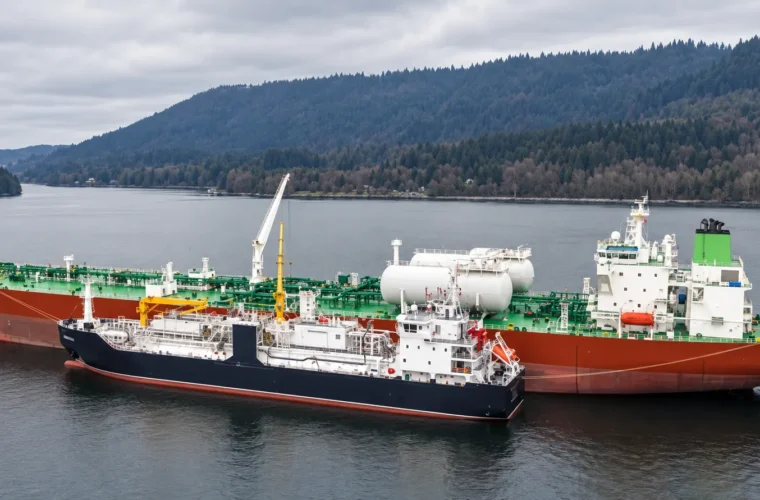
For a practical explanation of how cargo can move between tankers outside a conventional terminal call, see Tide Signal’s guide to ship-to-ship operations and tanker transfers.
Freight, Insurance and Chartering Exposure
The freight impact does not depend only on the total number of ships in the world fleet. What matters is the number of vessels that are in the right position, acceptable to the charterer, insurable for the voyage and clear of sanctions or ownership concerns.
That pool can contract quickly. Owners may refuse Gulf exposure. Insurers may require additional approval or change terms. Banks may decline payment routes. Charterers may reject ships with complicated histories. Even vessels willing to proceed can face waiting time, altered routes or operational instructions that reduce effective fleet capacity.
Recent fixtures have already shown how this scarcity can change tanker economics. Tide Signal’s analysis of the reported $25 million VLCC voyage illustrated how security risk and limited available tonnage can move freight far beyond conventional benchmarks.
The latest sanctions threat may reinforce that pressure even without a new attack. Physical danger raises the risk of the voyage; financial restrictions reduce the number of legally and commercially workable transactions. When the two operate together, the effect can be larger than either one alone.
The same interaction is visible in Tide Signal’s coverage of the ADNOC vessel attacks and Hormuz chartering risk, where repeated incidents were already changing availability, war-risk cost and commercial decision-making.
What the Market Must Watch on Monday
The headline size of the sanctions package will matter less than its operational detail. Shipping and commodity desks should look for five points:
- Who is designated? Tankers, owners, managers, traders, refiners, banks and port-service companies carry different operational consequences.
- Are third-country buyers targeted? Direct pressure on non-Iranian purchasers could have a greater effect on cargo flows than additional Iranian designations alone.
- Are wind-down periods or licences provided? Cargo already loaded or contracts already concluded may be treated differently from new business.
- How will enforcement work? Market reaction will depend on whether measures rely mainly on financial restrictions, vessel designation, port controls or maritime interception.
- How does Iran respond? The shipping impact will depend on whether Tehran’s response remains rhetorical or changes access, routing or security conditions in the strait.
Operational Watchlist for Owners and Charterers
| Signal | Why it matters |
|---|---|
| OFAC designations | May change whether a ship, owner, buyer or payment route remains acceptable. |
| UKMTO/JMIC alerts | Provide the current security picture, threat level and official reporting guidance. |
| AIS route behaviour | Aborted transits, waiting areas and route shifts reveal real operator confidence. |
| War-risk terms | Premiums, exclusions and notice requirements can determine whether the voyage proceeds. |
| China response | Buyer and banking behaviour will be critical to the effect on Iranian seaborne oil. |
Owners and charterers should not treat public vessel-tracking data as a complete operating picture. AIS gaps, delayed data and silent transits limit what can be concluded from open sources. Voyage decisions must remain grounded in company security assessments, flag and coastal-state instructions, insurer approval, charterparty terms and the master’s judgement.
What Has Not Yet Been Confirmed
No final sanctions list had been published when this report was prepared. There is no confirmed basis yet to say that Monday’s action will designate a specific ship, Chinese buyer, insurer, flag registry or port. There is also no new UKMTO incident underlying Sunday’s sanctions headline.
Those limits are important. The immediate story is a coming financial-policy escalation against the background of severely reduced traffic. Any claim that a particular company or vessel has already been targeted would be premature until the U.S. Treasury publishes the legal instruments and identifying information.
Tide Signal view
The next phase of the Hormuz crisis may be driven as much by compliance as by firepower. Physical attacks have already reduced confidence and traffic. A sanctions package that reaches vessels, buyers or payment channels could shrink the pool of workable voyages further—without a single additional projectile being fired.
Strait of Hormuz Standstill: Frequently Asked Questions
Is the Strait of Hormuz officially closed?
The strait should not be described simply as legally closed. Some vessels continue to move, but Reuters described traffic as being at a virtual standstill and UKMTO data show AIS-detected transits at approximately 90% below the pre-conflict baseline.
When will the United States announce the new Iran sanctions?
U.S. Treasury Secretary Scott Bessent is expected to hold a press conference at 14:00 EDT, or 18:00 UTC, on Monday. The final measures had not been published at the time of this report.
Why do Iran sanctions affect shipping?
Iranian oil exports depend on ships, owners, managers, traders, banks, insurers, buyers and terminals. Sanctions targeting any part of that chain can prevent a cargo movement from remaining legally or commercially workable.
How far have oil flows through Hormuz fallen?
The EIA estimates that oil and petroleum-liquids flows averaged 4.9 million barrels per day in Q2 2026, down from 21.6 million barrels per day in Q4 2025 before the conflict.
What should shipping companies monitor next?
Companies should monitor the final U.S. Treasury designations, UKMTO and JMIC guidance, war-risk insurance terms, vessel-route behaviour, payment restrictions and any operational response from Iran.
Sources and Further Reading
- Reuters: Iran responds to expected new U.S. sanctions as Hormuz shipping stalls
- UKMTO/JMIC: Voluntary Reporting Area overview, week ending 21 August 2026
- U.S. Energy Information Administration: Global oil markets and Hormuz flow estimates
- U.S. Treasury: Previous remarks on Iran-linked vessels, intermediaries and buyers
- International Maritime Organization: Middle East and Strait of Hormuz updates
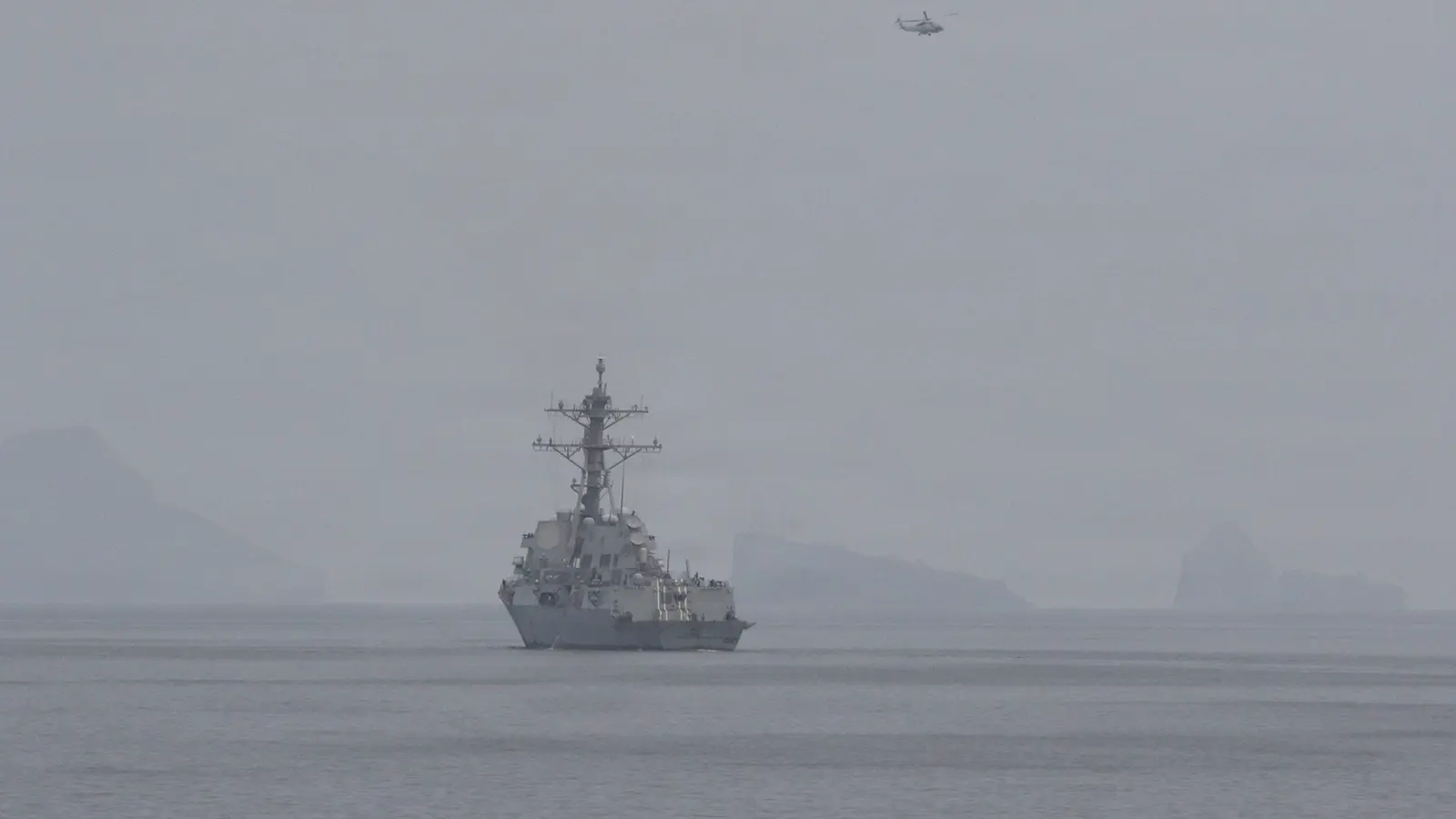
Featured image: U.S. naval forces operating near the Strait of Hormuz on 11 April 2026 during mine-clearance preparations. U.S. Central Command photo by NAVCENT Public Affairs via DVIDS. Public domain. File image; it does not depict the sanctions announcement described in this article. Cropped, resized and converted to WebP by Tide Signal.