

Decarbonisation
FuelEU Maritime Pooling: Why Compliance Is Becoming a Trading Decision
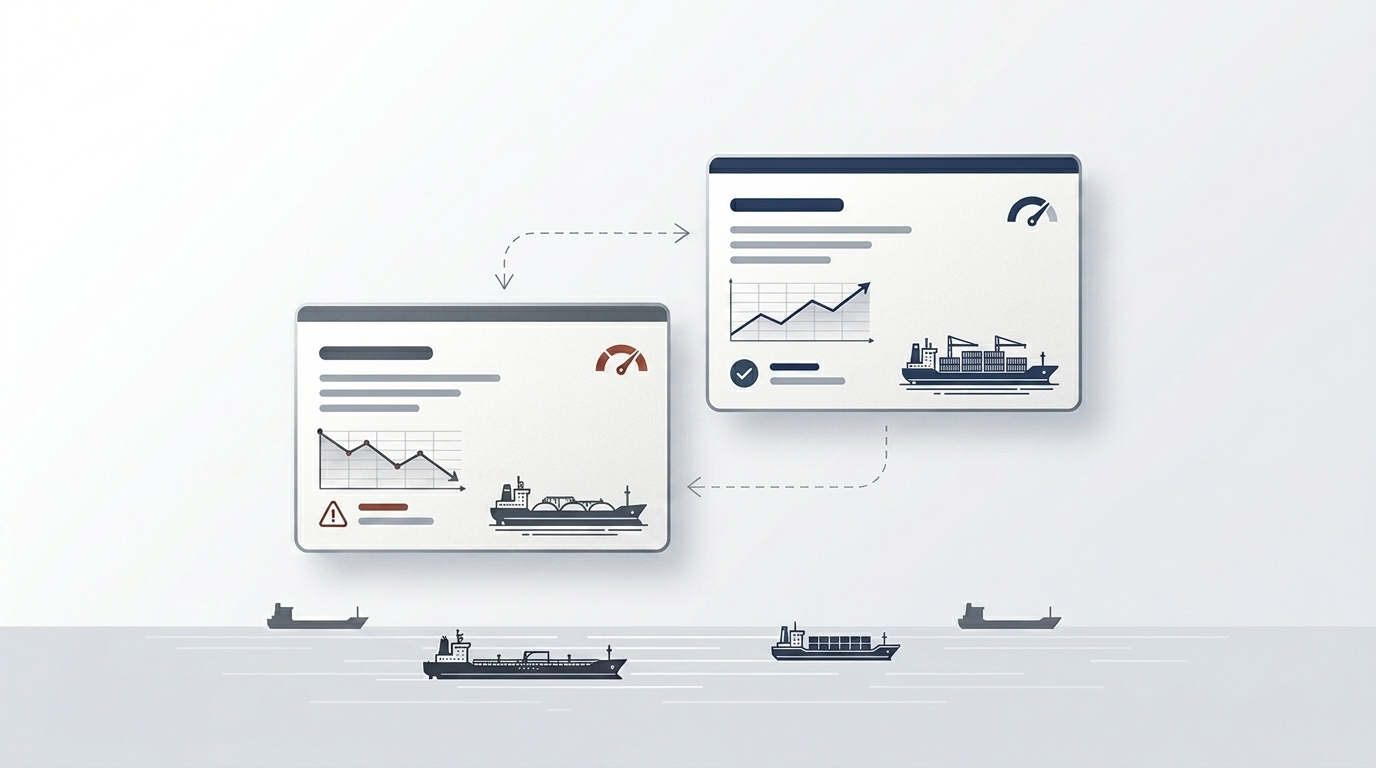
FuelEU Maritime pooling is creating a new commercial layer in shipping, where compliance surplus, deficits and penalties can affect owners, charterers, operators and fleet strategy.
FuelEU Maritime is no longer only a regulatory topic. As the first compliance cycle develops, owners and charterers are starting to treat compliance balances as commercial exposure. The key issue is not simply whether a vessel meets a greenhouse gas intensity target. It is whether a company has a deficit, a surplus, a penalty risk or an opportunity to use pooling.
That is why FuelEU Maritime pooling matters. It allows compliance balances from different vessels to be managed together, so that a surplus from one ship may help offset a deficit from another. In practice, this can turn compliance into a trading decision rather than a simple back-office reporting exercise.
What FuelEU Maritime Pooling Means
FuelEU Maritime sets greenhouse gas intensity requirements for the energy used on board ships calling at European Economic Area ports. The regulation applies to relevant ships above 5,000 gross tonnage, regardless of flag, when they fall within the regulation’s scope.
Pooling is one of the flexibility mechanisms inside the system. A vessel with a positive compliance balance may be grouped with one or more vessels with weaker performance, provided the pool as a whole satisfies the required limits.
For shipping companies, this changes the conversation. A vessel is not just compliant or non-compliant in isolation. Its compliance balance may have value inside a fleet, across related companies or potentially through commercial arrangements with counterparties.
Why Pooling Is Becoming Commercial
The commercial value of pooling comes from the difference between surplus and deficit. A ship using lower-carbon fuels or operating with a better compliance profile may generate a positive balance. Another ship may generate a deficit. Pooling creates a mechanism to manage the two together.
This does not automatically make compliance simple. It creates new questions: who owns the surplus, who pays for the deficit, who decides whether to pool, and how the value is reflected in charterparty terms, ship sale negotiations or fleet planning.
The New Language: Surplus, Deficit and Balance
The language of FuelEU Maritime is increasingly financial. Companies are not only talking about emissions. They are talking about balances, penalties, banking, borrowing, pooling and cost allocation.
That matters because the regulation can influence commercial behaviour before a penalty is actually paid. A ship with weak FuelEU exposure may become less attractive in certain trades. A vessel with better compliance potential may become more valuable within a fleet, especially if its surplus can support other vessels.
| Term | Commercial meaning | Why it matters |
|---|---|---|
| Compliance surplus | A vessel performs better than required. | May support pooling or future compliance strategy. |
| Compliance deficit | A vessel falls short of the requirement. | May create penalty exposure or need offsetting. |
| Pooling | Balances are managed across more than one vessel. | Can reduce risk if the pool remains compliant overall. |
| Cost allocation | Who pays or benefits from the compliance result. | Becomes important in charterparties and fleet decisions. |
Why Charterparty Clauses Matter
FuelEU Maritime pooling is not only an operational issue for technical departments. It can affect charterparty negotiations. If a charterer controls employment, fuel choices and voyage patterns, the owner may not want to carry all compliance consequences alone.
This is why contract wording becomes important. Charterparty clauses may need to address whether the charterer can instruct banking or pooling, how compliance data is shared, what happens at redelivery, and who carries the economic impact of any deficit.
The issue connects directly with broader commercial risk in shipping. Just as bunker costs can change the final result of a voyage, FuelEU exposure can change the true commercial outcome of a fixture. For a related view, read Tide Signal’s analysis of voyage chartering and bunker exposure.
Owners: From Compliance Cost to Fleet Strategy
For owners, pooling may become part of fleet strategy. A company with a mixed fleet may use stronger vessels to support weaker vessels. That can influence fuel procurement, vessel deployment, retrofit priorities and long-term asset planning.
The strongest commercial position will likely belong to companies that understand their compliance balance early. Waiting until the end of a reporting period may leave fewer options. Good data, verified reporting and clear internal responsibility are therefore essential.
Commercial Risks to Watch
- Late visibility: companies discover deficits too late to manage them efficiently.
- Weak clauses: charterparties do not clearly allocate FuelEU costs or benefits.
- Data gaps: poor voyage and fuel data creates uncertainty in compliance balances.
- Pool management risk: surplus and deficit allocation is not agreed early enough.
- Asset value impact: vessels with weaker compliance profiles may face discount pressure.
Charterers: Control Creates Responsibility
Charterers may also be affected. If they influence fuel choice, vessel employment, speed or trade pattern, they may be asked to carry part of the FuelEU exposure. In time charter situations, this can become especially important because operational decisions during the charter period may affect the compliance result.
This does not mean charterers will always carry the full cost. It means the question will become negotiable. The stronger the operational control, the stronger the argument for commercial allocation.
Why This Is Not Just a Compliance Department Issue
FuelEU Maritime pooling sits between regulation, operations, finance and chartering. A technical department may calculate the exposure, but the commercial department may need to price it. Finance teams may need to understand its effect on asset quality, while chartering teams may need to reflect it in fixture terms.
This is the same broader direction already visible in shipping finance. Carbon exposure is no longer separate from capital decisions. For more background, see Tide Signal’s analysis of shipping finance and carbon risk.
Data Quality Will Decide Who Handles It Well
Pooling depends on reliable data. If a company does not trust its fuel consumption data, voyage records, emissions inputs or reporting workflow, it cannot confidently manage compliance balances. This makes FuelEU pooling another example of why maritime digitalisation must start with data quality.
Companies with structured reporting and clear ownership of data will be better placed to decide whether to bank, borrow, pool or pay. Companies with fragmented spreadsheets and unclear workflows may struggle to act before deadlines.
For a wider digital view, read Tide Signal’s article on maritime data quality and why poor data limits digital shipping decisions.
What Shipping Companies Should Check
- Which vessels are expected to generate a FuelEU surplus or deficit?
- Who controls fuel choice, voyage profile and operational decisions?
- Are charterparty clauses clear on compliance costs and benefits?
- Can the company see compliance balances before the end of the period?
- Is there a strategy for pooling, banking, borrowing or penalty exposure?
- Are reporting workflows strong enough for verification and commercial decisions?
What to Watch Next
The market will watch how quickly FuelEU Maritime pooling becomes priced into fixtures, fleet deployment and asset discussions. The first practical compliance cycles will reveal whether companies treat pooling as a narrow regulatory option or as a wider commercial tool.
The most important development may not be the regulation itself, but how the industry builds the commercial language around it. Once surplus, deficit and pooling become part of negotiation, FuelEU Maritime will have moved from compliance into the centre of shipping business decisions.
Final View
FuelEU Maritime pooling is a sign of where decarbonisation is heading. Carbon rules are no longer just technical obligations. They are becoming commercial variables that can affect chartering, finance, operations and asset value.
For owners and charterers, the question is not only how to comply. It is how to manage the value and risk created by compliance balances. In that sense, FuelEU Maritime pooling is not just a regulatory mechanism. It is becoming a trading decision.
Sources and Further Reading
This article is based on public regulatory and industry information from the European Commission FuelEU Maritime page, EMSA FuelEU Maritime guidance, BIMCO FuelEU Maritime Clause for Time Charter Parties and DNV FuelEU Maritime insights.