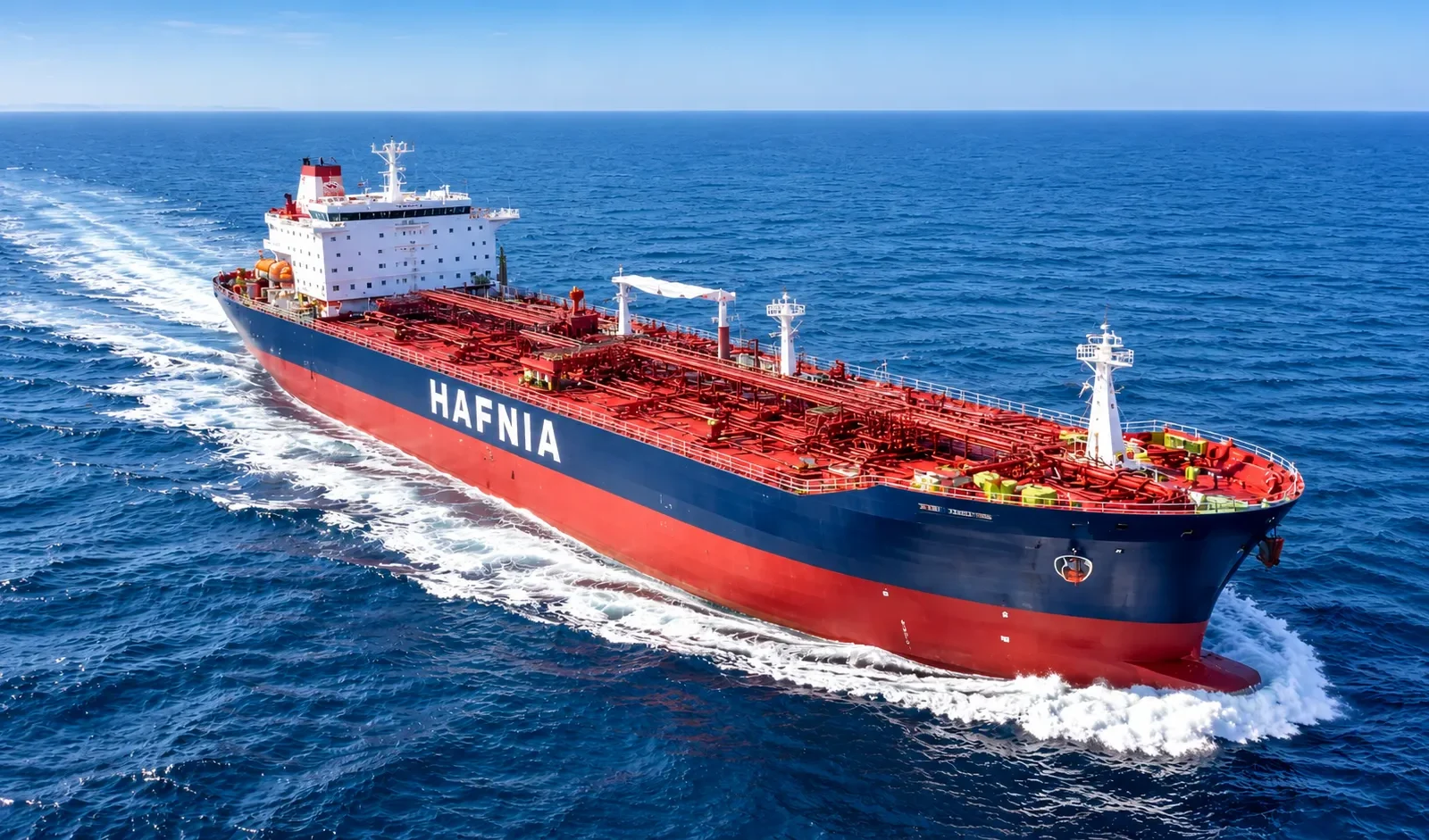
Asia’s MR product-tanker market has climbed to multi-year highs as exceptionally strong diesel exports tighten Pacific vessel availability and push regional earnings sharply above Atlantic levels.
For related Tide Signal market analysis, see US Diesel Export Ban: What It Could Mean.
The latest market data show the Singapore–Australia MR trade returning around $56,523 per day, India–Japan at approximately $41,349 per day and the Baltic Pacific MR basket at roughly $67,318 per day.
At the same time, Asian diesel exports reached about 3.3 million barrels per day during the latest reported week, the highest weekly average in the available Vortexa series dating back to January 2016.
The Pacific MR market is significantly outperforming the Atlantic as strong Asian middle-distillate exports create more cargo while longer voyages absorb vessels for additional days.
The widening regional spread shows that tanker supply is not simply a question of how many MR vessels exist globally. Where those ships are positioned has become one of the most important pricing variables in the market.
The current rally is being driven by a combination of record Asian diesel exports, strong cargo demand, longer voyage patterns and limited prompt vessel availability in the Pacific. When more product moves by sea — particularly over longer distances — vessels remain employed for more days and the effective supply available for the next cargo becomes tighter.
Asia MR Tanker Rates Reach Multi-Year Highs
Asia’s medium-range product-tanker market has moved into one of its strongest periods in years.
The Singapore–Australia MR benchmark has risen to around $56,523 per day, its highest level since December 2022.
The India–Japan MR route has climbed to approximately $41,349 per day, the strongest level since January 2024.
Meanwhile, the broader Baltic Pacific MR basket has reached roughly $67,318 per day.
The significance of those numbers becomes clearer when compared with the Atlantic.
Pacific MR earnings are currently running at close to twice the equivalent Atlantic basket, highlighting a sharp geographical split inside the global clean-tanker market.
Why Diesel Exports Matter for Product Tankers
Tanker demand does not increase because diesel prices rise.
It increases when physical product enters seaborne trade.
Asia exported around 3.3 million barrels per day of diesel during the latest reported week, according to Vortexa data cited in current tanker-market reporting.
That was the highest weekly average in the available series beginning in January 2016.
The figure matters because more exportable diesel can translate into more cargoes competing for tanker capacity.
But volume alone does not determine freight.
The destination of those barrels can be even more important.
Longer Voyages Absorb More Tanker Capacity
Shipping demand is fundamentally different from commodity demand.
A tonne of diesel moving a short distance and a tonne moving halfway around the world count equally in customs statistics.
They do not create the same tanker demand.
A longer voyage absorbs the vessel for more days.
That means fewer ships remain available for subsequent cargoes.
The important commercial equation is therefore not simply export volume.
Cargo volume × voyage distance × vessel-days × available tonnage determines far more about freight pressure than export volume alone.
If replacement diesel cargoes increasingly move from Asia toward Africa, Europe or other deficit regions, the tanker-market impact can become much larger than the headline export number suggests.
Pacific MR Earnings Are Pulling Away From the Atlantic
The widening spread between Pacific and Atlantic MR returns is one of the most important signals in the current market.
The Pacific MR basket at approximately $67,318 per day is close to twice the Atlantic level.
That difference creates strong incentives for owners to position vessels toward Asia.
But tanker supply cannot react instantly.
An MR vessel in the Atlantic must spend time and fuel repositioning before it can compete for a Singapore, Indian or Northeast Asian cargo.
The vessel may also arrive after the strongest fixing window has passed.
Singapore–Australia MR Earnings Reach $56,523 per Day
The Singapore–Australia MR trade is currently returning approximately $56,523 per day.
That is the highest reported level since December 2022.
Singapore remains one of the most important refined-product trading and bunkering centres in Asia, making the route a useful indicator of Southeast Asian MR market strength.
The current earnings level suggests that cargo demand is competing aggressively for prompt tonnage.
Actual vessel economics vary between fixtures.
Bunker prices, vessel consumption, port costs, commissions, waiting time and individual charter terms can all change the owner’s final TCE.
But the benchmark direction is clear: prompt MR tonnage in the Pacific has become considerably more valuable.
India–Japan MR Earnings Reach Highest Level Since January 2024
The India–Japan MR route has strengthened to approximately $41,349 per day.
That is its highest level since January 2024.
India is particularly important to the product-tanker market because of its large export-oriented refining sector.
Indian refiners can supply buyers across Asia while also sending products toward Africa and Europe when arbitrage economics support longer-haul movements.
Those longer voyages can create much greater vessel demand than short regional cargoes.
Why Destination Matters More Than the Headline Export Number
| Market Factor | Why It Matters |
|---|---|
| Export volume | More physical diesel creates more potential tanker cargoes. |
| Voyage distance | Longer voyages absorb vessels for more days and increase tonne-mile demand. |
| Parcel size | Determines whether MR, LR1 or LR2 tonnage is most commercially suitable. |
| Vessel position | Prompt ships near the loading region have greater commercial leverage. |
| Ballast distance | Ships repositioning from another basin require time and incur bunker costs. |
| Regional shortages | Supply deficits can pull Asian barrels onto unusually long voyages. |
| Refinery margins | Strong margins can support higher refinery runs and additional exports. |
How Middle East Disruption Is Supporting Asian Product Trades
The disruption surrounding the Strait of Hormuz has already produced extraordinary tanker-market moves.
The most visible effects initially appeared in crude tankers and Middle East Gulf clean-tanker routes.
But the commercial impact is much wider.
When traditional Middle Eastern product flows become constrained or unreliable, importing markets still need diesel, jet fuel, gasoline and other refined products.
Buyers therefore search for alternative supply.
Asia is one of the most important replacement centres.
That creates a second-order shipping effect.
Tide Signal has already tracked this shift in Asian diesel exports toward Africa , where replacement supply has created longer product-tanker trades.
The same mechanism helps explain why high Asian exports can support strong MR freight even when the underlying disruption originated thousands of miles away.
MR, LR1 and LR2 Tankers Will Not Benefit Equally
Not every refined-product cargo requires the same vessel class.
MR tankers are heavily used for regional and medium-haul movements of diesel, gasoline, jet fuel and other clean products.
LR1 and LR2 tankers can become more competitive when larger parcels move over longer distances.
This means the final tanker effect depends on both destination and cargo size.
If Asian diesel remains concentrated in regional Asia-Pacific trades, MR employment may remain particularly strong.
If larger replacement cargoes increasingly move toward Europe or Africa, LR1 and LR2 demand can strengthen as well.
The Product-Tanker Market Is Becoming More Regional
One of the strongest lessons from the current market is that shipping is not experiencing one uniform product-tanker cycle.
Different basins are producing dramatically different earnings.
The Pacific can be extremely tight while the Atlantic remains comparatively weak.
That divergence reflects differences in:
- cargo creation;
- refinery output;
- import requirements;
- available tonnage;
- ballast distance;
- regional security risk;
- and the timing of loading windows.
For owners, the commercial advantage increasingly comes from having the right ship in the right basin at the right time.
What the Pacific–Atlantic Spread Means for Shipowners
A strong Pacific premium naturally encourages owners to consider repositioning ships east.
But the decision is not risk-free.
A ballast voyage generates no freight revenue while still consuming fuel and time.
The owner is effectively making a forward view on the market.
If Pacific rates remain high when the vessel arrives, repositioning may be profitable.
If enough ships make the same decision, however, the arrival of additional tonnage can eventually reduce the very premium that attracted them.
What High MR Rates Mean for Charterers
For charterers and traders, higher freight can change the economics of the commodity itself.
The delivered price of diesel includes much more than the refinery value.
It can include:
- freight;
- insurance;
- financing;
- port costs;
- waiting time;
- losses;
- and local distribution costs.
A cargo can therefore look profitable based on the physical diesel spread but become uneconomic once freight rises far enough.
In that sense, the tanker market can eventually begin to limit the trade that originally pushed rates higher.
Could Asia MR Tanker Rates Stay High?
Several factors could keep the market supported.
- Persistently high Asian diesel exports would maintain cargo demand.
- Long-haul replacement trades would continue absorbing vessels for more days.
- Limited prompt Pacific tonnage would preserve owner leverage.
- Middle East disruption could continue redirecting buyers toward Asian supply.
- Strong refining margins could support high refinery utilisation and export availability.
But high freight naturally attracts more vessels.
If enough tonnage repositions into Asia, the prompt vessel list can expand and freight pressure can ease.
Rates could also soften if refinery maintenance increases, diesel export margins weaken or Middle East supply recovers.
The next phase of the Asia MR market will depend on whether cargo creation continues faster than vessel supply can respond. As long as diesel exports remain unusually strong and more barrels move over longer distances, the Pacific market can remain structurally supported.
What Tide Signal Is Watching Next
- 01 Pacific MR basket: whether earnings remain near current elevated levels or begin converging with Atlantic returns.
- 02 Asian diesel exports: whether the 3.3m b/d level is sustained in coming weekly data.
- 03 Singapore tonnage: growth in prompt vessel availability would signal that repositioning is beginning to ease tightness.
- 04 India export destinations: longer voyages would create more tanker demand than short regional trades.
- 05 Atlantic–Pacific spread: a persistent wide gap would continue attracting vessels toward Asia.
- 06 Hormuz product flows: a meaningful recovery or renewed deterioration in Gulf exports could rapidly change Asian replacement demand.
Asia MR Tanker Rates: Frequently Asked Questions
How high are Asia MR tanker rates?
Recent market data show Singapore–Australia MR earnings at approximately $56,523 per day and India–Japan at around $41,349 per day.
What is the Pacific MR tanker basket?
The Pacific MR basket is an aggregated indicator of earnings across selected MR product-tanker routes in the Pacific market. The latest reported level is approximately $67,318 per day.
Why are Asia MR tanker rates rising?
Rates are being supported by strong diesel exports, high cargo demand, longer trade routes and limited prompt vessel availability across the Pacific.
How much diesel is Asia exporting?
Asia exported approximately 3.3 million barrels per day during the latest reported week, the highest weekly average in the cited Vortexa dataset beginning in January 2016.
Are Pacific MR tanker rates higher than Atlantic rates?
Yes. The latest Pacific MR basket is running at close to twice the equivalent Atlantic level, highlighting a significant geographical divergence in product-tanker earnings.
Why does voyage distance affect tanker rates?
Longer voyages absorb vessels for more days. That reduces the number of ships available for subsequent cargoes and increases tonne-mile demand.
Can Atlantic MR tankers reposition to Asia?
Yes. However, repositioning requires ballast time and fuel, and owners face the risk that Pacific rates may weaken before the ship reaches the region.
Could Asia MR tanker rates fall again?
Yes. Rates could soften if more vessels enter the Pacific, diesel exports decline, refinery margins weaken or traditional Middle East product supply recovers.
What is the difference between an MR and an LR tanker?
MR tankers generally carry smaller refined-product parcels and are widely used in regional and medium-haul trades. LR1 and LR2 tankers carry larger parcels and can be more competitive on larger or longer-distance product movements.
Primary Sources and Market References
- Lloyd’s List — Product tankers join the party as MR rates in Asia hit multi-year highs
- Baltic Exchange — Tanker market information and freight benchmarks
- Tide Signal — Clean Tanker Rates: LR2, LR1 and MR Freight
- Tide Signal — Global Diesel Shortage Could Last Into 2027
Methodology: Freight assessments and TCE figures are market indicators rather than guaranteed vessel earnings. Actual voyage economics depend on fixture terms, vessel specifications, bunker prices, commissions, port expenses, waiting time and operational performance.