Asia’s diesel exports to Africa are set to reach at least a 4.5-year high in August as Middle East supply falls sharply, redirecting product flows and creating a new trade pattern for refiners, charterers and tanker markets.
Asia Diesel Exports: What Changed in August
- Asian supply surged: Asia, including India, is expected to ship 1.8–2.0 million tonnes of diesel to Africa in August.
- Middle East flows fell: Shipments to Africa dropped to roughly 600,000–800,000 tonnes, the lowest level in almost nine years.
- Security is reshaping routes: Persistent risk around the Strait of Hormuz and Bab el-Mandeb is affecting normal Middle East supply patterns.
- Saudi supply weakened: Jazan refinery exports to Africa fell to zero in August after about 163,000 tonnes in July.
- Asian refinery economics improved: Strong diesel margins and returning Chinese exports helped make westbound cargoes more viable.
Asia diesel exports are redrawing one of the most important refined-product trades into Africa. Shipments from Asia, including India, are expected to reach between 1.8 million and 2.0 million metric tonnes in August as African buyers replace barrels that would normally arrive from the Middle East.
The shift is not simply a refinery story. It is a shipping story built around security, route availability, refinery output, arbitrage economics and the availability of product-tanker tonnage.
Middle East diesel exports to Africa are estimated at only 600,000–800,000 tonnes for August, the lowest level in almost nine years, according to market data cited by Reuters. The gap is being filled increasingly by Asian refiners and traders able to move cargoes west.
That creates a clear maritime transmission chain: disruption in the Middle East changes cargo origin; changing cargo origin changes voyage distance and vessel employment; changing vessel employment can alter effective tanker supply and freight.
A 4.5-Year High in Asian Diesel Flows to Africa
Data from Kpler, Vortexa and a trade source cited by Reuters indicates that Asia, including India, will send 1.8–2.0 million tonnes of diesel to Africa during August.
That would be the highest monthly level in at least four and a half years.
The change is significant because Africa has traditionally relied heavily on Middle Eastern diesel. Last year, roughly half of African diesel imports originated in the Middle East, according to Kpler data cited in the report, with Saudi Arabia a major supplier.
August therefore represents more than a temporary increase in Asian exports. It shows how quickly a regional security and refinery disruption can redirect physical commodity flows across a much larger maritime system.
The shipping signal: Cargo demand has not disappeared. The origin of the cargo has changed. For tanker markets, that distinction matters because replacement barrels often require different vessel positioning, voyage duration and freight economics.
Why Middle East Diesel Supply to Africa Fell
Several disruptions are overlapping.
The U.S.-Iran war has destabilised export conditions around the Gulf, while persistent security risks through the Strait of Hormuz have made normal trading patterns more difficult. At the western side of the region, Houthi threats around the Red Sea and Bab el-Mandeb have created another constraint for cargoes moving toward Africa.
Reuters reported that Iran-aligned Houthis imposed a blockade on Saudi Arabia in the Red Sea and attacked Saudi Aramco’s Jazan refinery, contributing to a decline in Saudi diesel exports.
The result is visible in the cargo data: Middle East diesel exports to Africa are estimated at only 600,000–800,000 tonnes in August.
Tide Signal has already documented how the Strait of Hormuz disruption has reduced normal vessel activity and increased commercial risk. The diesel trade shows the next layer of that disruption: when normal supply routes become unreliable, buyers begin sourcing replacement barrels from farther away.
Jazan Refinery Exports to Africa Drop to Zero
One of the clearest changes is at Saudi Aramco’s Jazan refinery.
Shipments from Jazan to Africa fell to zero in August, according to Kpler data cited by Reuters, compared with approximately 163,000 tonnes in July.
Lower refinery runs at Jazan and other Saudi facilities have capped available exports at the same time that shipping risk has complicated regional logistics.
This matters because a refinery does not need to be permanently offline to affect tanker markets. Reduced runs can remove cargoes from the spot market, change loading programmes and force buyers to search for barrels in different regions.
Once replacement supply is sourced in India, China or elsewhere in Asia, the commercial question shifts from “where is the diesel?” to “which tanker can lift it, at what freight, and on what route?”
The East-West Arbitrage Has Become More Attractive
Security disruption alone does not explain why Asian barrels are moving west. Price structure matters as well.
The front-month east-west spread — the difference between ICE gasoil and 10ppm sulphur gasoil swaps — widened to around minus $135 per tonne in August, compared with approximately minus $100 per tonne in July.
That deeper negative spread improved the commercial incentive to send Asian diesel westward.
In practical terms, the arbitrage needs to cover more than the commodity price difference. Traders must account for freight, voyage time, financing, insurance, route risk and the opportunity cost of the vessel.
When the price spread becomes wide enough, cargoes that would normally remain in Asia can become competitive in African markets despite the longer voyage.
Chartering point: An open arbitrage is not only a trading signal. It creates physical shipping demand. If the economics support a westbound cargo, the next question is whether suitable product-tanker tonnage is available at a freight level that keeps the trade profitable.
Asian Refiners Have More Diesel to Sell
The supply side of the Asian market is also becoming more supportive.
Refinery runs in parts of Asia have recovered, while Chinese diesel exports have resumed. At the same time, strong refining margins encouraged plants to maximise output.
Asian diesel margins averaged around $66 per barrel in August, up from approximately $61 per barrel in July, according to the Reuters report.
Strong margins provide refiners with an incentive to increase throughput. More throughput can create more exportable middle distillates, particularly when domestic demand does not absorb the additional production.
The increase in spot availability has already softened part of the regional market. Singapore’s benchmark diesel cash premium fell to around $4 per barrel, near a one-month low.
This combination — strong refinery economics, additional supply and an attractive westbound arbitrage — is what allows Asia to respond when Middle East barrels disappear from the African market.
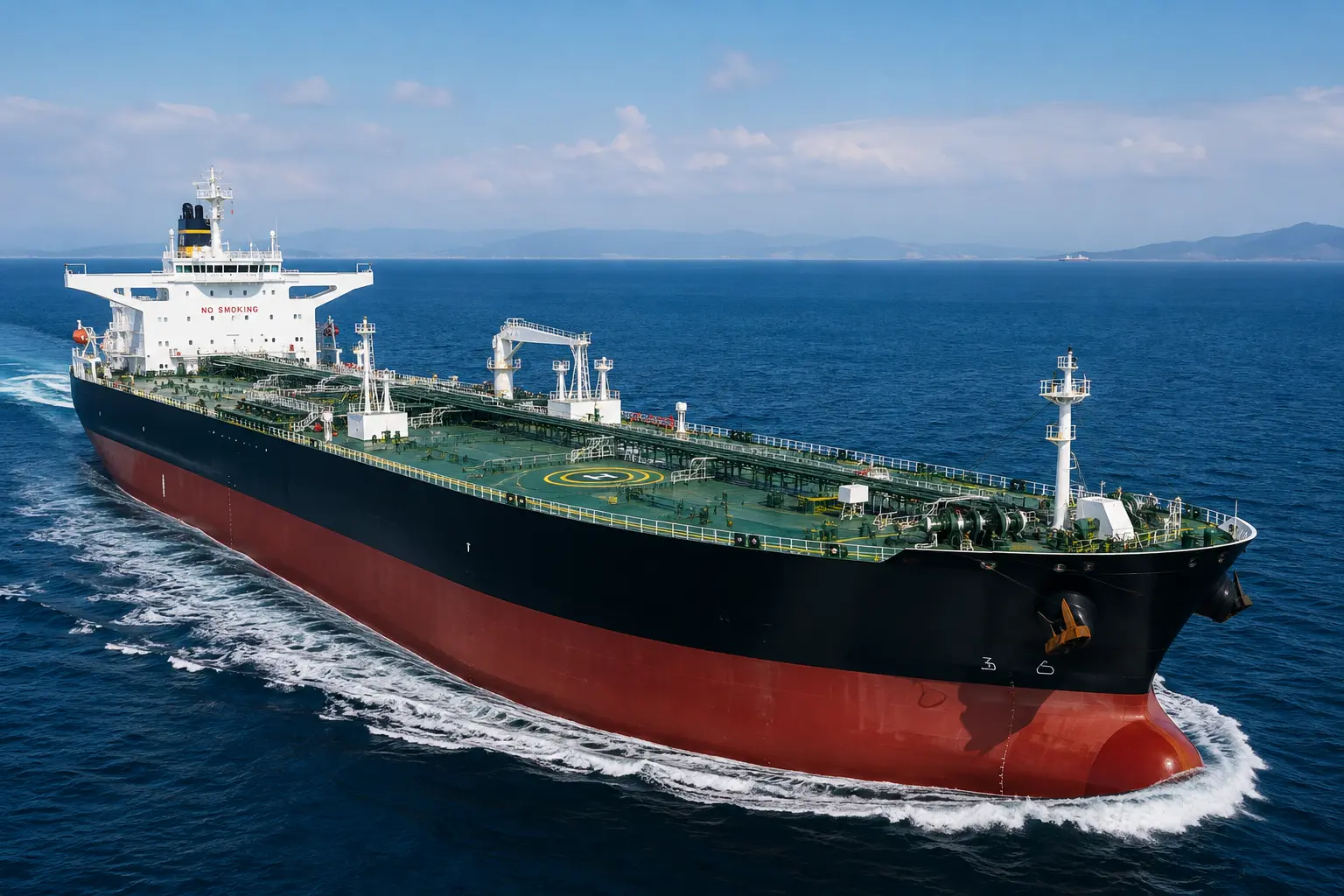
What the Shift Means for Product Tankers
The most important shipping consequence is not simply the number of tonnes exported. It is how those tonnes change vessel employment.
When a buyer replaces a nearby or conventional supplier with cargo from a more distant origin, the same amount of diesel can require more vessel-days to move. In tanker markets, that can increase tonne-mile demand even if final consumption in Africa does not change.
The effect is route-specific. Not every Asian cargo travels farther than every Middle Eastern cargo, and vessel size, port pair and routing matter. But a sustained shift toward India, China and other Asian origins can absorb product-tanker capacity for longer periods and alter regional positioning.
This is particularly relevant when security conditions are already reducing the number of vessels willing or commercially able to trade through high-risk areas.
Tide Signal’s analysis of the $25 million VLCC voyage showed the same underlying market principle in crude tankers: the physical fleet may be large, while the pool of vessels that is available, approved, insurable and willing to perform a specific voyage can be much smaller.
Product tankers face the same basic mechanism, even if the freight scale and vessel classes are different.
Potential Product-Tanker Effects
| Trade Change | Shipping Effect | Commercial Consequence |
|---|---|---|
| More Asian diesel moves to Africa | More westbound product-tanker employment | Potentially stronger vessel utilisation on affected routes |
| Middle East supply falls | Traditional cargo programmes shrink | Tonnage may reposition toward alternative loading regions |
| Longer replacement voyages | More vessel-days per cargo movement | Can increase tonne-mile demand and tighten effective supply |
| Hormuz/Bab el-Mandeb risk | Routing and owner acceptance become more important | War-risk and freight negotiations can become more complex |
| Wider east-west spread | More cargoes become economically viable | Additional spot tanker demand may emerge |
Why Africa Is Pulling More Diesel From Asia
Africa’s need for diesel has not disappeared because Middle East exports have fallen.
Refiners, traders and importers still need to supply transport, industry, power generation and local distribution networks. When established suppliers cannot deliver normal volumes, the market searches for the next commercially workable barrel.
In August, that barrel increasingly came from Asia.
India is naturally important because of its large export-oriented refining system and geographic position between East Asia and African markets. Returning Chinese exports add another source of available supply.
If Middle East disruption persists, analysts expect East Africa in particular to continue pulling barrels from Asia, especially while European supply remains commercially less attractive under the current east-west price structure.
Freight Is Part of the Diesel Price
A change in cargo origin can eventually affect the delivered cost of fuel.
The refinery gate price is only the beginning. Importers must also pay for freight, insurance, financing, port costs, losses, waiting time and local distribution.
That means a diesel cargo can be available in Asia and still fail to reach Africa if freight rises enough to close the arbitrage.
Conversely, a wide price spread can support surprisingly long voyages if the destination market is short of product.
This is why refined-product markets and tanker markets cannot be analysed separately. Commodity arbitrage creates shipping demand, and shipping cost determines whether the arbitrage survives.
Security Risk Is Reshaping Trade, Not Just Delaying Ships
The wider lesson from August is that geopolitical risk is no longer affecting only transit time.
It is changing where cargoes are sourced.
The Strait of Hormuz crisis has already demonstrated how physical risk, sanctions, insurance and owner acceptance can reduce effective shipping capacity. War-risk premiums and voyage restrictions can raise the cost of a route even when it remains technically navigable.
The Bab el-Mandeb threat adds another layer. A supplier may have diesel available, but the route used to reach the buyer may no longer be the most reliable or commercially attractive option.
In that environment, global trade adapts by creating new flows. Those new flows can remain in place long after the original disruption if buyers, traders and refiners discover that the replacement route is commercially workable.
The important number is not only 2 million tonnes. The important change is the origin of those tonnes. Africa is replacing lost Middle East diesel with Asian barrels, turning a regional security crisis into a global product-tanker trade shift. If the pattern persists, the market impact will be measured not only in refinery margins and diesel prices, but in vessel-days, tonne-miles, positioning and freight.
For related Tide Signal market analysis, see Global Diesel Shortage Could Last Into 2027 as.
For related Tide Signal market analysis, see China Fuel Exports Jump 13% as Jet Fuel Hits Record High.
What Shipping and Oil Markets Should Watch in September
| Signal | Why It Matters |
|---|---|
| Saudi refinery runs | A recovery at Jazan and other facilities could restore Middle East diesel availability. |
| Bab el-Mandeb security | Any improvement or deterioration could change Saudi routing and African supply. |
| Hormuz vessel traffic | Transit confidence affects Gulf exports, insurance and vessel availability. |
| China diesel exports | Higher Chinese export availability could keep Asian supply ample. |
| East-west gasoil spread | A narrower spread could weaken the economics of moving Asian barrels west. |
| MR/LR tanker freight | Freight determines whether the arbitrage remains commercially viable. |
| African import demand | Strong buying would support continued long-haul replacement flows. |
Frequently Asked Questions
How much diesel is Asia exporting to Africa in August 2026?
Asia, including India, is expected to ship around 1.8 million to 2.0 million metric tonnes of diesel to Africa in August 2026, according to Kpler, Vortexa and trade-source data cited by Reuters.
Why are Asia diesel exports to Africa increasing?
African buyers are replacing reduced Middle East supply. Gulf and Red Sea security risks, lower Saudi refinery output, a wider east-west price spread and stronger Asian refinery availability have made Asian cargoes more competitive.
How much diesel is the Middle East exporting to Africa?
Middle East diesel exports to Africa are estimated at roughly 600,000–800,000 tonnes in August, the lowest level in almost nine years according to market data cited by Reuters.
What happened to Jazan refinery diesel exports?
Diesel shipments from Saudi Aramco’s Jazan refinery to Africa fell to zero in August, compared with roughly 163,000 tonnes in July, according to Kpler data cited by Reuters.
How can the trade shift affect product tanker rates?
Replacement cargoes sourced farther from African buyers can require more vessel-days and may increase tonne-mile demand. The freight effect depends on route, vessel class, cargo size, tanker availability and whether the arbitrage remains profitable.
What is the east-west diesel spread?
The east-west spread compares European gasoil pricing with Asian 10ppm sulphur gasoil swaps. A wider negative spread can make Asian diesel more competitive in western markets after freight and other voyage costs are considered.
Sources & Methodology
This article is based on Reuters reporting published on 31 August 2026, including Kpler, Vortexa, LSEG and trade-source shipping data, refinery-market information and comments from Energy Aspects. August cargo totals remain subject to normal vessel-tracking and final customs revisions.
Primary external source: Reuters — Asia’s diesel exports to Africa jump in August, replace Mideast supply.
Tide Signal distinguishes reported cargo data from market interpretation. References to potential tonne-mile and freight effects describe shipping-market mechanisms and should not be read as a claim that every route or tanker class will react identically.