WIBON, WIPON, WIFPON and WCCON are four of the most important abbreviations connected with Notice of Readiness (NOR) and the commencement of laytime under voyage charterparties.
They commonly appear together in fixture recaps, charterparty clauses and NOR provisions:
WIBON – Whether In Berth Or Not
WIPON – Whether In Port Or Not
WIFPON – Whether In Free Pratique Or Not
WCCON – Whether Customs Cleared Or Not
At first sight, these expressions appear straightforward. Their commercial effect, however, is much more important than simply expanding four abbreviations.
They can influence where a vessel may tender NOR, whether waiting outside a berth or port can count, whether pending port formalities prevent a valid notice and ultimately when laytime begins.
But none of them should be read in isolation. Their effect depends on the complete charterparty, whether the fixture is a berth or port charter, the reason the vessel cannot proceed, the vessel’s actual readiness and the wording governing Notice of Readiness.
Quick answer: WIBON and WIPON primarily address where NOR may be tendered in particular circumstances. WIFPON and WCCON address the effect of pending free pratique and customs formalities. They can advance the contractual NOR position, but they do not automatically cure a vessel that is genuinely unready to load or discharge.
WIBON, WIPON, WIFPON & WCCON: Quick Reference
| Abbreviation | Full wording | Main issue |
|---|---|---|
| WIBON | Whether In Berth Or Not | Can NOR be tendered before the vessel reaches the nominated berth? |
| WIPON | Whether In Port Or Not | Can NOR be tendered from a recognised waiting place outside the port in applicable circumstances? |
| WIFPON | Whether In Free Pratique Or Not | Does the absence of completed free-pratique formalities prevent NOR? |
| WCCON | Whether Customs Cleared Or Not | Does pending customs clearance prevent NOR? |
| WWWW | Combined shorthand for the four terms | Frequently used to indicate WIBON, WCCON, WIFPON and WIPON together. |
The four clauses address two broad aspects of NOR:
Geographical readiness: WIBON and WIPON.
Formal/legal readiness: WIFPON and WCCON.
That distinction is useful, but it is only a starting point. The vessel must still satisfy the complete contractual test for a valid NOR.
Why WIBON, WIPON, WIFPON and WCCON Matter
Under a voyage charter, time spent waiting can become extremely expensive.
If a bulk carrier, tanker or other vessel arrives at the loading area but cannot proceed immediately to berth, the question becomes:
Who bears the cost of the waiting time?
That depends heavily on whether a valid NOR can be tendered and when laytime begins.
If NOR cannot validly be tendered until the vessel reaches berth, several days of congestion may remain primarily on the owner’s side of the time calculation.
If the charterparty permits NOR to be tendered from an earlier contractual position, that waiting period may move into the laytime regime after the applicable notice period expires.
The difference can be worth tens or hundreds of thousands of dollars on a single voyage.
That is why these four apparently small abbreviations can have significant commercial consequences.
What Does WIBON Mean?
WIBON means “Whether In Berth Or Not.”
It is particularly important in a berth charterparty.
Without wording that changes the ordinary position, a vessel fixed to a specific berth generally needs to reach the contractual berth before becoming an arrived ship for NOR purposes.
A WIBON provision can alter that allocation of risk.
The BIMCO Laytime Definitions for Charter Parties 2013 define WIBON in the context of a designated berth being unavailable on arrival. The vessel may then tender NOR from the usual waiting place at the port, with laytime commencing according to the charterparty.
Simple WIBON example
Assume:
- the vessel is fixed to one nominated berth;
- the vessel arrives at the port on Monday at 08:00;
- the nominated berth is occupied by another vessel;
- the charterparty contains WIBON;
- the vessel proceeds to the usual waiting anchorage; and
- she is otherwise ready in accordance with the charterparty.
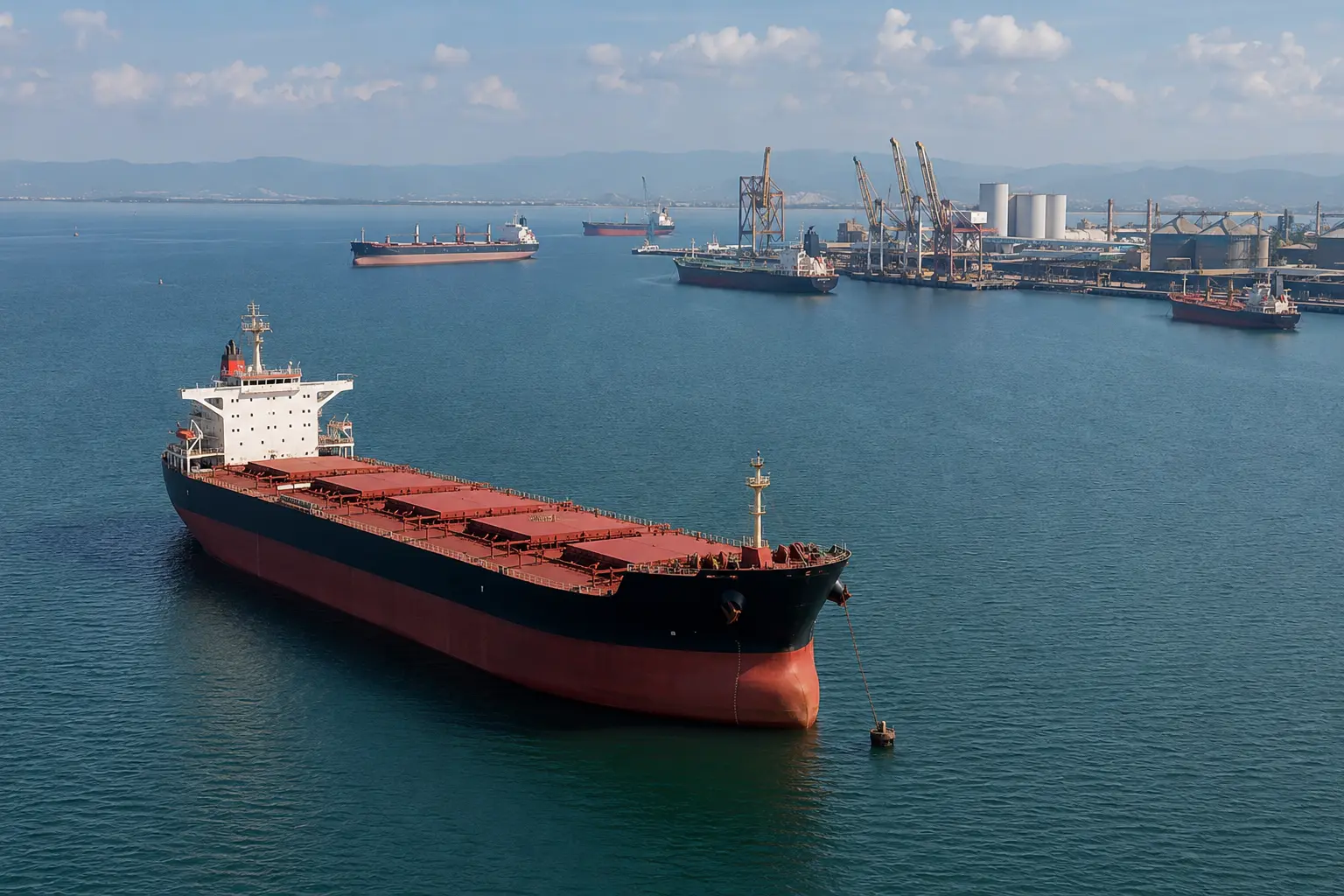
WIBON may allow the Master to tender NOR from that waiting position rather than waiting until the vessel physically reaches the berth.
This can materially change the laytime calculation.
If NOR is valid at 08:00 Monday and the charterparty provides that laytime begins six hours after valid NOR, the laytime regime may begin at 14:00 even though the vessel remains at anchorage.
The berth may not become available until Tuesday or Wednesday.
That difference explains the commercial importance of WIBON.
WIBON Does Not Mean “Anywhere, for Any Reason”
This is probably the most important point in the entire article.
WIBON is not a universal permission allowing NOR to be tendered whenever a vessel happens to be outside the berth.
The classic English-law discussion is associated with The Kyzikos.
Steamship Mutual’s detailed Notice of Readiness – Voyage Charter guide explains that the House of Lords treated WIBON in its established congestion context.
In that case, the berth itself was available, but fog prevented the vessel from proceeding to it.
The owners argued that WIBON allowed NOR to be tendered from the waiting position.
The argument failed.
The key distinction was that the vessel was not waiting because the berth was unavailable through congestion. The berth was available, but a navigational obstacle prevented the vessel from reaching it.
This produces an important practical distinction:
| Situation | WIBON position |
|---|---|
| Berth occupied / unavailable because of congestion | WIBON may allow NOR from the appropriate waiting place, subject to the charterparty. |
| Berth available but vessel cannot reach it because of fog or another navigational obstacle | Do not assume WIBON transfers that delay to charterers. |
Critical rule: Do not interpret WIBON by reading only the words “whether in berth or not.” The reason the vessel is not in berth can matter.
West of England P&I similarly highlights this distinction in its Notices of Readiness in a Nutshell guidance.
What Does WIPON Mean?
WIPON means “Whether In Port Or Not.”
Its purpose is to address a different geographical problem.
A vessel may arrive for the nominated port but be unable to enter the port itself or reach the usual waiting place because of congestion.
The BIMCO Laytime Definitions state that where the designated berth and the usual waiting place at the port are unavailable on arrival, WIPON can allow NOR to be tendered from a recognised waiting place off the port.
This can be particularly important at ports where congestion causes vessels to wait outside formal port limits or at designated offshore anchorages.
Simple WIPON example
Assume:
- a vessel arrives off the nominated load port;
- the berth is unavailable;
- the normal in-port waiting area is also unavailable;
- port control directs the vessel to a recognised offshore waiting area;
- the charterparty contains WIPON; and
- the vessel is otherwise contractually ready.
WIPON may permit NOR to be tendered from that recognised waiting location even though the vessel has not physically entered the port.
Again, the exact charterparty wording and circumstances must be checked.
WIBON vs WIPON: What Is the Difference?
The easiest way to understand the difference is to think in terms of geographical layers.
Berth → Port → Recognised waiting place off the port.
| Clause | Geographical problem addressed |
|---|---|
| WIBON | The vessel cannot reach the nominated berth because the berth is unavailable in the circumstances contemplated by the clause. |
| WIPON | The vessel cannot reach the relevant in-port position and may need to wait at a recognised place outside the port. |
They are often written together:
“NOR may be tendered WIBON/WIPON…”
But that does not make them interchangeable.
WIBON concerns the berth boundary. WIPON potentially extends the NOR position farther outward.
The underlying concept remains the same: determining when the vessel has reached the contractual position from which NOR may validly be tendered.
What Does WIFPON Mean?
WIFPON means “Whether In Free Pratique Or Not.”
Free pratique relates to the vessel satisfying port-health requirements and being permitted to communicate and operate normally with the port from a health-control perspective.
Historically, this could involve health declarations and inspection. Modern procedures may involve electronic documentation, port-health authorities and other arrival formalities.
The central question for NOR is whether the absence of formal free-pratique approval means the vessel is not yet legally ready.
A WIFPON clause can allow NOR to be tendered even though the formal grant of free pratique has not yet been obtained, depending on the charterparty and circumstances.
But there is a major qualification:
WIFPON does not make a genuinely unhealthy or legally unready vessel ready.
If free pratique is only an expected administrative formality and there is no substantive problem preventing the vessel from loading or discharging, the position can be very different from a case where health authorities have a genuine reason to withhold clearance.
Steamship Mutual’s Notice of Readiness FAQs gives an important illustration: where deficiencies such as invalid vaccination certificates meant that obtaining free pratique was more than a mere formality, owners could not simply rely on WIFPON to overcome the underlying problem.
WIFPON example: routine formality
The vessel arrives, crew and vessel health status are normal, all required declarations have been submitted and formal free pratique is expected routinely after arrival.
If the charterparty permits NOR WIFPON, the fact that the administrative confirmation has not yet physically been issued may not necessarily prevent tendering NOR.
WIFPON example: substantive problem
The vessel arrives with an actual health-documentation deficiency or another condition that causes health authorities to withhold clearance.
Now the problem is not merely that a stamp or electronic confirmation is pending.
The vessel may have a genuine legal-readiness problem.
WIFPON should not be assumed to cure it.
What Does WCCON Mean?
WCCON means “Whether Customs Cleared Or Not.”
It performs a similar role in relation to customs formalities.
A vessel may reach the relevant arrival position and be physically ready for cargo operations while customs clearance remains administratively pending.
Where the charterparty contains WCCON, the parties may have agreed that the mere absence of completed customs formalities does not prevent NOR from being tendered.
BIMCO uses this approach expressly in its Waiting for Berth Clause 2002, which permits NOR in specified circumstances whether in free pratique or not and whether customs cleared or not, while still requiring the Master to warrant that the vessel is in fact ready in all respects.
That final qualification is extremely important.
WCCON changes the treatment of the formality. It does not necessarily excuse an actual condition that prevents lawful cargo operations.
The Critical Distinction: Pending Formality vs Genuine Unreadiness
WIFPON and WCCON are frequently misunderstood because people focus on whether the paperwork has been completed rather than why it has not been completed.
Consider two situations.
Scenario A — paperwork pending
The vessel has arrived.
The holds are ready.
All vessel certificates are valid.
There is no health issue.
There is no customs deficiency.
Free pratique and customs clearance are simply awaiting routine completion by the relevant authorities.
The charterparty says NOR can be tendered WIFPON/WCCON.
Those clauses may be highly relevant.
Scenario B — vessel actually cannot obtain clearance
The vessel has arrived, but authorities refuse clearance because a substantive requirement has not been met.
The problem is no longer merely administrative timing.
The vessel may not be legally ready for the cargo operation.
Writing WIFPON or WCCON in the recap does not necessarily transform that vessel into a ready ship.
| Situation | Key question |
|---|---|
| Routine clearance pending | Does the charterparty allow NOR before completion of the formality? |
| Actual health/customs deficiency | Is the vessel genuinely legally ready at all? |
This distinction is consistent with the broader principle discussed by Gard in its guidance on Notice of Readiness and commencement of laytime: the vessel needs to satisfy physical and legal readiness requirements, subject to the specific contractual wording.
What Does WWWW Mean in Shipping?
WWWW is sometimes used as shorthand for the combined set of four provisions:
- WIBON — Whether In Berth Or Not;
- WCCON — Whether Customs Cleared Or Not;
- WIFPON — Whether In Free Pratique Or Not; and
- WIPON — Whether In Port Or Not.
BIMCO uses the abbreviation in worked examples accompanying its charterparty clauses, including its Cargo Fumigation Clause for Charter Parties 2015.
A recap may therefore contain wording such as:
NOR to be tendered during office hours, WWWW.
That compact line potentially incorporates all four concepts.
But the abbreviation should not be treated as a substitute for reading the rest of the charterparty.
The permitted NOR times, notice recipients, readiness requirements, commencement provision and other rider clauses remain relevant.
Why Berth Charter vs Port Charter Matters
To understand WIBON and WIPON properly, it is essential to understand the difference between a berth charter and a port charter.
Berth charter
Under a berth charter, the contractual destination is the berth.
Without wording transferring or modifying the risk, the vessel generally needs to reach the berth before becoming an arrived ship.
This means that congestion preventing the vessel from reaching the berth can be commercially significant for owners.
WIBON exists largely to address this type of problem.
Port charter
Under a port charter, the contractual destination is the port.
The vessel may become an arrived ship when she reaches the relevant waiting position within the port and is at the charterer’s immediate and effective disposition, subject to the applicable legal tests and charterparty wording.
The distinction can materially change which party carries several days of port congestion.
This is why one of the first questions in a serious NOR dispute is often:
Is this actually a berth charter or a port charter?
For the wider contractual context, see Tide Signal’s guide to charterparties in shipping.
Worked Example: WIBON, WIPON, WIFPON and WCCON in One Port Call
Consider the fictional bulk carrier M/V Tide Meridian, fixed to load 60,000 MT of grain.
| Fixture item | Assumed term |
|---|---|
| Charter type | Voyage charter |
| Loading destination | One safe berth, Port Meridian |
| NOR wording | WIBON, WIPON, WIFPON, WCCON |
| Notice period | 6 hours after valid NOR |
| Vessel arrival | Monday 08:00 LT |
08:00 — Vessel arrives off the port
The nominated berth is occupied.
The normal port anchorage is also heavily congested, and Port Control instructs the vessel to wait at a recognised offshore waiting area.
The geographical issue immediately raises WIBON and WIPON.
Depending on the precise contractual wording and the status of that waiting location, the clauses may allow NOR to be tendered before the vessel physically enters the port or reaches the berth.
08:15 — Free pratique and customs formalities remain pending
The vessel is physically ready.
The cargo holds have been inspected internally and are ready.
There is no known health problem.
The vessel’s documentation is in order.
Free pratique and customs clearance have simply not yet been formally completed.
WIFPON and WCCON now become relevant.
08:30 — NOR tendered
The Master tenders NOR to the parties and by the method specified in the charterparty.
If the geographical position is permitted under WIBON/WIPON, the vessel is genuinely ready, WIFPON/WCCON apply to the outstanding formalities and all other NOR requirements are satisfied, the notice may be capable of being valid.
14:30 — Notice period expires
Assuming a valid NOR and a six-hour notice period, laytime could begin according to the charterparty even though the vessel has not yet reached the berth.
Tuesday — Berth becomes available
The vessel proceeds inward and berths.
The time treatment of shifting from the waiting place to the berth must still be checked against the charterparty. Some clauses specifically exclude shifting time.
The actual port chronology should then be preserved carefully in the Statement of Facts.
Why this example matters
Without the relevant clauses, the same physical port call could produce a very different laytime result.
The vessel is the same.
The cargo is the same.
The congestion is the same.
The difference is the contractual allocation of waiting-time risk.
How WIBON, WIPON, WIFPON and WCCON Affect NOR and Laytime
The commercial chain can be simplified as follows:
Vessel approaches port
↓
Has she reached the required contractual location?
↓
WIBON / WIPON may affect this question
↓
Is the vessel physically and legally ready?
↓
WIFPON / WCCON may affect pending formalities
↓
Is NOR tendered correctly?
↓
Notice period runs
↓
Laytime commences according to the charterparty
This is why the four abbreviations should be studied together with Tide Signal’s guide to when NOR is valid and when laytime starts.
Once laytime has commenced, the next question becomes how allowed time, interruptions, exceptions and actual port time are calculated. That is covered separately in Laytime and Demurrage in Shipping.
Do These Clauses Guarantee That Laytime Starts?
No.
This is another common mistake.
Seeing:
“NOR WIBON WIPON WIFPON WCCON”
does not automatically mean:
“Master sends NOR = laytime starts.”
A valid NOR may still depend on several requirements.
- The vessel must satisfy the required contractual location test.
- The vessel must be physically ready.
- The vessel must satisfy legal-readiness requirements subject to the agreed exceptions.
- The NOR must be given to the correct party.
- The NOR must be served by the required method.
- The NOR may need to be served during specified hours.
- The vessel may need to satisfy cargo-specific readiness requirements.
- The charterparty may contain additional conditions.
Only after the valid notice is tendered does the separate laytime commencement provision become relevant.
That provision might say, for example:
“Laytime to commence six hours after valid NOR.”
or:
“Laytime to commence at 08:00 next working day following valid NOR.”
The abbreviations and the commencement clause therefore need to be read together.
What If NOR Is Invalid When Tendered?
An invalid NOR can create major problems in a demurrage claim.
A key principle under English-law authorities is that a notice that is invalid when tendered does not simply become valid automatically when the defect later disappears.
For example, if the vessel tenders NOR before becoming an arrived ship in circumstances not protected by the charterparty, simply reaching the correct position several hours later does not necessarily transform the original notice into a valid NOR.
The position can then become dependent on:
- whether a fresh NOR was tendered;
- the exact charterparty wording;
- whether cargo operations subsequently commenced;
- whether the charterer waived the defect; or
- other factual and legal circumstances.
Steamship Mutual discusses this issue and relevant authorities in its NOR FAQs.
The operational lesson for Masters and operators is simple:
If there is genuine doubt about the first NOR, do not assume time will cure it. Review the charterparty and consider whether a fresh NOR should be tendered.
Common WIBON, WIPON, WIFPON and WCCON Mistakes
1. Assuming WIBON always permits NOR from anchorage
It does not.
The charterparty, contractual destination, waiting location and reason the vessel cannot reach berth all matter.
2. Assuming WIPON means NOR can be tendered from anywhere outside the port
WIPON should not be read as “wherever the vessel happens to stop.”
The status of the waiting place and contractual wording must be considered.
3. Treating WIFPON as a cure for an actual health problem
There is a major difference between formal approval being pending and the vessel genuinely failing a health requirement.
4. Treating WCCON as a cure for customs non-compliance
A pending administrative clearance is not necessarily the same as an actual deficiency preventing lawful cargo operations.
5. Ignoring physical readiness
WWWW wording does not make dirty cargo holds clean, damaged cargo equipment operational or unsuitable tanks ready.
6. Ignoring NOR office hours
A vessel may be geographically and physically ready but tender NOR outside the time permitted by the charterparty.
7. Sending NOR to the wrong recipient
Charterparties may specify charterers, agents, shippers, receivers or another named party.
8. Assuming laytime starts immediately when NOR is sent
The charterparty may impose a notice period or define another commencement time.
9. Ignoring the reason for delay
Congestion, weather, tide, pilot availability, vessel deficiency and governmental restriction do not necessarily produce the same contractual result.
10. Reading the recap without the charterparty
A short recap expression can be modified or qualified by the printed form and rider clauses.
Practical NOR Checklist for Masters and Operators
Before relying on WIBON, WIPON, WIFPON or WCCON, the vessel and shore team should confirm the complete NOR position.
Location
- What is the contractual destination: port or berth?
- Where is the vessel currently located?
- Is this the recognised or customary waiting place?
- Is the vessel inside or outside formal port limits?
- Why can she not proceed farther?
- Does WIBON or WIPON cover the situation?
Physical readiness
- Are holds or tanks ready for the nominated cargo?
- Is cargo equipment operational where required?
- Are hatch covers, pumps, lines and related systems ready?
- Are there defects that genuinely prevent cargo operations?
Legal and documentary readiness
- Has free pratique been granted?
- If not, is it only a routine formality?
- Does the charterparty contain WIFPON?
- Has customs clearance been completed?
- If not, does WCCON apply?
- Is there any substantive reason clearance is being withheld?
NOR service
- Who must receive NOR?
- What method of service is required?
- Can NOR be tendered by email?
- Are there specified office hours?
- Do weekends or holidays affect tendering?
- Has proof of transmission and receipt been retained?
Laytime commencement
- When does laytime start after valid NOR?
- Is there a six-hour or other notice period?
- Does laytime begin the next working day?
- Do SHEX, SHINC or other time provisions apply?
- Is shifting time excluded?
These details should later match the recorded chronology in the vessel’s Statement of Facts.
Where These Terms Fit in the Chartering Sequence
The four abbreviations are not isolated shipping vocabulary. They sit in the middle of the voyage-chartering process:
Charterparty negotiated
↓
Laycan agreed
↓
Vessel proceeds toward load port
↓
Vessel reaches port / waiting position
↓
WIBON / WIPON analysis
↓
Physical and legal readiness checked
↓
WIFPON / WCCON analysis
↓
NOR tendered
↓
Notice period expires
↓
Laytime commences
↓
Cargo operations
↓
Statement of Facts records events
↓
Laytime calculation
↓
Demurrage or despatch where applicable
Understanding this sequence is much more useful than memorising four definitions.
Continue the Tide Signal Chartering Series
- What Is a Charterparty in Shipping? — understand the contractual framework behind voyage employment.
- Laycan in Shipping — laydays, cancelling dates, late arrival and laycan extensions.
- Notice of Readiness in Shipping — when NOR is valid and when laytime can start.
- Laytime and Demurrage in Shipping — calculations, examples and commercial consequences.
- Statement of Facts in Shipping — why every port-call time entry matters.
WIBON, WIPON, WIFPON & WCCON: Frequently Asked Questions
What does WIBON mean in shipping?
WIBON means Whether In Berth Or Not. It can allow a vessel to tender Notice of Readiness before reaching the nominated berth when the circumstances and charterparty wording permit, particularly where the berth is unavailable.
What does WIPON mean in shipping?
WIPON means Whether In Port Or Not. In applicable circumstances, it can permit NOR to be tendered from a recognised waiting place outside the port where the vessel cannot reach the berth or normal port waiting position.
What does WIFPON mean?
WIFPON means Whether In Free Pratique Or Not. It addresses whether the absence of completed free-pratique formalities prevents the vessel from tendering NOR. It should not be assumed to cure genuine health-related or legal unreadiness.
What does WCCON mean?
WCCON means Whether Customs Cleared Or Not. It can permit NOR despite customs clearance remaining formally pending, subject to the complete charterparty and the vessel being genuinely ready.
What does WWWW mean in a charterparty?
WWWW is shorthand commonly used for WIBON, WCCON, WIFPON and WIPON together.
What is the difference between WIBON and WIPON?
WIBON primarily addresses the vessel being outside the nominated berth, while WIPON addresses circumstances where the vessel may also be outside the port. Their exact effect depends on the charterparty and factual circumstances.
Does WIBON convert every berth delay into laytime?
No. The reason the vessel has not reached the berth can matter. English-law authority distinguishes berth unavailability caused by congestion from situations such as navigational delay where the berth itself is available.
Can NOR be tendered before free pratique?
It may be possible depending on the charterparty and circumstances, particularly where WIFPON applies and free pratique is only a routine formality. A substantive health or legal problem can produce a different result.
Can NOR be tendered before customs clearance?
Where the charterparty contains WCCON, pending customs clearance may not necessarily prevent NOR. However, the clause should not be assumed to cure a substantive customs problem that means the vessel is genuinely not ready.
Does WWWW automatically make NOR valid?
No. The vessel may still need to satisfy physical readiness, contractual-location, notice-recipient, timing and service requirements. WWWW does not override every other NOR condition.
Does laytime start immediately after NOR?
Not necessarily. The charterparty determines when laytime commences after a valid NOR. There may be a six-hour notice period, next-working-day provision or another agreed mechanism.
What happens if NOR is invalid when first tendered?
An invalid NOR does not necessarily become valid automatically when the underlying defect later disappears. Depending on the facts and charterparty, a fresh NOR may be required, although waiver and other legal principles can also become relevant.
Why are WIBON and WIPON important in congested ports?
They can shift the contractual point from which NOR may be tendered and therefore affect which party bears potentially substantial waiting time before the vessel reaches the berth.
Final View
WIBON, WIPON, WIFPON and WCCON are not merely abbreviations to memorise.
They are contractual tools for allocating one of the most expensive risks in voyage chartering: time lost around vessel arrival and berth access.
WIBON can affect whether the vessel needs to be physically in berth.
WIPON can affect whether she needs to be physically inside the port.
WIFPON can affect the significance of pending free-pratique formalities.
WCCON can affect the significance of pending customs clearance.
But the four expressions do not operate in a vacuum.
The commercial team still needs to determine:
- what the contractual destination is;
- where the vessel actually is;
- why she cannot proceed farther;
- whether she is physically ready;
- whether she is legally ready;
- whether outstanding formalities are routine or substantive;
- whether NOR was correctly tendered; and
- when the charterparty says laytime begins.
Tide Signal view: The dangerous question is not “Does the recap say WIBON/WIPON/WIFPON/WCCON?” The useful question is “What exact obstacle prevents this vessel from being at berth and fully cleared right now, and which party did the charterparty agree would carry that specific risk?”
That is the point at which four abbreviations become practical chartering analysis.
Authoritative Sources and Further Reading
- BIMCO — Laytime Definitions for Charter Parties 2013 — definitions of WIBON, WIPON, free pratique, demurrage and related laytime terminology.
- BIMCO — Waiting for Berth Clause 2002 — example of contractual treatment of NOR while awaiting berth, free pratique and customs clearance.
- Steamship Mutual — Notice of Readiness: Voyage Charter — detailed discussion of arrived ships, WIBON, WIPON, readiness and English-law authorities.
- Steamship Mutual — Notice of Readiness FAQs — practical treatment of NOR validity, port limits, free pratique and invalid notices.
- Gard — Notice of Readiness and the Commencement of Laytime — overview of arrived-vessel and readiness requirements and contractual variations.
- West of England P&I — Notices of Readiness in a Nutshell — practical guide covering berth and port charters, WIBON/WIPON, WIFPON and WCCON.
This article provides a general educational and commercial explanation of charterparty terminology. The validity of Notice of Readiness, commencement of laytime and allocation of waiting-time risk depend on the complete charterparty, incorporated clauses, governing law and individual voyage facts. It does not constitute legal advice.