A Statement of Facts in shipping is the chronological record of what happened during a vessel’s port call. It normally captures arrival, anchoring, Notice of Readiness, clearances, berthing, inspections, cargo operations, stoppages, completion and departure. Its commercial importance is much greater than its simple format suggests: when laytime or demurrage is disputed, the SOF is often the first document used to reconstruct the sequence.
An SOF does not decide by itself whether time counts. The charterparty supplies the contractual rules; the SOF supplies contemporaneous facts. The final position depends on both, together with the Notice of Readiness, logbooks, terminal records, weather evidence, correspondence and the circumstances of the individual port call.
Operational definition
The Statement of Facts records the sequence. The laytime calculation interprets that sequence under the charterparty. Confusing those two functions is one of the quickest ways to create a weak demurrage file.
What a Statement of Facts Actually Does
The SOF creates a common timeline for the vessel, agent, terminal, shipper, receiver, owner and charterer. Instead of relying on later recollection, the parties can see when a material event was recorded as occurring and, where properly completed, why an operation stopped or resumed.
The shipping industry has used standardised SOF forms for decades. BIMCO states that its Standard Statement of Facts was published in 1975 and is recommended by BIMCO and FONASBA. The form’s age does not make the document outdated. It reflects a permanent operational need: port calls generate dozens of time-sensitive events, and those events must be preserved in a form that commercial teams can understand after the vessel has sailed.
A useful SOF should allow someone who was not present at the port to reconstruct the call without guessing. That person may be a vessel operator reviewing performance the next morning, a demurrage analyst weeks later, a chartering manager negotiating settlement, or a lawyer examining the record months or years afterwards.
Core function
Chronological port-call record
Commercial use
Laytime and demurrage evidence
Main risk
Vague, missing or disputed entries
Best practice
Record facts as they occur
Why the SOF Matters Commercially
A port call happens once. The dispute about it may begin much later.
By the time a demurrage claim is prepared, the master may be on another voyage, the agent may be handling dozens of other vessels and the terminal team may no longer remember a specific stoppage. A clear SOF protects the contemporaneous sequence before routine operational detail disappears.
This matters because a difference of several hours can change the commercial outcome. The disputed period may concern whether the vessel was waiting for berth, whether cargo was available, whether rain actually prevented work, whether a terminal breakdown interrupted operations, or whether documents were delayed after cargo completion. At a substantial demurrage rate, a small factual disagreement can become a meaningful claim.
Those timestamps can also become decisive in time-charter off-hire disputes. See Tide Signal’s off-hire in shipping guide.
The SOF can also be contractually important. Some charterparties require a signed Statement of Facts and specified supporting documents to accompany a demurrage claim within a time bar. Steamship Mutual’s discussion of The Ocean Neptune shows how documentary requirements can be decisive: claims were treated as time barred where required countersigned SOFs, or the alternative letters of protest, had not been supplied in accordance with the clause.
The practical point is not that every charterparty demands the same signatures or documents. It is that the claims team must read the actual documentary clause before the vessel leaves port. Discovering a missing signature after the contractual deadline is a preventable problem.
Who Prepares and Signs the Statement of Facts?
The port agent commonly prepares the Statement of Facts using information received from the vessel, terminal and local parties. On board, the master and deck officers should check the entries against the deck logbook, movement records, cargo log, emails, notices and other contemporaneous evidence.
Depending on the form, trade and charterparty, the SOF may be signed by the master, agent and representatives of the charterer, shipper, receiver or terminal. There is no safe universal signature formula. The contract may require particular parties to sign, may state what happens if a countersignature cannot be obtained, or may require a letter of protest.
A signature should never be treated as a routine rubber stamp. Before signing, the master should examine whether the sequence, times, descriptions and reasons for stoppage are accurate. If an entry is incorrect, the preferred response is to correct it before signature. Where agreement cannot be reached, the master should record a clear qualification and follow company or P&I guidance rather than silently signing an inaccurate document.
| Party | Typical contribution | Point requiring attention |
|---|---|---|
| Agent | Compiles the port-call chronology and circulates the document. | May depend on information from several parties; entries still require verification. |
| Master / vessel | Checks movements, NOR, readiness, cargo events and onboard records. | Should not sign known inaccuracies without clear qualification. |
| Terminal | Confirms berth and cargo-operation events, stoppages and terminal performance. | Its description of causation may differ from the vessel’s record. |
| Charterer / shipper / receiver | Confirms or qualifies the chronology where required. | Authority to sign and contractual requirements should be checked. |
What Should Be Recorded in a Strong SOF?
The level of detail depends on the trade and the form used, but a commercially useful Statement of Facts normally covers the vessel’s progress from arrival through departure. It should record material facts, not arguments dressed as facts.
Arrival and waiting
Relevant entries may include arrival at port limits or roads, pilot station, anchorage arrival, anchor down, drifting instructions, berth nomination, pilot ordered and the reason the vessel remains waiting. “Vessel waiting” is rarely enough. Waiting for berth congestion, tidal access, cargo readiness, daylight, pilot availability and port instructions can have different contractual consequences.
Notice and clearances
The SOF should accurately record when the Notice of Readiness was tendered, how it was served and when receipt or acceptance was acknowledged where relevant. It may also record free pratique, customs, immigration and other formalities.
These entries do not validate an otherwise defective NOR. They show what happened. Whether the notice was contractually effective still depends on arrival, physical and legal readiness, permitted timing, method of service and the charterparty wording.
Berthing and inspections
Pilot on board, anchor aweigh, first line ashore, all fast, gangway down and shore access completed may all matter. For dry cargo, record hold inspection and the precise time the holds passed or failed. For tanker operations, manifold connection, safety checks, tank inspection and readiness of cargo systems may be material.
Do not replace an inspection result with an ambiguous phrase such as “vessel ready” if a surveyor rejected the holds. The SOF should identify the inspection, outcome, rectification period and reinspection time. Supporting survey reports and photographs should be preserved separately.
Cargo operations
Record when cargo operations commenced, the number of gangs or working units where relevant, stoppages, resumptions, changes in working arrangements and completion. Material causes should be stated neutrally and specifically: “loading stopped by terminal due to shore conveyor breakdown” is more useful than “operations delayed.”
Where the cause is contested, the document can record the competing positions or the vessel can attach a reservation. It is better to preserve a visible disagreement than to create a false appearance of agreement.
Completion and sailing
Cargo completion is not always the end of the port-call chronology. Draft survey, ullaging, hose disconnection, documents on board, bills of lading, customs clearance, pilot boarding and sailing may remain relevant. If the vessel is delayed after cargo completion, the record should state the event and apparent cause without assuming automatically that the period counts as laytime, demurrage or detention.
SOF, NOR, Time Sheet and Logbook Are Not the Same Document
| Document | Primary function | What it does not do |
|---|---|---|
| Statement of Facts | Records the port-call sequence and material events. | Does not by itself decide which hours count. |
| Notice of Readiness | Declares that the vessel has reached the required place and is ready, subject to the contract. | Does not create a complete port-call chronology. |
| Laytime statement / time sheet | Applies the charterparty rules to calculate time used. | Should not invent facts missing from the evidence. |
| Deck or cargo logbook | Creates the vessel’s detailed contemporaneous operational record. | Is not necessarily the agreed commercial summary circulated to all parties. |
This distinction is central to good claims practice. The SOF may state that rain stopped loading from 10:15 to 12:00. The time sheet must then determine whether that period is excluded under the agreed weather-working-day wording. Likewise, the SOF may record a berth wait of 30 hours, but the charterparty and validity of NOR determine whether any of that waiting time counts.
Timestamp Discipline: Minutes, Local Time and Sequence
SOF entries should normally use the port’s local time and identify the time zone or UTC offset. The document should use one consistent time basis throughout. This becomes especially important around daylight-saving changes, ports with unusual offsets, offshore waiting areas or correspondence sent by teams in different countries.
Times should be precise enough to distinguish events that occur close together. “Morning” or “after arrival” is not adequate for a laytime file. Nor should several events be rounded to the same hour merely for convenience.
Sequence matters as much as the individual time. If NOR appears before anchor down, free pratique before the authority’s message, or cargo commencement before holds passed inspection, the inconsistency requires immediate review. It may be a harmless clerical error, but it may also affect a contractual argument.
Better entry
2026-09-16 / 10:15 LT — Loading stopped by terminal due to heavy rain; hatch covers closed.
Weak entry
AM — Bad weather delay.
The stronger entry identifies when, what operation stopped, who stopped it and the immediate operational condition. It still avoids deciding the legal result.
Weather, Breakdowns and the Difference Between Event and Cause
Many SOF disagreements are really disagreements about causation. Cargo work may stop while rain is falling, but was rain the reason the terminal stopped? A conveyor may be unavailable while the vessel is changing holds, but did the breakdown cause additional delay? A berth may be empty, yet navigation restrictions may prevent the vessel from reaching it.
The SOF should separate the event from the asserted cause wherever possible. Record the observable fact first, then identify the instruction or reported reason. Supporting evidence can include rain logs, terminal messages, crane records, weather reports, photographs, letters of protest and the vessel’s logbooks.
Skuld notes that owners and charterers may rely on different evidence when weather time is assessed, including vessel logs and competing Statements of Facts. This is why “rain” alone is not enough. The file should show whether the relevant operation was prevented, which holds or equipment were affected, when covers were closed and reopened, and whether other work continued.
Signing, “For Receipt Only” and Reservations
A countersigned SOF can be powerful evidence, but signature language matters. A party may sign as agreement, sign “for receipt only,” add a qualification or refuse to sign. These outcomes are not interchangeable.
Skuld’s review of SOF evidence explains that the document is not necessarily treated as the “only truth,” particularly where a party signs for receipt only or disputes part of the record. Even so, contemporaneously prepared and confirmed SOFs can carry strong evidential weight compared with later reconstruction.
If the master disagrees with an entry, a useful reservation should identify the exact line and the vessel’s position. A general stamp stating “signed under protest” may be less helpful because it does not tell the reader what is disputed.
Illustrative reservation
Signed for receipt only. The vessel does not agree with the entry for 16 September 2026, 10:15–12:00. Loading was stopped on terminal instruction due to heavy rain and hatch covers were closed. Vessel’s rain log and deck log entries are attached. All owners’ rights are reserved.
This wording is illustrative, not a universal legal formula. The precise approach should follow the charterparty, company instructions, governing law and advice received for the actual dispute.
What Happens When the SOF Is Wrong or Incomplete?
An error should be addressed while the parties and evidence are still available. The agent should issue a corrected draft or clearly marked revision, with changes visible and an audit trail preserved. Quietly replacing the document without explaining the change can damage confidence in the entire record.
If another party will not accept a correction, the master or operator should preserve the disputed draft, send a contemporaneous email explaining the disagreement and issue a letter of protest where appropriate. Supporting documents should be attached or identified, not left somewhere in a separate inbox with no clear connection to the disputed entry.
Common weaknesses include:
- missing arrival, anchoring, pilot or all-fast times;
- NOR recorded as “accepted” without recording tender and receipt separately;
- no local-time or time-zone indication;
- stoppages recorded without a reason or responsible party;
- weather entries that do not state whether operations were prevented;
- hold or tank inspection failure omitted from the chronology;
- different times appearing in SOF, logbook, emails and terminal records;
- cargo completion confused with documents-on-board or vessel sailing;
- unsigned pages or missing contractually required countersignatures;
- late corrections with no visible revision history.
How the SOF Supports Laytime and Demurrage
The Statement of Facts is the factual foundation; the laytime and demurrage calculation is the contractual analysis built on top of it.
The analyst typically begins by checking the charterparty’s arrival and NOR provisions, notice allowance, laytime definition, working-time regime, exceptions, reversibility, demurrage rate and documentary time bar. The SOF then provides the events to which those rules are applied.
A strong claims file should normally reconcile the SOF with the NOR and proof of service, vessel logs, inspection records, terminal statements, weather evidence, letters of protest, cargo documents and relevant correspondence. Depending on the trade, pumping logs, pressure records, ullage reports, draft surveys or gang records may also be required.
Do not assume that a signed SOF cures an invalid NOR or overrides the charterparty. Equally, do not dismiss the SOF merely because another record later presents a different version. The proper task is to examine the document’s contractual status, signatures, reservations, timing and consistency with the full evidence.
This discipline is especially important during port delays. A vessel may spend days at anchorage before berthing, but the commercial treatment of that period depends on the contractual destination, congestion clauses, validity of NOR and commencement wording—not simply the fact that the vessel was waiting.
Worked Port-Call Example: M/V Tide Horizon
The following fictional dry-bulk example is illustrative. It does not determine the outcome under any real charterparty.
Assumed terms: M/V Tide Horizon is fixed on a port charter to load grain at the fictional Port Greyhaven. NOR may be tendered at the recognised anchorage, whether in berth or not and whether in free pratique or not, provided the vessel is otherwise ready. Laytime begins six hours after valid NOR. The full charterparty contains separate weather and terminal-breakdown provisions.
| Date / local time | SOF event | Potential relevance |
|---|---|---|
| 14 Sep — 05:50 | Vessel arrived at port limits. | Confirms initial arrival, not necessarily contractual arrival. |
| 14 Sep — 06:20 | Anchor down at recognised waiting anchorage. | Assumed contractual place for tendering NOR. |
| 14 Sep — 06:35 | NOR tendered by master through agent. | Potential start of the six-hour notice allowance. |
| 14 Sep — 07:05 | Agent acknowledged receipt of NOR. | Check whether the clause runs from tender or receipt. |
| 14 Sep — 08:10 | Free pratique granted. | WIFPON is assumed; the underlying facts must still be checked. |
| 15 Sep — 18:30 | Pilot on board; anchor aweigh. | Ends anchorage waiting and begins inward movement. |
| 15 Sep — 20:00 | Vessel all fast at Berth 4. | Confirms physical berthing; laytime may already be running. |
| 16 Sep — 06:00 | Holds inspected and passed. | Supports readiness but does not retrospectively cure a knowingly false NOR. |
| 16 Sep — 06:40 | Loading commenced with two gangs. | Operational start of cargo work. |
| 16 Sep — 10:15–12:00 | Loading stopped by terminal due to heavy rain; hatches closed. | Counting depends on the weather wording and evidence. |
| 17 Sep — 03:20–05:05 | Loading stopped due to shore conveyor breakdown. | Allocation depends on the breakdown clause and responsibility. |
| 18 Sep — 14:30 | Loading completed. | Possible end of laytime calculation, subject to the contract. |
| 18 Sep — 16:00 | Cargo documents on board. | Important if post-completion delay becomes a separate issue. |
| 18 Sep — 17:00 | Pilot on board; vessel sailed. | Completes the port-call record. |
On the assumed wording, and only if NOR was valid at 06:35 on 14 September, laytime would potentially commence at 12:35 local time. That means part of the anchorage wait could count before the vessel berthed. The rain and conveyor stoppages must then be tested against the precise exceptions and causation evidence.
If the holds were not actually ready when NOR was tendered, the conclusion could change materially. The entry showing that they passed inspection on 16 September would not, by itself, make the earlier NOR valid. This is why the SOF must record both the time and the true operational condition.
A Practical SOF Review Checklist
Before arrival
Review the charterparty’s NOR, laytime, signature, supporting-document and time-bar clauses. Tell the agent what the final file must contain.
During the call
Record events in local time as they occur. Preserve emails, logs, inspection records, weather evidence, terminal messages and protests.
Before signing
Reconcile the chronology. Correct wrong times, identify disputed causation and qualify any unresolved entry precisely.
After sailing
Send the signed SOF and complete supporting file promptly. Do not wait for the contractual time bar to approach.
- Confirm vessel, port, berth, cargo and voyage details.
- State that times are local and identify the UTC offset.
- Separate arrival, anchor down, NOR tender, receipt and acceptance.
- Record free pratique, customs and inspections at their actual times.
- Use first line ashore and all-fast consistently.
- Record cargo start, every material stop, resumption and completion.
- State the observable reason for each stoppage and who issued the instruction.
- Reconcile SOF entries with the deck log, cargo log and emails.
- Keep corrections visible and preserve version history.
- Obtain every signature required by the charterparty.
- Use a specific reservation or letter of protest when agreement is impossible.
- Submit the complete demurrage package inside the contractual time bar.
Statement of Facts: Frequently Asked Questions
What does SOF mean in shipping?
SOF means Statement of Facts. It is the chronological record of material events during a vessel’s port call, including arrival, NOR, berthing, inspections, cargo operations, stoppages, completion and sailing.
Who normally prepares the Statement of Facts?
The port agent commonly compiles it, using information from the vessel, terminal and local parties. The master and operator should still verify every material entry before signature or commercial use.
Who should sign the SOF?
The answer depends on the form and charterparty. Typical signatures may include the master, agent, terminal and charterer, shipper or receiver representative. Check the actual documentary clause rather than relying on local habit.
Is a signed SOF legally final?
Not necessarily. It can be strong contemporaneous evidence, but its effect depends on the wording, signatures, reservations and other records. An SOF signed for receipt only is not the same as an unqualified agreement.
Does the SOF decide when laytime starts?
No. It records the events relevant to the calculation. The charterparty determines whether NOR was valid, when the notice allowance expired and which periods count or are excluded.
Can the master refuse to sign an incorrect SOF?
The master should not knowingly confirm an inaccurate record. The practical response may be correction, precise qualification, signature for receipt only or a letter of protest, depending on the circumstances and company or legal guidance.
Can an SOF be corrected after sailing?
Errors can be corrected, but the revision should be transparent, supported and circulated with a clear audit trail. A late unexplained change may carry less weight than a correction made while the facts were still contemporaneous.
Is the SOF required for every demurrage claim?
It is commonly required and highly useful, but the exact documentary requirements depend on the charterparty. Some clauses specify signatures, additional records and strict submission deadlines.
Tide Signal view
A reliable SOF is not produced at the end of the port call. It is built event by event: one verified time, one clear description and one preserved source at a time. When the record is disciplined, operators can understand the call and claims teams can defend the calculation. When it is vague, a routine delay becomes a debate about what happened before anyone can even ask whether the time counts.
Authoritative Sources and Further Reading
- BIMCO — Standard Statement of Facts
- BIMCO — Laytime Definitions for Charter Parties 2013
- Skuld — Statement of Facts
- Skuld — Weather Working Days
- Steamship Mutual — The Ocean Neptune: documentary requirements and time bars
- Steamship Mutual — The Adventure: perils of demurrage time bars
- Gard — Notice of readiness and commencement of laytime
This article provides general educational and operational analysis. The effect of a Statement of Facts, the commencement and calculation of laytime, documentary requirements and claim time bars depend on the charterparty, applicable law and facts of the individual voyage. It is not legal advice.
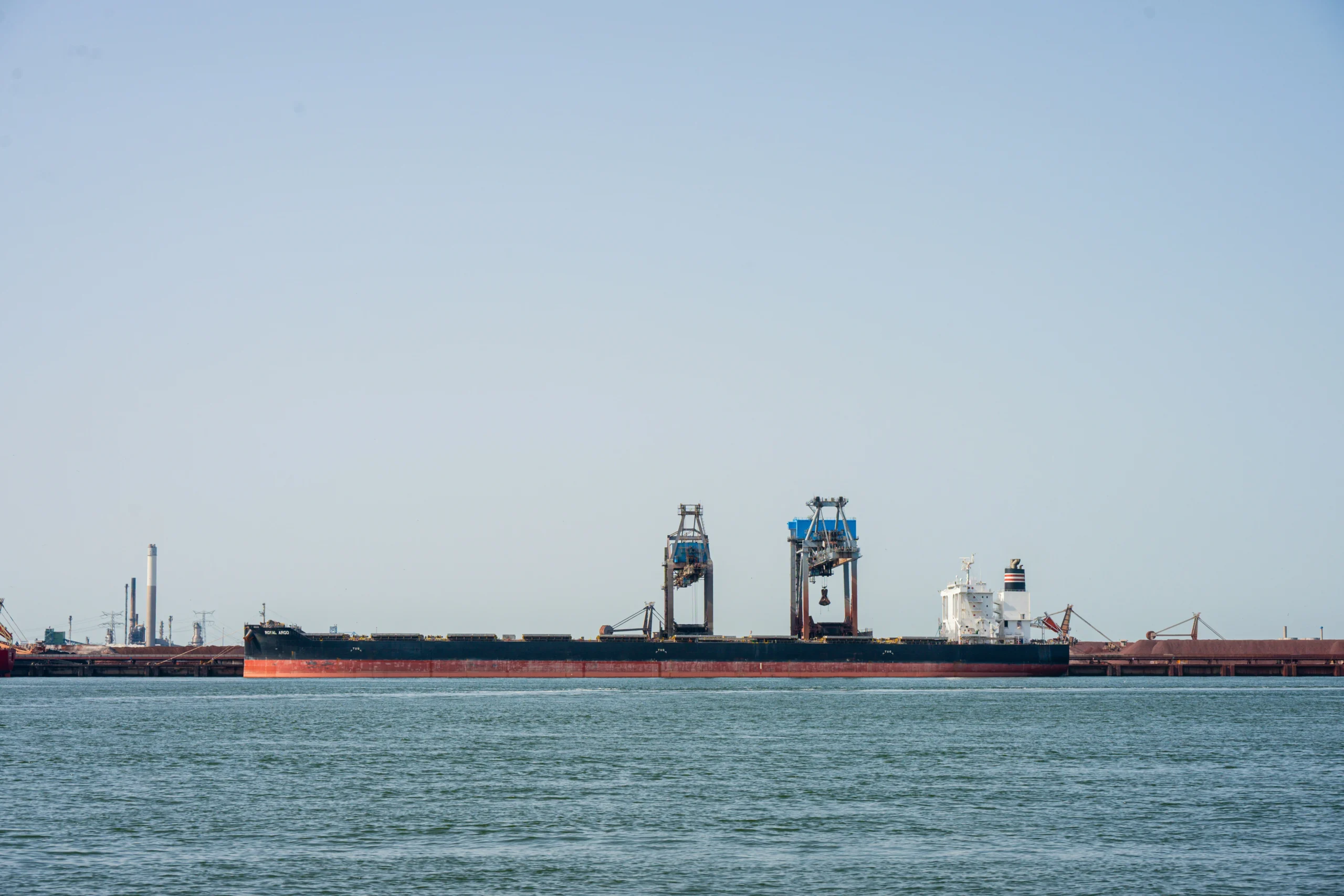
Featured image: Bulk carrier alongside an industrial terminal in Rotterdam. Photograph by Julia Taubitz via Unsplash, used under the Unsplash License.