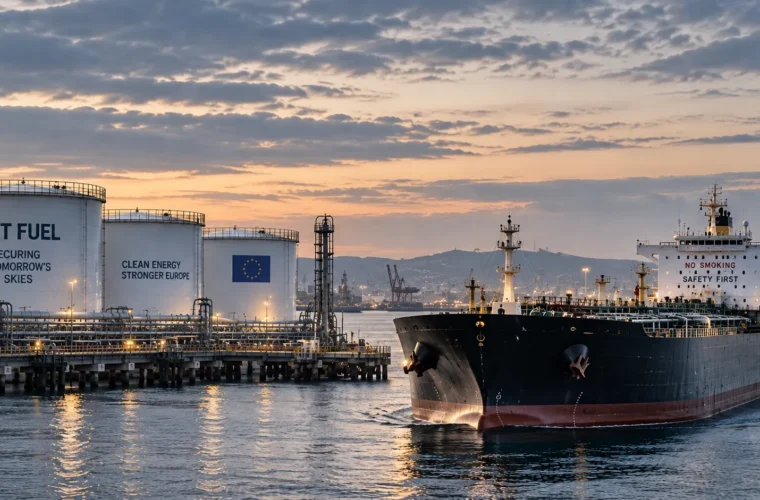
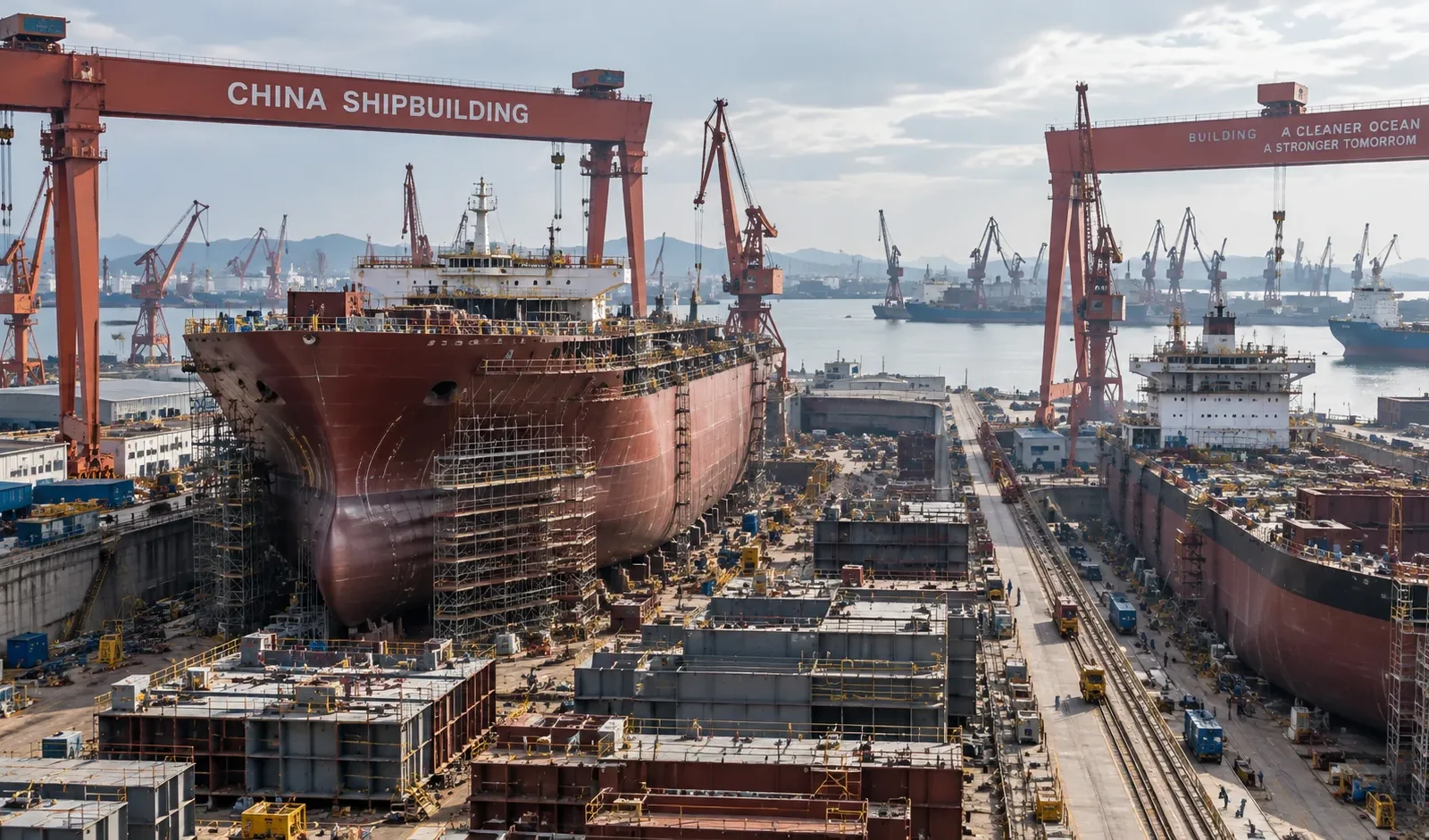
The COSCO shipbuilding IPO process is moving forward at a moment when Chinese yards are capturing an extraordinary share of global newbuilding demand. COSCO Shipping Heavy Industry enters the process with nine major shipyards, a 216-vessel orderbook at the end of 2025 and exposure to one of shipping’s strongest capital-investment cycles.
The COSCO shipbuilding IPO is not yet a completed stock-market listing. It is a planned A-share flotation that has entered China’s formal pre-IPO counselling stage.
China Maritime Services Network reported that COSCO Shipping Heavy Industry registered for pre-IPO tutoring on 12 September, with China International Capital Corporation and China Merchants Securities appointed as advisers. The filing is an important preparatory step, but it is not the same as receiving listing approval or completing an IPO.
Reuters Breakingviews highlighted the move on 21 September, arguing that COSCO is approaching the capital market during a strong shipbuilding cycle. Reuters described COSCO Shipping Heavy Industry as the world’s fifth-largest shipbuilder by new orders and the largest ship repairer. Read the Reuters Breakingviews analysis.
COSCO Shipbuilding IPO Starts With a 216-Vessel Orderbook
The strongest part of the investment story is not simply the COSCO name. It is the amount of work already sitting inside the yard network.
At the end of 2025, COSCO Shipping Heavy Industry held a shipbuilding backlog of 216 vessels totaling 24.77 million dwt, according to the pre-IPO information reported by CNSS. Of that total, 76 vessels representing 8.11 million dwt were already under construction.
During 2025 the company secured 79 new shipbuilding orders worth RMB41.3 billion and delivered 62 vessels totaling 6.31 million dwt. Revenue increased 22.03% year on year, with reported industry estimates placing the revenue scale close to RMB50 billion.
The company operates nine large and medium-sized yards and has stated annual merchant-ship building capacity of more than 8 million dwt.
That makes the planned listing a financing event attached to a substantial industrial platform rather than an early-stage yard expansion concept.
China Is Dominating the 2026 Newbuilding Market
The timing is unusually favourable because China’s share of global contracting has continued to rise.
Clarksons Research data reported by PortNews showed global newbuilding orders reached 59.72 million compensated gross tons across 2,128 vessels in the first eight months of 2026.
Chinese shipyards secured 45.39 million CGT of that total — approximately 76% of global contracting — compared with 15.7% for South Korea.
August was even more concentrated. Chinese yards took 85.4% of global new orders by CGT during the month, with 107 vessels totaling 3.59 million CGT.
| 2026 shipbuilding indicator | China | South Korea | Market signal |
|---|---|---|---|
| Jan–Aug new orders | 45.39m CGT | 9.38m CGT | China held about 76% of global contracting |
| Jan–Aug global share | 76.0% | 15.7% | Large gap in contracted volume |
| August global share | 85.4% | 7.3% | Extremely concentrated monthly contracting |
| End-August orderbook | 145.39m CGT | 37.96m CGT | China held 67.2% of the global orderbook |
The numbers show why a shipbuilder with existing scale may want access to public capital now. The constraint in the strongest yards is increasingly not whether demand exists, but how quickly capacity, labour, equipment and delivery slots can be expanded without damaging execution.
The Newbuilding Boom Is Not One Vessel-Class Story
The current cycle is broad, but it is not uniform.
Tanker contracting has been particularly strong. Clarksons data reported for August showed tanker orders up 76.1% year on year, while LPG carrier contracting also increased. LNG carrier contracting, by contrast, was substantially weaker during the month.
Tide Signal’s analysis of 217 VLCC orders in 2026 shows how extraordinary the tanker side of the investment cycle has become. That article examines the interaction between high freight earnings, an ageing tanker fleet, longer crude routes and future fleet supply.
For shipyards, a strong tanker market can translate directly into demand for large berths, steel capacity, engines, outfitting resources and delivery slots.
But tanker orders are only one part of the picture. Container ships, gas carriers, offshore projects and alternative-fuel vessels are competing for yard capacity as well.
↓
Owners renew and expand fleets
↓
Shipyard orderbooks grow
↓
Delivery slots tighten
↓
Newbuilding prices stay elevated
↓
Shipyards need more capital and capacity
Newbuilding Prices Show How Much Capital Is at Stake
Shipyard demand is also visible in newbuilding prices.
The Clarksons Newbuilding Price Index reached 186.34 in August. Benchmark values reported with the index placed a new VLCC at around $131 million, a 174,000-cbm LNG carrier at about $248.5 million, and a 22,000–24,000 TEU containership at approximately $254 million.
For owners, those prices increase the importance of financing structure, delivery timing and long-term employment assumptions.
For shipyards, they underline the scale of working capital, equipment procurement and project execution required to carry a large multi-year orderbook.
This is why a shipbuilding IPO can be strategically important even for a company that already belongs to one of the largest shipping groups in the world.
COSCO Heavy Is More Than a Newbuilding Yard
COSCO Shipping Heavy Industry combines newbuilding with ship repair, conversion, offshore engineering and supporting services.
Reuters Breakingviews described the company as the world’s largest ship repairer, while company information cited in the pre-IPO report says the group has delivered more than 860 vessels and more than 50 offshore engineering projects.
That diversification matters because newbuilding is highly cyclical.
Ship repair and conversion can provide a different revenue profile from new construction. When owners hesitate to order new ships, they may instead invest in life extension, efficiency upgrades, fuel conversions, ballast-water systems, scrubbers, energy-saving devices or major machinery work.
The result is an industrial platform exposed to several different capital-spending decisions made by shipowners.
Green Fleet Investment Is Feeding the Yard Pipeline
Environmental regulation is another important driver of the current shipbuilding cycle.
Owners are not only replacing old ships. Many are ordering vessels designed around alternative fuels, lower consumption and future regulatory flexibility.
An official COSCO SHIPPING Energy 2025 annual report shows how this trend translates into actual contracts with COSCO Shipping Heavy Industry yards.
In February 2025, COSCO SHIPPING Energy and subsidiaries contracted six oil tankers from COSCO Heavy yards for an aggregate RMB3.392 billion. The package included two Panamax crude/product tankers described as methanol-fuel-ready, two methanol dual-fuel Aframax tankers and two methanol dual-fuel LR2 tankers.
Later in 2025, another package covered 19 vessels with a total contract price of RMB7.882 billion, including Aframax, LR2, LR1 and MR tankers.
These are related-party contracts inside the wider COSCO group, so they should not be treated as proof of independent external demand. But they demonstrate the type of fleet-renewal work the yard network is already building.
Tide Signal’s Ammonia as Marine Fuel guide explains why new fuels are creating new design, safety and training requirements across the industry, while the MARPOL Annexes guide provides the wider regulatory context behind emissions and pollution-control investment.
The strongest argument for the COSCO shipbuilding IPO is not simply that China is winning more orders. It is that the current cycle is demanding more capital per ship and more technical complexity per delivery.
A yard building conventional tonnage competes mainly on price, quality and delivery. A yard building methanol-ready tankers, dual-fuel ships, large containerships and offshore projects must also invest in engineering capability, specialised systems, supplier integration and workforce skills.
Public-market access can therefore support expansion, but it does not remove execution risk. The more crowded the orderbook becomes, the more valuable schedule discipline, supplier control and project quality become.
Why an IPO Can Matter to Shipowners
Shipowners do not normally choose a yard because it is publicly listed.
They care about price, delivery slot, design capability, refund guarantees, quality, class approvals, technical track record and whether the builder can deliver on time.
But a successful capital raise can still matter indirectly.
Additional capital can support yard expansion, equipment, digitalisation, working capital and engineering capacity. Those investments can increase the number or complexity of projects a builder is able to handle.
That can affect owners through:
more available delivery slots; greater competition between major builders; faster development of alternative-fuel designs; improved repair and conversion capacity; and potentially different pricing power across vessel classes.
The effect will not necessarily be lower newbuilding prices. If demand remains stronger than available high-quality capacity, shipyards can still retain pricing power even while expanding.
The Capacity Question Is Becoming More Important Than the Order Count
Shipping often focuses on the number of ships ordered.
For the next phase of the cycle, delivery capacity may be the more important number.
An orderbook represents future supply, but a vessel only changes the freight market after it is delivered.
If leading yards are heavily booked, new orders can be pushed into later delivery years. That delays fleet growth even when contracting looks extremely strong.
This distinction is especially important in sectors such as VLCCs where freight can remain tight while a large future orderbook builds in the background.
The Tide Signal VLCC orderbook analysis makes the same point from the shipowner side: current freight is determined by ships available today, while the supply impact of newbuilding decisions can take years to arrive.
Could the Boom Eventually Create Too Much Capacity?
Yes. That is one of the central risks in any shipbuilding upcycle.
Strong freight encourages owners to order. High secondhand values make newbuildings look relatively more attractive. Older ships remain profitable enough to avoid scrapping. At the same time, yards expand capacity.
If all of those forces continue together, future vessel supply can grow faster than cargo demand.
The problem is timing.
An owner ordering a ship in 2026 may be making a view about freight markets in 2028, 2029 or 2030. The commercial conditions that justified the order can change long before delivery.
This is why shipbuilding cycles frequently contain both a shortage phase and a later oversupply risk.
Shipping Finance Is Becoming Part of the Yard Story
The IPO also sits inside a wider change in maritime capital allocation.
New ships are expensive, alternative-fuel systems add technical uncertainty, environmental rules can alter future operating costs, and lenders increasingly have to consider vessel efficiency and long-term employability.
Tide Signal’s Shipping Finance in 2026 analysis examines why carbon exposure, regulation and efficiency are becoming financial variables rather than purely environmental ones.
That matters for shipyards because owners can only place orders if capital is available on terms that still make the project economic.
A shipbuilding boom therefore depends on two financing systems at once: the shipyard’s ability to finance production and expansion, and the shipowner’s ability to finance the vessel being ordered.
Competition With South Korea Still Matters
China has a commanding share of current order intake, but South Korea remains the closest large-scale competitor in complex shipbuilding.
Korean yards retain strong positions in LNG carriers, large containerships, offshore engineering and high-value vessel types. The competitive question is therefore not simply how many ships each country builds.
It is also which yards capture the highest-value contracts, which technologies they control, how quickly they can deliver and what margins they earn.
China’s 76% share of global Jan–Aug contracting by CGT is a major scale advantage, but the long-term contest will also be about vessel complexity and profitability.
What the COSCO Shipbuilding IPO Still Does Not Tell Us
Several important questions remain unanswered.
The company has not publicly disclosed the final amount it intends to raise, the valuation it will seek or a confirmed listing date.
The current stage is pre-IPO counselling, not a completed application or approved flotation.
Investors will eventually need more detailed financial information on margins, yard profitability, working-capital requirements, customer concentration, related-party orders and how much of the business comes from newbuilding versus repair and conversion.
Those details will determine whether the market sees COSCO Heavy primarily as a cyclical shipbuilder, a diversified marine-engineering group or a strategic industrial platform inside the broader COSCO ecosystem.
What Shipping Should Watch Next
The Bottom Line
The COSCO shipbuilding IPO process is arriving at one of the strongest moments for Chinese shipbuilding in modern market history.
COSCO Shipping Heavy Industry already had 216 vessels in its orderbook at the end of 2025, while Chinese yards captured 76% of global new orders by CGT in the first eight months of 2026 and more than 85% in August alone.
That scale makes the proposed listing more than a corporate-finance story.
It is a signal about where capital is flowing inside shipping: toward more yard capacity, more newbuildings, more complex fuel systems and a larger industrial base capable of delivering them.
For shipowners, the central question is not whether China can keep winning orders. It is how quickly that shipyard expansion turns today’s orderbook into tomorrow’s delivered fleet — and what that means for freight, asset values and vessel supply when the ships finally arrive.
- Reuters Breakingviews — COSCO shipbuilding IPO and global shipbuilding context, 21 September 2026
- CNSS — COSCO Shipping Heavy Industry A-share listing process and pre-IPO filing
- PortNews / Clarksons Research — August 2026 global newbuilding orders, orderbook and newbuilding prices
- COSCO SHIPPING Energy 2025 Annual Report — tanker newbuilding contracts with COSCO Shipping Heavy Industry yards