Safety · Operations · Markets · Marine Insurance
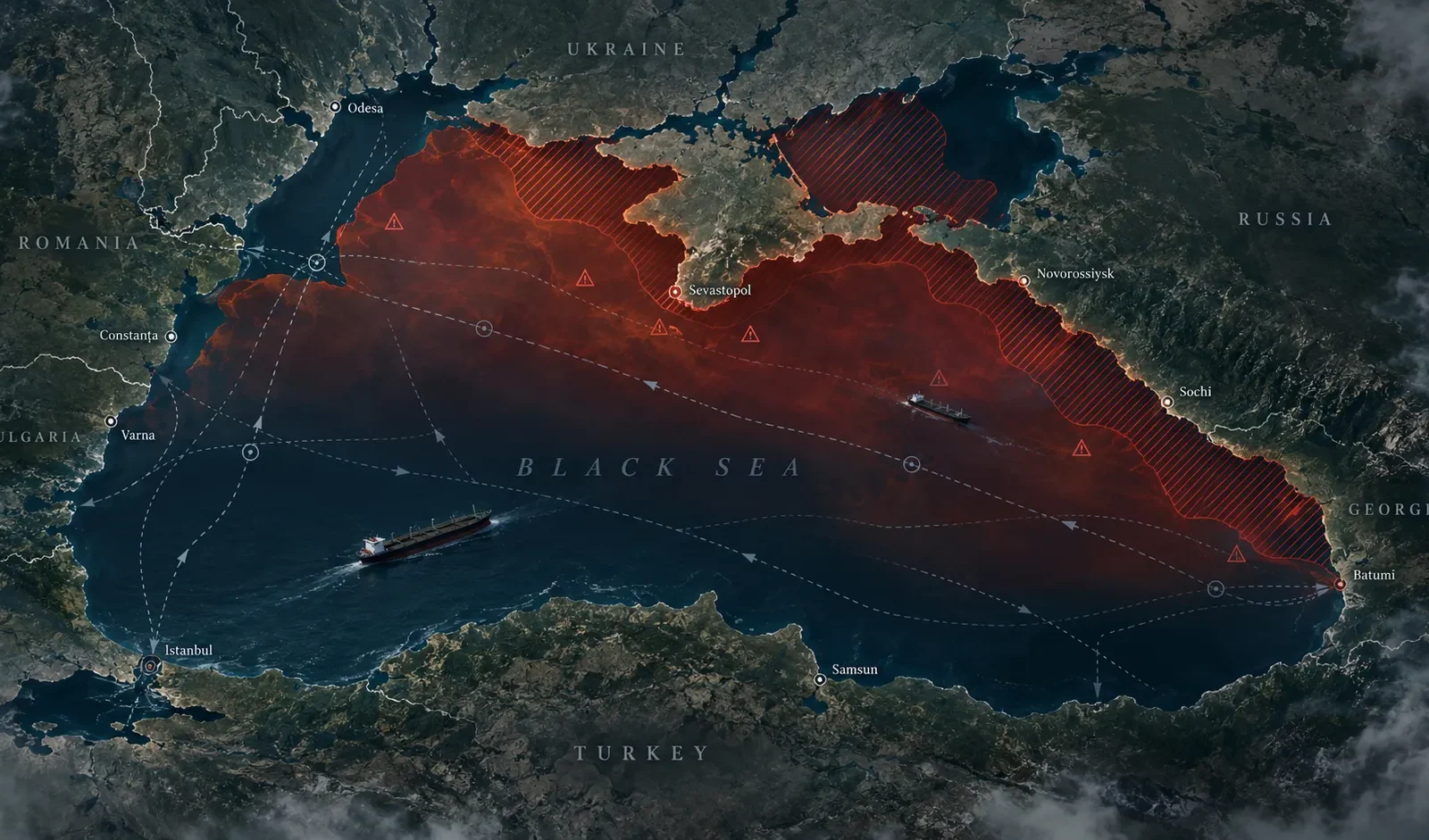
The Black Sea high risk zone has effectively widened after the Joint War Committee expanded reporting requirements across the whole Black Sea as attacks on commercial shipping increased. The change does not close the sea to merchant traffic, but it makes voyage notification, war-risk underwriting and owner acceptance even more important for ships trading in the region.
What changed in the Black Sea? The Joint War Committee expanded its reporting requirements to the whole Black Sea area. The coastal waters of Russia and Ukraine were already listed. According to the JWC secretary, voyages inside the territorial waters of adjacent countries still do not require notification under this change.
Black Sea High Risk Zone: What Changed in September 2026?
London’s marine insurance market has widened the area of the Black Sea subject to heightened reporting requirements as attacks on commercial shipping increase. Reuters reported on 18 September that the Joint War Committee had expanded Black Sea reporting requirements to the whole of the Black Sea area.
Previously, the coastal waters of Russia and Ukraine were already listed. The new change broadens the reporting framework beyond those coastal areas and reflects a deterioration in the perceived maritime threat environment.
The practical importance is that ships trading in the region may face additional notification, underwriting and voyage-approval considerations even when their route does not call directly at a Russian or Ukrainian coastal location.
Tide Signal read
The development matters because marine insurance reacts to risk geography, not only to whether a port is open. A route can remain physically navigable while the commercial cost of using it rises through premiums, owner restrictions, voyage conditions and reduced appetite for exposure.
What Is the Joint War Committee?
The Joint War Committee brings together underwriting representatives from the Lloyd’s and London company markets that write marine hull war business. It publishes the Listed Areas: geographical regions considered to present enhanced risk from war-related perils.
The Lloyd’s Market Association says the JWC works with independent security advisers and draws on input from government, security firms and shipping companies. Its current Listed Areas were reviewed in September 2026.
Importantly, the JWC does not set a universal war-risk premium. The LMA states that rating remains a matter for individual negotiation between underwriters and brokers.
Does Every Black Sea Voyage Now Require Notification?
No. The distinction in the latest advisory is important.
Neil Roberts, head of marine and aviation at the Lloyd’s Market Association and secretary of the Joint War Committee, said the JWC had expanded reporting requirements to the whole Black Sea area, but that voyages within the territorial waters of adjacent countries still do not require notification.
The Black Sea is bordered not only by Russia and Ukraine but also by Bulgaria, Georgia, Romania and Turkey. The latest change therefore widens the risk map without treating every movement in every coastal area identically.
Operators should still rely on the actual policy wording, broker guidance and the current JWC Listed Areas when deciding whether a particular voyage triggers notification or additional cover requirements.
What the Black Sea High Risk Zone Means for Marine Insurance
The most immediate commercial effect is greater attention to war-risk insurance. Ships entering a listed area may require additional war-risk cover or voyage-specific approval, depending on the underlying policy.
The cost is not fixed. It can move rapidly with attack frequency, vessel type, ownership, flag, cargo, port, route, time in the area and underwriter appetite.
Reuters reported that war-risk premiums have surged in recent weeks and can add hundreds of thousands of dollars to the cost of a seven-day voyage in the region. That figure should not be treated as a standard tariff; it illustrates the scale of additional cost that can emerge when threat perception rises.
For the mechanics behind those charges, Tide Signal’s War Risk Premiums in Shipping guide explains how additional war-risk cover can move into freight, charterparty cost allocation and final voyage economics.
How Black Sea War Risk Moves Into Voyage Cost
War-risk insurance is only one line in the voyage calculation. A higher threat level can affect several connected costs at the same time.
- Additional premium: voyage-specific war-risk insurance cost.
- Freight premium: owners may require higher freight to compensate for exposure.
- Waiting time: ships may wait for security clearance, berth availability or operational guidance.
- Deviation: route changes can increase distance, bunkers and time.
- Crew arrangements: companies may impose additional procedures or restrictions.
- Port acceptance: owners may restrict calls to ports they consider too exposed.
- Following employment: a risky voyage can change the vessel’s next open position and commercial options.
Tide Signal’s Voyage Estimation in Shipping guide shows how extra time, bunker consumption and voyage expenses flow through to TCE and break-even freight.
What Owners and Charterers Should Check Before a Black Sea Fixture
A listed-area change does not answer the chartering question by itself. The actual voyage still has to be tested against the contract, insurance and company risk framework.
| Check | Why it matters |
|---|---|
| Current JWC area | Confirms whether the route or port falls within the current reporting framework. |
| Hull war policy | Determines notice requirements, additional premium and any restrictions. |
| Charterparty wording | Allocates war-risk costs, voyage orders, refusal rights and additional expenses. |
| Owner approval | A voyage may be technically possible but commercially unacceptable to the owner. |
| Security guidance | Company and official guidance can affect route, timing and port approach. |
| Cargo and counterparties | Sanctions and compliance risk can sit alongside physical war risk. |
| Time in area | Longer exposure can influence the premium and operating risk. |
The same commercial chain is visible in other high-risk regions. Tide Signal’s analysis of Lloyd’s Gulf losses and shipping war-risk economics shows how security events can feed into insurance, vessel availability and freight without a formal route closure.
Why the Black Sea Matters to Global Shipping
The Black Sea is a major corridor for grain, crude oil and refined products. That makes any increase in marine risk commercially important well beyond the immediate region.
For dry bulk shipping, changes in Black Sea grain flows can alter tonne-mile demand, vessel positioning and the availability of Panamax and smaller bulk tonnage. For tankers, disruption can affect crude and product liftings, route selection and insurance cost.
The market impact therefore depends on more than whether individual ports remain open. It depends on whether enough owners, crews, insurers and charterers remain willing to accept the voyage.
Tide Signal’s Maritime Chokepoints Explained examines the wider principle: concentrated shipping routes become commercially fragile when security risk reduces usable capacity or forces longer alternatives.
A High-Risk Zone Does Not Mean the Black Sea Is Closed
This distinction is essential.
The Black Sea high risk zone is an insurance and risk-management designation. It does not itself create a blanket legal ban on commercial shipping and it does not mean every Black Sea port has stopped operating.
Likewise, being inside a listed area does not prove that a particular vessel will be attacked. The designation tells insurers and shipping companies that the risk is elevated enough to require additional attention.
Operational distinction
Open describes physical or legal access. Insurable describes whether cover can be arranged. Commercially acceptable describes whether the owner, charterer and other counterparties will actually proceed. Those three conditions can diverge sharply in a war-risk market.
Why the Change Could Affect Freight Even Without a Port Closure
Freight markets respond to the number of ships that are commercially available, not only to the number of ships that physically exist.
If some owners refuse Black Sea employment, the effective position list becomes smaller. If underwriters demand substantially higher additional premiums, owners may seek reimbursement or higher freight. If ships spend longer waiting for clearance or safer operating windows, the same fleet performs fewer voyages.
That can tighten the market even if cargo volumes remain unchanged.
The mechanism is similar to what Tide Signal has documented in Gulf shipping: geopolitical risk can transform vessel availability before it removes any ship from the world fleet.
7 Critical Black Sea Shipping Risks to Watch Next
| Signal | What it would indicate |
|---|---|
| New attacks on merchant ships | Could trigger another repricing of war-risk exposure. |
| JWC Listed Areas updates | Would show whether the formal risk geography changes again. |
| Additional premium levels | Provides a direct commercial signal of underwriter threat assessment. |
| Owner refusals | Indicates whether effective vessel supply is shrinking. |
| Port activity | Shows whether grain, crude and product flows remain operational. |
| Waiting and deviation | Can increase voyage time and reduce effective fleet capacity. |
| Adjacent-state territorial routes | Important because the latest JWC notification change preserves a distinction for those waters. |
Tide Signal Analysis: The Insurance Map Is Becoming Part of the Freight Map
The Black Sea development is important because it shows how quickly a security problem can become a commercial shipping problem.
The physical sea has not changed. What has changed is the market’s assessment of the probability and cost of operating within it.
When insurers widen reporting requirements, owners reassess employment. When owner appetite falls, charterers have fewer vessels to choose from. When fewer vessels are willing to trade, freight can rise even before cargo flows materially change.
That is why the Black Sea high risk zone matters beyond insurance. It can influence chartering, voyage economics, vessel positioning, port activity and ultimately the cost of moving grain and energy cargoes.
Black Sea High Risk Zone: Frequently Asked Questions
What is the Black Sea high risk zone?
It is part of the marine war-risk framework used by the Joint War Committee to identify areas considered to present enhanced war-related risk. In September 2026, reporting requirements were expanded across the whole Black Sea area.
Is the whole Black Sea closed to shipping?
No. The JWC change is a risk and reporting measure, not a blanket closure of the Black Sea to merchant shipping.
Do ships in the Black Sea need extra war-risk insurance?
Ships entering a JWC Listed Area may require additional war-risk cover or voyage-specific approval depending on their policy terms. Pricing and acceptance are negotiated individually.
Do voyages in Bulgarian, Georgian, Romanian or Turkish territorial waters require notification?
According to the JWC secretary quoted by Reuters, voyages within the territorial waters of adjacent countries still do not require notification under the latest expansion.
How expensive is Black Sea war-risk cover?
There is no universal tariff. Reuters reported that war-risk premiums have recently added hundreds of thousands of dollars to some seven-day voyages, but actual cost depends on the vessel, route, timing and underwriter.
Why can the high-risk designation affect freight?
If higher insurance cost or security concerns cause owners to reject Black Sea employment, the effective supply of available vessels can fall, which can increase freight pressure.
- Reuters — London marine insurers widen Black Sea high-risk zone as shipping attacks surge, 18 September 2026.
- Lloyd’s Market Association — Joint War Committee, role and Listed Areas framework.
- Lloyd’s Market Association — current JWC Listed Areas and September 2026 review.
Reporting status: 18 September 2026. Tide Signal will update this article if the Joint War Committee changes the Black Sea Listed Area, notification requirements or if marine war-risk conditions shift materially.