The United States has become one of the most important suppliers in the global seaborne diesel market. A possible US diesel export ban or temporary restriction would therefore do much more than keep additional fuel inside America: it could remove a major source of Atlantic product-tanker cargoes, force importers to source replacement barrels over longer distances and redraw freight demand across MR, LR1, LR2 — and potentially crude tanker — markets.
Tide Signal Market Intelligence · Updated 27 September 2026
The shipping market is analysing the possibility of temporary US diesel export restrictions after the proposal entered public policy debate. The distinction matters: this report examines the market impact of a potential restriction, not an implemented ban.
A US diesel export ban would probably not affect every tanker segment in the same direction.
The most immediate exposure would be in the Atlantic MR market, where US Gulf diesel exports generate a large amount of employment. If buyers were forced to replace those barrels with supply from Asia or the Middle East, longer voyages could support LR1 and LR2 tonne-mile demand.
The second-order effects could reach crude tankers as well: lower US refinery runs could leave more domestic crude available for export, while higher Asian diesel margins could alter what refiners are willing to pay for crude transportation.
Why the US Diesel Export Ban Debate Matters to Shipping
The shipping importance begins with scale.
According to Vortexa data published by Lloyd’s List, US seaborne diesel and gasoil exports have averaged about 1.4 million barrels per day in 2026.
That represented approximately 18% of global seaborne diesel volumes in the dataset, up from 14% in 2025.
The United States has therefore become more important to the global diesel system at exactly the moment supply elsewhere has tightened.
Tide Signal’s global diesel shortage analysis already shows how low inventories, disrupted supply and exceptionally strong refining margins have turned middle distillates into one of the tightest parts of the oil market.
Removing or restricting a major export source would not simply reduce trade.
It would change where replacement cargoes have to come from.
For shipping, that distinction is critical.
The shipping question is not only how many barrels disappear from US exports.
It is whether the replacement barrels travel farther.
A shorter US Gulf–Latin America diesel movement disappearing from the market could reduce MR employment. But if the buyer replaces that cargo with a longer-haul shipment from the Middle East or Asia, the replacement voyage could absorb substantially more vessel-days.
That is how fewer available barrels can, under some scenarios, create more tanker tonne-mile demand in another basin.
The US Is Shipping More Than 1 Million Barrels a Day of Distillates
Official US Energy Information Administration data confirms the scale of the export flow.
For the week ending 18 September 2026, the EIA reported US distillate fuel oil exports of 1.331 million barrels per day.
Weekly exports had been:
- 1.601m b/d on 14 August;
- 1.790m b/d on 21 August;
- 1.735m b/d on 28 August;
- 1.556m b/d on 4 September;
- 1.614m b/d on 11 September;
- 1.331m b/d on 18 September.
Monthly EIA data also show that the US Gulf Coast dominates American distillate exports.
In June, the US exported around 1.432m b/d of distillate fuel oil, with approximately 1.311m b/d originating from PADD 3 — the Gulf Coast.
Why MR Tankers Have the Most Immediate Exposure
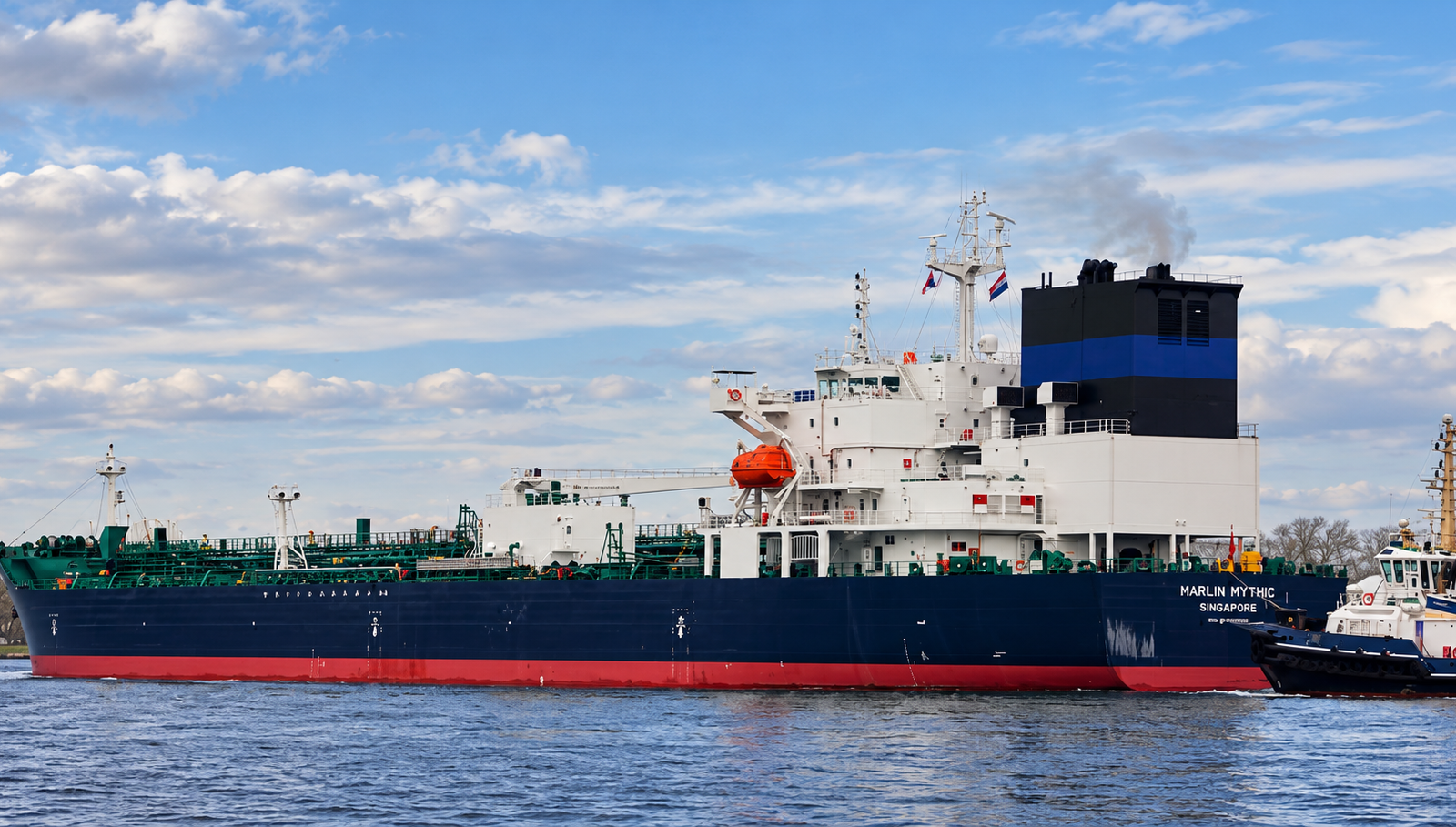
The clearest shipping exposure is the MR2 product tanker market.
Vortexa data cited by Lloyd’s List show MR2 tankers carried approximately 88% of US diesel exports year-to-date.
Other vessel classes had substantially smaller shares:
| Vessel Segment | Share of US Diesel Exports YTD | Potential Initial Effect of Restrictions |
|---|---|---|
| MR2 | 88% | Highest direct cargo-loss exposure, particularly in the Atlantic basin |
| LR2 | 5% | Potential benefit from longer-haul replacement supply |
| LR1 | 2% | Potential replacement-cargo opportunities depending on parcel size |
| MR1 | 2% | Smaller direct exposure |
| Other | 3% | Mixed effects |
This makes an export restriction fundamentally different from a normal shift in regional arbitrage.
It could remove a large volume of cargo from a market in which one vessel segment — MR2 — has become heavily exposed.
Atlantic MR Rates Could Face the First Shock
The most direct scenario is straightforward.
↓
Fewer US Gulf export cargoes
↓
Lower MR2 cargo demand in the Atlantic
↓
More available MR tonnage
↓
Initial pressure on Atlantic MR freight
Lloyd’s List reported that Fearnley Securities viewed a possible restriction as initially negative for Atlantic MR freight.
That conclusion follows the cargo geography.
According to the same Vortexa data, approximately 62% of US diesel exports this year went to South and Central America and the Caribbean.
Another 24% went to Europe.
Those are core Atlantic-basin trades.
Remove the originating barrels and a significant amount of existing MR employment disappears unless an alternative trade develops.
But the Story Could Reverse for LR1 and LR2 Tankers
The global diesel market cannot simply stop consuming because one exporter reduces supply.
Importing regions would search for replacement barrels.
That could favour:
- Middle East refineries;
- Indian refiners;
- South Korean refiners;
- Chinese exports where quotas and domestic supply allow;
- and other Asian suppliers.
The crucial shipping difference is distance.
Replacing a US Gulf cargo into Latin America with diesel from Northeast Asia creates a radically different voyage.
Likewise, replacing a US cargo into Europe with barrels from the Middle East or Asia could extend vessel employment.
Those longer-haul movements favour larger clean-tanker parcels and can support LR1 and LR2 demand.
Why Asia Could Become Even More Important
The Pacific product-tanker market is already unusually strong.
Tide Signal reported on 26 September that Asia MR tanker rates had reached multi-year highs as diesel exports surged.
That market is being supported by strong regional refined-product export demand and long-haul opportunities.
A restriction on US diesel exports could increase the call on Asian replacement supply.
If Asian refiners respond by exporting more middle distillates, the tanker effect could extend beyond MRs.
Larger parcels travelling from Asia or the Middle East toward Europe and Latin America could favour LR1 and LR2 ships.
MR vs LR2: The Tanker Trade-Off
| Factor | MR | LR2 |
|---|---|---|
| US diesel exposure | Very high | Lower direct exposure |
| Atlantic impact | Potentially negative initially | More limited direct impact |
| Asia replacement trade | Can benefit | Potentially significant beneficiary |
| Long-haul economics | Flexible but smaller parcel | Stronger scale on large long-distance cargoes |
| Tonne-mile sensitivity | High | Particularly high on large replacement parcels |
Where US Diesel Exports Are Going Today
The destination pattern shows why the policy question has implications far beyond the United States.
Vortexa data cited by Lloyd’s List put the 2026 YTD destination split at approximately:
- 62% — South and Central America and the Caribbean;
- 24% — Europe;
- 9% — Africa;
- 2% — Asia;
- 3% — other destinations.
Mexico was the largest individual country destination in that dataset, followed by Chile, Brazil and several European and Latin American destinations.
This creates an important shipping asymmetry.
The US is physically close to many of its major diesel buyers.
Replacement supply from Asia or the Middle East is not.
Europe Would Have to Compete Harder for Replacement Diesel
Europe is already operating in an unusually tight middle-distillate environment.
Tide Signal’s Europe jet-fuel deficit analysis shows how the region has been reaching farther into Asian supply as nearby availability tightened.
The same broad freight mechanism applies to diesel.
If US supply were curtailed, European buyers could be forced to compete more aggressively for barrels originating farther east.
The physical consequence for shipping would be longer voyages and potentially stronger competition for available clean tonnage.
Latin America Could Face an Even Larger Routing Change
Latin America matters because it currently receives the majority of US seaborne diesel exports.
Many destinations benefit from geographic proximity to US Gulf refineries.
If those barrels were unavailable, replacement sourcing could extend considerably farther.
A cargo that previously moved from the US Gulf to the Caribbean or South America could instead originate from:
- Northwest Europe;
- the Mediterranean;
- the Middle East;
- India;
- or Asia.
Even if replacement volumes were incomplete, the increase in voyage distance could generate additional vessel-days.
Could China Fill the Gap?
China has recently increased refined-fuel exports.
Tide Signal’s China fuel exports analysis tracks the rebound in diesel and jet-fuel shipments.
But China cannot be treated as an automatic balancing barrel.
Exports depend on refinery economics, quotas, domestic requirements and policy.
A sharp rise in international diesel prices may improve export economics, but domestic energy-security considerations can affect how much product is ultimately released.
The Existing Global Diesel Shortage Makes the Risk Larger
This debate is taking place against an already tight physical market.
Reuters reported on 21 September that global diesel shortages could persist into 2027, with US inventories at historically low seasonal levels and Europe and Asia also facing constrained stocks.
That is why a US restriction would matter more now than it would in a well-supplied diesel market.
There is less spare supply available to replace a large exporter quickly.
Read the full Tide Signal analysis: Global Diesel Shortage Could Last Into 2027 as Inventories Hit Historic Lows.
Could a US Diesel Export Ban Affect Crude Tankers?
Potentially, yes.
This is where the market becomes more interesting than a simple clean-tanker story.
If US refiners lose access to part of their export market, they could eventually reduce crude throughput.
Lower domestic refinery demand could leave additional US crude available for export.
That would potentially support crude tanker employment from the US Gulf.
Aframax Exposure
Additional US crude exports could create employment for Aframax tankers in Atlantic trades, depending on destination and parcel structure.
This is particularly relevant because Aframax and LR2 vessels occupy overlapping size ranges.
For the technical distinction between the crude-tanker classes, see Tide Signal’s VLCC vs Suezmax vs Aframax guide.
Could LR2s Move Back Toward Dirty Trades?
If LR2 clean-tanker economics and Aframax crude economics diverge enough, vessel employment can respond.
Some suitably specified LR2 tonnage has the technical flexibility to participate in dirty trades, subject to vessel specification, coatings, cargo history, cleaning and charterer requirements.
Changes in cross-segment vessel employment can tighten one market while adding supply to another.
Could the Policy Affect VLCC Rates Too?
The possible VLCC effect is more indirect.
One constraint on extreme crude tanker freight is refinery margin.
If reduced US diesel supply pushes refined-product values higher in Asia relative to crude, refinery margins could theoretically provide buyers with more room to absorb expensive crude freight.
Lloyd’s List identified this as one potential second-order effect of US export restrictions.
That does not mean a diesel restriction would automatically send VLCC rates higher.
VLCC freight still depends on crude supply, refinery demand, vessel availability, positioning, security exposure and voyage economics.
The WTI–Brent Spread Is Already Reacting to the Debate
The market is not waiting for a final policy decision before analysing the consequences.
Reuters reported on 25 September that discussion of a possible US diesel export ban had widened the discount of West Texas Intermediate crude to Brent.
WTI traded as much as $12.02 per barrel below Brent on 24 September, according to LSEG data cited by Reuters — the widest discount since 6 May.
The market logic is straightforward:
↓
Less export outlet for US refiners
↓
Potential reduction in refinery crude demand
↓
More domestic crude availability
↓
Pressure on WTI relative to Brent
↓
Potentially more incentive for US crude exports
What Would Happen Before a Ban Took Effect?
Timing would matter.
If a restriction were announced with a future effective date, the immediate tanker reaction could be the opposite of the later structural effect.
Cargo interests could attempt to move diesel out of the United States before the deadline.
That could temporarily create:
- a burst of US Gulf product fixtures;
- tighter prompt MR availability;
- higher short-term freight;
- port and terminal congestion;
- and a stronger scramble for prompt tonnage.
After the cutoff, however, cargo demand could fall sharply.
Why Worldscale Alone Will Not Tell the Whole Story
Any resulting freight move has to be translated into actual voyage economics.
A higher Worldscale number does not necessarily mean a better voyage if:
- ballast distance increases;
- bunker consumption rises;
- waiting time expands;
- port costs change;
- war-risk premiums rise;
- or the ship ends the voyage in a weaker position.
Tide Signal’s Worldscale in Shipping explains how tanker freight quotations translate into actual voyage revenue.
For the full owner-side calculation, see Voyage Estimation in Shipping.
US Diesel Ban Scenario: Who Could Gain and Who Could Lose?
| Segment | Initial Exposure | Potential Second-Order Effect |
|---|---|---|
| Atlantic MR | Negative | Could recover if replacement cargo patterns create new employment |
| Pacific MR | Neutral / positive | Potential support from higher Asian exports |
| LR1 | Limited direct hit | Potential long-haul replacement demand |
| LR2 | Limited direct hit | Potential beneficiary of large long-haul replacement parcels |
| Aframax | Indirect | Could benefit if more US crude becomes available for export |
| VLCC | Indirect | Could respond to changes in Asian refinery margins and crude economics |
These are market mechanisms rather than forecasts.
The actual result would depend on the design, duration and exemptions of any restriction, how refiners respond, which producers replace lost barrels and how quickly tanker positioning adjusts.
What Shipping Markets Should Watch Next
Why This Is Bigger Than a US Fuel Policy Story
The global tanker market has become increasingly sensitive to trade inefficiency.
A cargo does not need to disappear completely to reshape freight.
It only needs to move from a different refinery, over a different distance, on a different vessel class.
A US diesel restriction would potentially change all three at once.
That makes it a shipping story as much as an energy-policy story.
A US diesel export restriction would not produce one simple tanker-market winner.
The first impact could be negative for Atlantic MR2s because the US currently generates a large share of their diesel cargo base.
But replacing those barrels from Asia or the Middle East could lengthen voyages, increase tonne-mile demand and support LR1 and LR2 employment.
The effects could then spread into crude shipping if US refinery runs fall, more US crude becomes available for export or stronger Asian diesel margins alter the economics of paying record crude-tanker freight.
The key variable is therefore not simply whether US exports decline.
It is where the replacement barrel comes from — and how many vessel-days it takes to reach the buyer.
US Diesel Export Ban: Frequently Asked Questions
Has the United States banned diesel exports?
No nationwide US diesel export ban had been confirmed as in force as of 27 September 2026. The market is analysing proposals and public discussion around possible temporary restrictions.
How much diesel does the US export?
Vortexa data reported by Lloyd’s List put US seaborne diesel and gasoil exports at roughly 1.4 million barrels per day year-to-date in 2026. EIA weekly data showed 1.331 million b/d of distillate exports in the week ending 18 September.
How much of global seaborne diesel comes from the US?
Vortexa data cited by Lloyd’s List estimated the US at approximately 18% of global seaborne diesel volumes year-to-date in 2026.
Would a US diesel export ban hurt MR tanker rates?
It could initially pressure Atlantic MR rates because MR2 vessels carry the large majority of US seaborne diesel exports. Longer-haul replacement trades could later create alternative employment.
Could LR2 tanker rates benefit?
Potentially. If Europe or Latin America replaced US diesel with larger cargoes from the Middle East or Asia, the longer voyages and larger parcels could support LR2 tonne-mile demand.
Could US diesel restrictions affect crude tanker rates?
Yes indirectly. Lower US refinery runs could make more domestic crude available for export, while changing refinery margins overseas could alter what refiners can economically pay for crude freight.
Why does voyage distance matter?
A longer voyage keeps a tanker employed for more days. This means the same physical cargo volume can create significantly more tanker demand when the source of supply moves farther from the buyer.
Which tanker class carries most US diesel exports?
MR2 product tankers carried about 88% of US seaborne diesel exports year-to-date in the Vortexa dataset cited by Lloyd’s List.
Sources and Market Data
- US Energy Information Administration — Weekly US distillate fuel oil exports.
- US Energy Information Administration — Monthly distillate exports by PADD.
- Lloyd’s List — US diesel export restriction and tanker-rate analysis, including Vortexa shipping data.
- Reuters — Global diesel shortage and inventory conditions, 21 September 2026.
- Reuters — Global diesel prices and refining constraints, 21 September 2026.