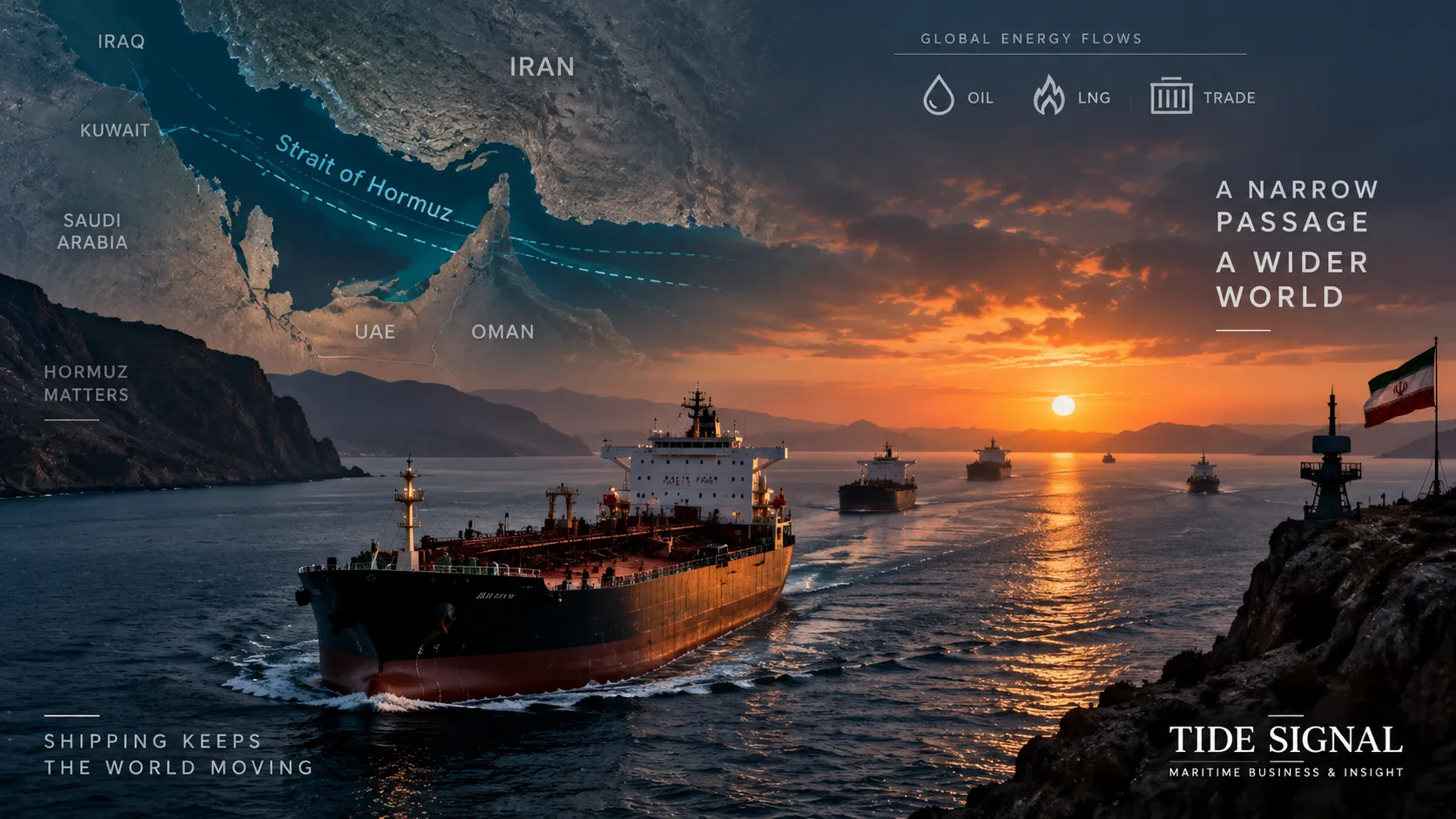
Is the Strait of Hormuz open? Yes, some vessels are still transiting, but the waterway remains far from normal commercial operation. The latest Reuters report, citing preliminary Kpler data, showed four visible commodity-vessel transits on 17 September, down from six the previous day and below the 10-day average of 16. Three LNG vessels also reappeared outside the strait, while the planned Oman meeting on Hormuz was postponed with no new date announced.
For related Tide Signal market analysis, see LNG Prices Surge to $26 as Asia Imports Hit 8-Year Low.
Yes — but not under normal commercial conditions. Physical passage remains possible for some ships, while visible commodity traffic is still far below pre-war levels and the security environment remains severe.
17 September
Previous day
Visible transits
Pre-war benchmark
- Is Hormuz open right now?
- Latest vessel traffic
- 13 September attack
- Which ships are still passing?
- Why open does not mean normal
- Iran vessel restrictions
- AIS and dark crossings
- War-risk insurance
- How security moves into freight
- Why Hormuz matters to energy
- LNG and STS adaptation
- Oman talks postponed and diplomacy
- What a real reopening looks like
- What operators should watch next
- Frequently asked questions
Is the Strait of Hormuz Open Right Now?
Yes. Ships are still passing through the Strait of Hormuz. But the commercially useful answer is more precise: the waterway is physically open to some movements while remaining severely disrupted as a normal shipping route.
A navigable channel is only one element of a successful voyage. An owner must accept the security profile, the insurer must be willing to cover the exposure on workable terms, the vessel and counterparties must pass sanctions and compliance checks, and the crew and managers must be prepared to perform the passage.
A ship can therefore be technically capable of transiting Hormuz and still be commercially unavailable for a Hormuz-linked fixture.
It is: how many ships can still transit with an acceptable combination of security, insurance, sanctions, owner approval and commercial economics?
For the latest incident-specific coverage, see Tide Signal’s 13 September Strait of Hormuz ship attack report. For the wider weekly market setup, see Shipping Week Ahead.
For related Tide Signal market analysis, see Shipping Week Ahead: Suez Return, $11,000 Container Rates.
Hormuz Shipping Traffic Remains Far Below Normal
The latest Reuters report, citing preliminary Kpler shipping data, showed four visible commodity-vessel transits on Thursday, 17 September. That was down from six in the previous-day comparison used in the latest dataset and well below the 10-day average of 16.
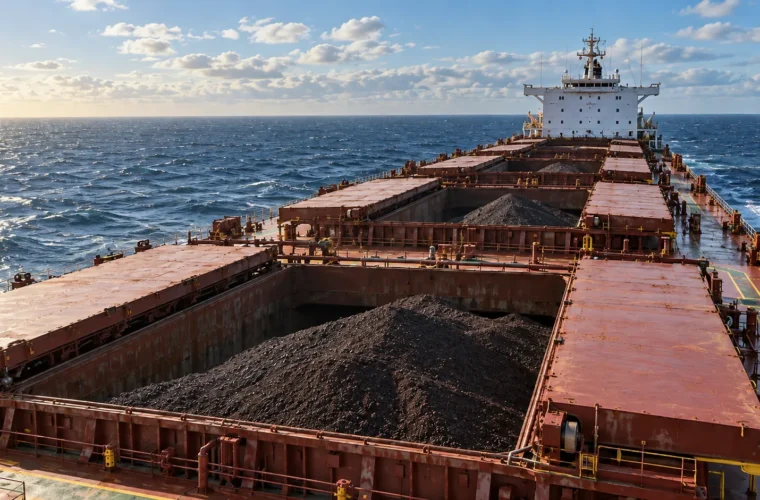
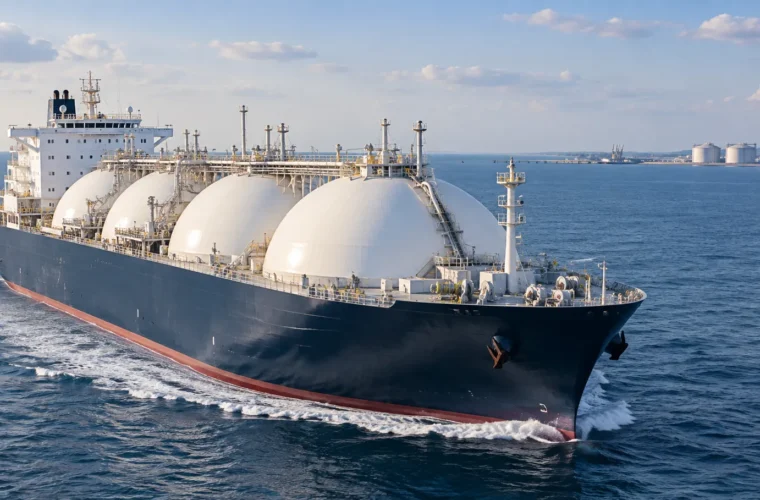
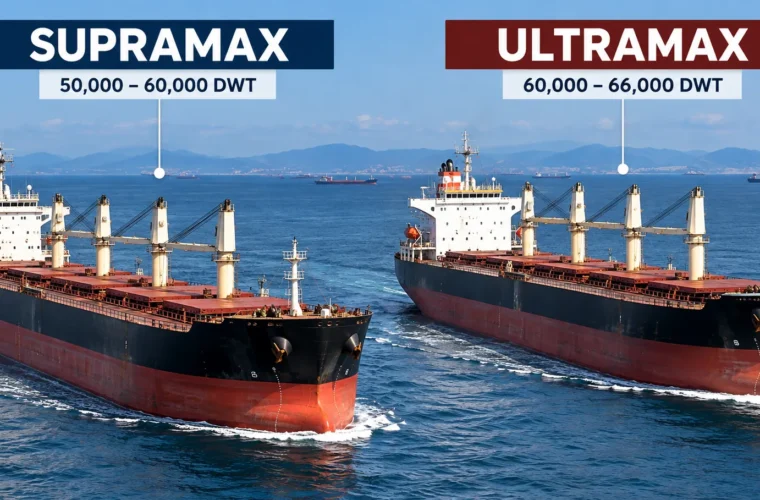
The four reported transits included two Panamax tankers, one Supramax and one Kamsarmax. Separately, three LNG vessels — Al Daayen, Al Samriya and Marigold LNG — reappeared outside the strait after several days, showing that selective gas and commodity movements continue even as overall activity remains heavily constrained.
Before the conflict, roughly 125 large commercial vessels per day used the Strait of Hormuz. The Kpler commodity-vessel count is not directly equivalent to that broader benchmark because it focuses on visible commodity traffic and may exclude ships moving without AIS transmission. Preliminary vessel-tracking figures can also be revised as new positional data are processed.
| Traffic measure | Latest level | What it indicates |
|---|---|---|
| Visible commodity transits | 4 on 17 Sep | Latest preliminary Kpler count reported by Reuters |
| Previous-day comparison | 6 | Day-to-day traffic remains thin and volatile |
| 10-day average | 16 | Latest recent-traffic benchmark |
| Pre-war commercial traffic | ~125/day | Shows the scale of disruption versus normal conditions |
This page uses visible vessel counts as a market indicator rather than presenting them as a complete census. Public tracking cannot capture every dark, delayed or non-commodity movement, and the latest daily figures should be read as a directional shipping signal.
Latest external source: Reuters — Hormuz traffic remains below the 10-day average as LNG vessels reappear .
Latest Hormuz Attack Raises Security Risk Again
Security conditions deteriorated again on 13 September when UK Maritime Trade Operations reported that a vessel transiting the Strait of Hormuz had been struck by an unidentified projectile.
The strike was followed by a fire and the crew was evacuated with assistance from local authorities. Reuters separately reported casualties from another Iranian commercial-vessel strike in the area, reinforcing the broader conclusion that active physical threat remains part of the operating environment.
A fresh projectile strike on 13 September shows that individual successful transits cannot be used as evidence that the route has normalised commercially.
Read Tide Signal’s full incident report: Ship Hit by Projectile in Strait of Hormuz as Fire Forces Crew Evacuation .
For official incident reporting and navigation warnings, operators should monitor UK Maritime Trade Operations and relevant flag-state and coastal-state advisories.
External source: Reuters — new Hormuz shipping attack heightens oil-supply fears .
Which Ships Are Still Passing Through Hormuz?
The latest 17 September Kpler snapshot reported by Reuters included two Panamax tankers, one Supramax and one Kamsarmax. Separately, three LNG vessels reappeared outside the strait. The mix reinforces a central point: selective movement continues across tanker, dry-bulk and gas trades, but no vessel class has a guaranteed or commercially normal pathway.
The useful conclusion is not that a particular vessel class has a guaranteed pathway. The useful conclusion is that selective passage continues across several segments while the pool of owners prepared to accept the trade remains far smaller than under normal conditions.
A VLCC carrying crude, an MR product tanker, an LNG carrier and a bulk carrier can face very different voyage economics, insurance conditions, ownership scrutiny and cargo urgency. Their willingness to transit cannot be inferred from vessel type alone.
For the tanker-market consequence, see Tide Signal’s VLCC Rates Hit Record WS450 on the Gulf of Oman–China Route.
Why an Open Strait Can Still Function Like a Closed Market
Shipping capacity is commercial, not merely physical.
Assume 100 ships are technically capable of performing a trade. If a large group of owners rejects the region, another group cannot secure suitable insurance, some ships create sanctions or counterparty concerns and others are unacceptable to the charterer, the market does not have 100 available ships.
It has only the ships that remain workable after every commercial filter has been applied.
This is why freight can rise sharply even if cargo demand itself has not increased. Charterers compete for the smaller set of vessels that are positioned correctly, approved, insured, legally workable and willing to enter the area.
Tide Signal’s $25 Million VLCC Voyage shows how scarce Gulf-capable tanker availability can transform voyage economics.
Iranian Vessel Restrictions Add Another Layer of Risk
Security risk around Hormuz also overlaps with vessel identity and compliance risk.
Iran expanded its restricted-vessel framework in early September, taking the reported list to 56 vessels. The list spans several vessel segments, including large crude tankers, gas carriers and product tankers.
Iran has warned that listed vessels can face fines, detention or confiscation if they attempt to use the strait, and has also threatened consequences for ships cooperating with restricted vessels through ship-to-ship transfers or transshipment.
That creates an additional commercial filter. Charterers, owners, banks and insurers may examine previous trading patterns, ship-to-ship counterparties, beneficial ownership, flag, management links and sanctions-sensitive commercial relationships before approving a fixture.
Read Tide Signal’s earlier coverage of the restriction regime: Iran Blacklists Tankers as Hormuz Traffic Falls .
External source: Reuters — Iran expands Hormuz vessel blacklist .
AIS Data and Dark Crossings: What Public Tracking Can and Cannot Show
The visible traffic count should not be confused with the total number of ships physically using Hormuz.
AIS transmissions can be absent or intermittent, satellite reception can introduce delays, and GNSS interference can reduce confidence in the public tracking picture. Not every vessel class is represented in every commodity-focused dataset.
Reuters explicitly notes that Kpler’s visible vessel counts exclude ships that may have crossed the strait with AIS switched off.
For operators, public AIS should therefore be treated as market intelligence rather than a substitute for company security assessments, flag guidance, insurer instructions or official maritime reporting channels.
This is also why Tide Signal’s broader Maritime Cyber Security guide is relevant to the Hormuz operating picture: navigation integrity, spoofing, GNSS interference and resilient bridge procedures increasingly overlap with physical maritime security.
That navigation-integrity risk is becoming more important in areas affected by GNSS interference and spoofing. See Tide Signal’s Galileo anti-spoofing breakthrough.
Is Marine War-Risk Insurance Still Available for Hormuz?
Yes. Marine war-risk cover can remain available for qualifying and legally permissible voyages. But availability does not mean normal pricing, automatic owner approval or predictable voyage execution.
The Lloyd’s Market Association has said that reduced traffic should not be explained simply as a disappearance of insurance capacity. War cover can remain available while notice provisions and terms allow underwriters to reprice rapidly as the threat environment changes.
The International Union of Marine Insurance has likewise said that meaningful marine-insurance capacity remains available in the Middle East where business is legally permissible, even as terms, pricing and underwriting appetite change.
For the commercial mechanics, see Tide Signal’s War Risk Premiums in Shipping: The Hidden Voyage Cost .
External references: Lloyd’s Market Association and International Union of Marine Insurance.
How Hormuz Risk Moves Into Freight
The war-risk premium itself does not determine the freight rate. Freight rises because security conditions change the number of vessels actually available to charterers.
When the effective position list shrinks, freight can rise even while the wider global fleet remains unchanged.
That mechanism has been visible in the VLCC market, where Gulf-linked freight reached extreme Worldscale levels as owners priced security exposure, scarce approved tonnage and uncertainty over following employment.
For the benchmark mechanics, read Worldscale in Shipping: How WS100 and Tanker Freight Rates Really Work .
For the current tanker-market structure, see Tide Signal’s VLCC Time Charter Rates: Spot vs Period Market and VLCC Asset Values.
For readers testing the voyage economics directly, Tide Signal’s Voyage Margin Calculator provides a practical framework for freight revenue, bunker cost, port expenses and break-even analysis.
Why the Strait of Hormuz Still Matters to Global Energy
The traffic disruption matters because Hormuz was one of the world’s largest energy arteries before the conflict.
The U.S. Energy Information Administration estimated that crude oil and petroleum liquids moving through Hormuz averaged around 21.6 million b/d in Q4 2025, compared with approximately 4.9 million b/d in Q2 2026.
Alternative routes exist, but they cannot fully reproduce the flexibility and capacity of the strait.
Saudi Arabia can move some crude west toward Yanbu through the East-West pipeline, while other producers have pipeline and storage alternatives. But the current crisis has shown that bypass infrastructure carries its own operational and security risk.
That issue became more urgent after attacks forced Saudi Arabia to shut the East-West pipeline in September. Read Tide Signal’s Saudi East-West Pipeline Shut as Bab el-Mandeb Risk Rises .
For the broader supply picture, see Tide Signal’s IEA Global Oil Supply Outlook 2026 .
External reference: U.S. Energy Information Administration — Global Oil Market / Short-Term Energy Outlook .
LNG and Crude Flows Are Adapting Through STS Outside Hormuz
The disruption is changing not only which ships transit Hormuz, but also where cargo changes hands.
Reuters reported on 18 September that the LNG vessels Al Daayen, Al Samriya and Marigold LNG had reappeared outside the strait after several days. The report also said QatarEnergy-linked Al Rayyan carried out a ship-to-ship cargo transfer with Al Mashabiyyah off Oman on 13 September.
For the wider impact on Qatar’s LNG expansion plans, see Tide Signal’s QatarEnergy North Field expansion.
STS structures can reduce the number of receiving ships required to accept the full Gulf exposure, but they do not remove risk. They relocate parts of the voyage, cargo-transfer and security exposure to another vessel and location.
The same adaptation is now visible in crude. Trade sources told Reuters that Saudi Aramco plans to move around 60 million barrels from Ras Tanura during September and October using ship-to-ship transfers at Sohar, Oman. The planned flow, estimated at roughly 1–1.5 million b/d, comes as reported early-October Fujairah-to-Asia VLCC freight has reached around WS800.
That combination matters commercially: STS is not simply an operational workaround. In a disrupted chokepoint market it can become part of the export system itself, linking cargo availability, vessel positioning, owner willingness, freight and insurance.
For the operational framework, see Tide Signal’s Ship-to-Ship Operations: Tanker Transfer Guide .
External references: Reuters — LNG vessels reappear outside Hormuz and Reuters — Aramco plans 60 million barrels of Gulf exports via Sohar STS.
The broader lesson is that shipping networks rarely respond to a chokepoint crisis with one solution. Alternative pipelines, shuttle voyages, STS transfers, changing cargo origins, different vessel pools and higher inventories can all become part of the adaptation.
Hormuz Diplomacy: Oman Meeting Postponed
The planned meeting in Oman between Gulf states and Iran, scheduled for 14 September to discuss possible arrangements around the Strait of Hormuz, was postponed. Oman’s foreign minister announced the delay on 13 September and no new date was provided.
The postponement removed an immediate diplomatic milestone from the shipping calendar. Reuters reported that the meeting had been expected to discuss possible arrangements for the strait, while an earlier Iran-Oman understanding was described as laying groundwork for a potential future reopening rather than delivering an immediate reopening.
The underlying negotiating gap also remains commercially important. Iran has sought a framework that would increase its role in administering passage and collecting fees, while Oman has opposed elements of that proposal.
The meaningful test is whether diplomacy produces conditions strong enough for owners, insurers, charterers, crews and banks to treat Gulf transits as materially more predictable.
External sources: Reuters — Oman meeting between Gulf states and Iran postponed , Reuters — proposed Hormuz talks and negotiating positions and Reuters — Iran-Oman understanding does not provide immediate reopening .
What Would a Real Commercial Reopening of Hormuz Look Like?
Tide Signal would treat a genuine commercial reopening as a combination of several indicators rather than a single diplomatic announcement.
| Signal | What improvement would look like |
|---|---|
| Traffic | Sustained increase in visible transits rather than a one-day spike |
| Security | Meaningful reduction in attacks, projectile incidents and threat advisories |
| Insurance | Broader owner acceptance and less extreme war-risk conditions |
| Restrictions | Lower detention, blacklist and confiscation uncertainty |
| Oil and LNG flows | Persistent recovery in Gulf export volumes |
| Freight | Shrinking scarcity premium for Gulf-capable tonnage |
Until several of those signals improve together, calling the Strait of Hormuz simply “open” gives an incomplete commercial picture.
What Owners, Charterers and Market Desks Should Watch Next
- Daily Kpler and Vortexa vessel counts: does visible traffic rise consistently above the recent average?
- UKMTO incident reporting: are merchant vessels still being struck, hailed, diverted or threatened?
- Oman diplomacy: is a new meeting date set, and does any proposal become credible enough to change owner, insurer or charterer behaviour?
- Iranian restriction lists: does the vessel blacklist expand again?
- War-risk terms: do premiums, notice requirements and exclusions start to ease?
- VLCC and product-tanker availability: does more owner-approved tonnage return to Gulf employment?
- LNG movements: do STS structures outside the strait become a persistent operating model?
- Saudi export infrastructure: does the East-West pipeline return to service?
- Oil prices and product cracks: do energy markets continue pricing persistent supply risk?
Tide Signal Analysis: Hormuz Is Open to Ships, Not to Business as Usual
The Strait of Hormuz is not closed in the simplest physical sense. Ships are crossing it.
But commercial shipping does not operate on physical possibility alone.
A working trade route requires predictable security, acceptable insurance, usable tonnage, clear rules, functioning payments, cargo availability and enough confidence for owners to commit expensive assets and crews.
Hormuz currently provides only part of that package.
The route has become selective. The market is filtering vessels by risk, ownership, insurance, sanctions exposure and commercial necessity.
Some ships pass. Some owners refuse. Some cargoes move through alternative structures. Some vessels disappear from the visible AIS picture. And every successful transit takes place inside a market where the price of access has become part of the freight equation.
That is the status Tide Signal will continue to track on this page.
Frequently Asked Questions
Is the Strait of Hormuz open today?
Yes. Some vessels are still transiting the Strait of Hormuz. However, traffic remains severely reduced and current conditions should not be described as normal commercial operation.
How many ships are passing through the Strait of Hormuz?
The latest Reuters report, citing preliminary Kpler data, showed four visible commodity vessels transiting on 17 September, compared with six in the previous-day comparison and a 10-day average of 16. The figure is not a complete census because dark, delayed and non-commodity movements may not appear in the same dataset.
What types of ships are still crossing Hormuz?
The latest reported visible transits included two Panamax tankers, one Supramax and one Kamsarmax. Separately, LNG vessels have reappeared outside the strait and STS structures continue to be used as operators adapt Gulf cargo flows.
Is the Strait of Hormuz completely closed by Iran?
No. Physical vessel transits continue. However, Iranian restrictions, military incidents, owner caution, insurance conditions and sanctions-related compliance have sharply reduced normal commercial activity.
Is war-risk insurance available for Hormuz?
Marine insurance bodies have said cover remains available for qualifying and legally permissible voyages, but pricing, notice provisions and underwriting decisions can change quickly with the security situation.
Why are some ships not visible on AIS near Hormuz?
Public tracking does not capture every vessel movement. AIS can be switched off or intermittent, while satellite delays, equipment issues and GNSS interference can also complicate the public picture. An AIS gap should not automatically be interpreted as proof of one specific motive.
Why is Hormuz so important for oil and LNG?
Before the current conflict, Hormuz was one of the world’s most important energy chokepoints. Large volumes of Gulf crude, petroleum products and LNG depended on the route, meaning sustained disruption affects production, inventories, tanker deployment, freight and global energy prices.
Will the Oman talks reopen the Strait of Hormuz?
The meeting that had been scheduled for 14 September was postponed and no new date was announced. A meaningful commercial reopening would require more than renewed talks: shipping markets would need sustained improvement in security, insurance conditions, owner confidence, compliance certainty and vessel traffic.
When will the Strait of Hormuz return to normal?
There is no confirmed date. Tide Signal would look for sustained growth in vessel traffic, fewer attacks, more stable insurance terms, reduced restriction risk and recovery in Gulf export flows before describing the route as commercially normalised.
- Reuters — 18 September Hormuz traffic and LNG-vessel update
- Reuters — Aramco Gulf exports, Sohar STS and tanker freight
- Reuters — 13 September attack and wider Gulf disruption
- Reuters — Oman meeting between Gulf states and Iran postponed
- Reuters — Iran-Oman understanding and reopening conditions
- Reuters — Iranian vessel restrictions
- UK Maritime Trade Operations — current incidents and advisories
- U.S. EIA — global oil market and Gulf-flow outlook
- Lloyd’s Market Association — Hormuz insurance availability
- IUMI — marine insurance capacity in the Middle East