Russian warships in the English Channel escorted two sanctioned cargo vessels during a closely monitored passage through northern European waters, in a development that brings maritime sanctions enforcement, naval security and commercial shipping risk increasingly into the same operational picture.
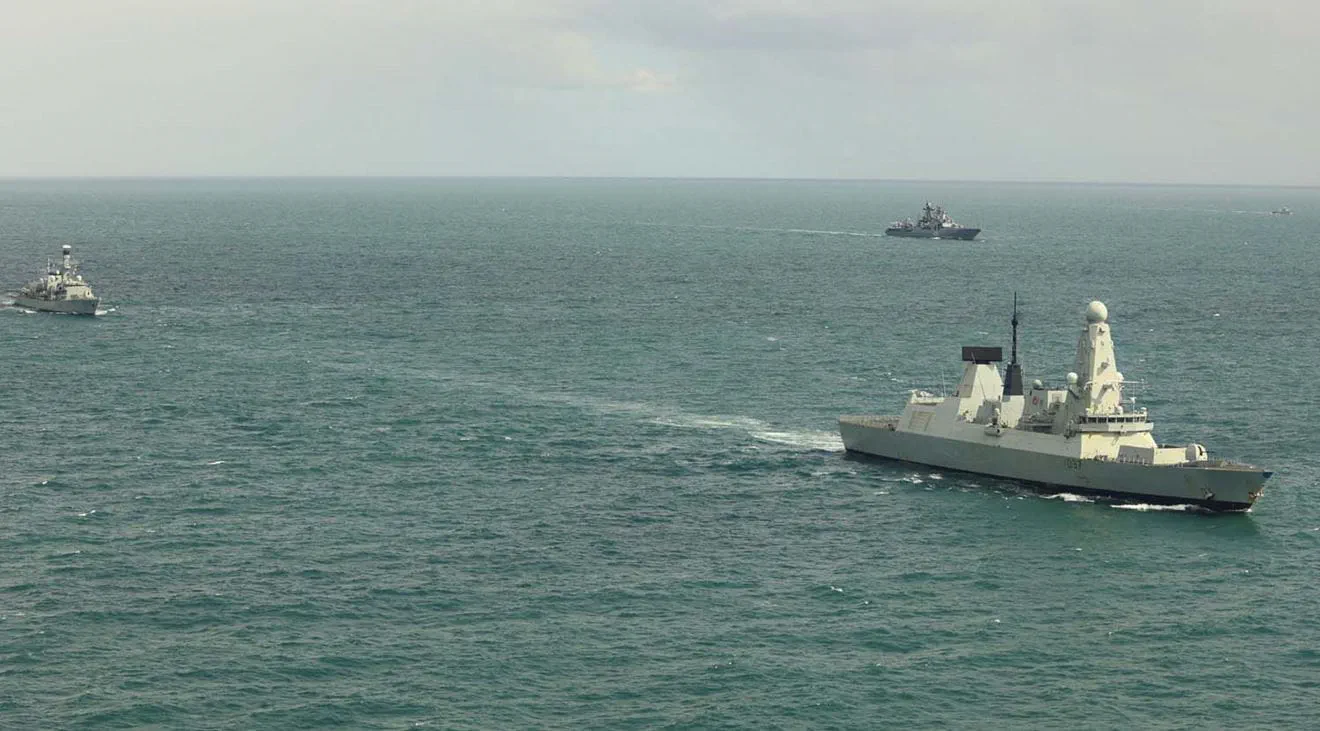
The Royal Navy said the Russian destroyer Admiral Levchenko accompanied the sanctioned cargo vessels General Skobelev and Sparta as they moved south from the North Sea and through the English Channel. The Russian frigate Neustrashimy was also involved as the group continued its voyage.
Britain deployed HMS Duncan, HMS St Albans and HMS Severn, supported by a Merlin helicopter, during an operation that lasted around 72 hours. Surveillance of the Russian formation was later handed to another NATO navy near Ushant, off the French Atlantic coast.
The latest operation is significant beyond the movement of individual warships. The Royal Navy says its activations to monitor Russian activity increased by 25% during the first eight months of 2026 compared with the same period in 2025.
The commercial signal: sanctions are no longer influencing only ownership structures, payments and port access. They are increasingly affecting vessel routing, military deployments, voyage planning and the physical environment in which sanctioned shipping operates.
Public information released by the Royal Navy identifies General Skobelev and Sparta as sanctioned cargo vessels but does not establish what cargo was carried aboard either ship. Tide Signal does not speculate on cargo where supporting documentation has not been made public.
What Happened in the English Channel?
The Royal Navy described a multi-day operation in which British naval units tracked Russian military and sanctioned commercial vessels moving from the North Sea toward the English Channel.
The Russian group included:
- Admiral Levchenko, a Russian Navy destroyer;
- Neustrashimy, a Russian Navy frigate;
- General Skobelev, identified by Britain as a sanctioned cargo vessel; and
- Sparta, also identified as a sanctioned cargo vessel.
The British response involved:
- HMS Duncan, a Type 45 destroyer;
- HMS St Albans, a Type 23 frigate;
- HMS Severn, an offshore patrol vessel; and
- a Merlin helicopter supporting surveillance from the air.
The Royal Navy also reported separate monitoring of the Russian replenishment vessel Akademik Pashin in the wider area.
There was no reported boarding, seizure or direct confrontation involving General Skobelev or Sparta during this passage. British forces monitored the formation before responsibility was transferred to another NATO navy as the vessels continued south-west.
Why This Matters to Commercial Shipping
For the maritime industry, the important part of the story is not simply that Russian warships entered one of Europe’s busiest shipping corridors.
The more consequential development is the increasingly visible relationship between sanctioned merchant shipping and state military protection.
International sanctions can affect almost every commercial service surrounding a vessel:
- insurance;
- banking and payment processing;
- port access;
- bunkering;
- ship agency;
- technical services;
- classification support;
- cargo financing;
- chartering; and
- counterparty acceptance.
A naval escort does not make those restrictions disappear.
A sanctioned vessel remains subject to the sanctions rules applicable to banks, insurers, ports and commercial counterparties regardless of whether a naval ship is sailing nearby.
What the escort changes is the physical environment in which enforcement takes place.
Monitoring or attempting to interdict a single merchant vessel is operationally very different from dealing with a merchant vessel travelling in close proximity to military assets.
From the Smyrtos Boarding to Naval Escorts
The latest movement becomes more significant when viewed against events earlier in 2026.
In June, Royal Marines Commandos and National Crime Agency personnel boarded the sanctioned tanker Smyrtos in the English Channel during an operation supported by Royal Navy ships, helicopters and Royal Air Force aircraft.
The vessel was subsequently escorted to anchorage off Portland.
That operation represented a much more direct form of sanctions enforcement than surveillance alone.
The sequence since then is worth watching:
June 2026: British forces board a sanctioned tanker in the English Channel.
August 2026: sanctioned cargo ships pass through the Channel accompanied by Russian naval vessels.
This does not prove that Russia will escort every sanctioned commercial ship through European waters.
It does, however, suggest that sanctions enforcement is beginning to influence not only legal and financial decisions, but also route planning and the deployment of military assets.
Naval Protection Does Not Remove Sanctions Exposure
The distinction between physical protection and commercial acceptability is critical.
A warship may reduce certain physical risks during a passage, but it cannot automatically provide the merchant vessel with:
- international P&I cover;
- hull insurance acceptable to ports or financiers;
- access to western banking;
- bunker supplies;
- port services;
- repairs;
- agency support;
- classification services; or
- future chartering opportunities.
Modern shipping depends on an ecosystem of services that extends far beyond the ability of a vessel to navigate from one point to another.
A voyage can be physically possible while becoming increasingly difficult to insure, finance, service or trade.
This is one reason sanctions can impose substantial costs without physically stopping every sanctioned ship.
Sanctions Are Becoming a Voyage-Planning Issue
Sanctions screening has traditionally focused heavily on questions such as:
- Who owns the vessel?
- Is the vessel itself designated?
- Who is the beneficial owner?
- Who is financing the cargo?
- Can the freight payment legally be processed?
- Can a port or service provider deal with the ship?
The recent developments add another layer:
What route and operating pattern will the vessel use to complete the voyage?
If sanctioned vessels begin avoiding waters associated with interdiction, waiting for military escorts or adopting longer routes, the sanctions regime starts producing direct operational consequences.
Those consequences can include:
- additional sailing distance;
- higher bunker consumption;
- longer voyage duration;
- additional waiting time;
- reduced schedule reliability;
- greater uncertainty around port calls; and
- more complex insurance and compliance approvals.
In other words, sanctions can create a measurable voyage-cost effect even when the vessel ultimately reaches its destination.
Royal Navy Monitoring Is Up 25%
The Royal Navy’s statement that monitoring activations involving Russian activity increased 25% during the first eight months of 2026 adds another important dimension.
Continuous maritime surveillance requires resources.
A single operation may involve:
- destroyers or frigates;
- patrol vessels;
- helicopters;
- airborne surveillance;
- intelligence assets;
- coastal monitoring;
- NATO coordination; and
- handover between allied navies.
The cost of sanctions enforcement therefore does not fall only on sanctioned operators.
States enforcing sanctions also commit military, intelligence and administrative resources.
If naval escorts of sanctioned merchant shipping become more frequent, the resource burden on both sides could increase further.
Why the English Channel Matters
The English Channel and Dover Strait form one of the most heavily used maritime corridors in the world.
Every day, the route carries a dense mix of:
- container ships;
- product and crude tankers;
- bulk carriers;
- ro-ro vessels;
- ferries;
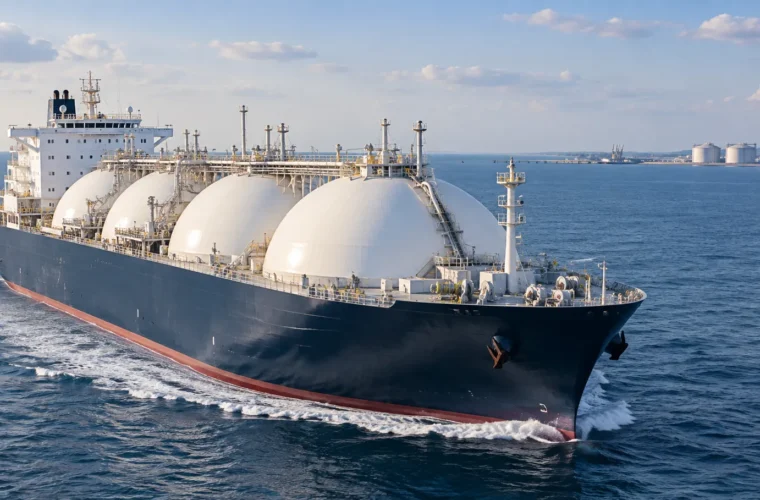
- LNG carriers; and
- coastal traffic.
Military movements therefore take place inside an already complex commercial traffic environment.
For merchant vessels navigating nearby, the presence of Russian or NATO warships does not alter the fundamental bridge-team responsibilities.
Masters and officers must continue to follow:
- COLREGs;
- traffic-separation schemes;
- VTS instructions;
- NAVTEX and navigational warnings;
- company procedures; and
- normal bridge resource management.
Media reporting about a military formation should never be treated as navigational guidance.
Insurance Risk Is More Complicated Than the Headline
It would be premature to say that one escorted passage will automatically increase marine insurance rates across the English Channel.
Insurance pricing depends on much broader factors, including vessel type, trading pattern, policy wording, sanctions exposure, threat assessment and underwriter appetite.
But repeated interaction between naval forces and sanctioned merchant vessels can change the risk picture considered by insurers.
Underwriters may increasingly look at:
- detention risk;
- interdiction risk;
- delay exposure;
- potential escalation;
- sanctions clauses;
- route deviation; and
- voyage-specific notification requirements.
This is similar to the way geopolitical risk can feed into war-risk premiums and voyage economics even when a shipping lane remains physically open.
Counterparties Still Face the Same Compliance Questions
For a bunker supplier, ship agent, bank or marine insurer, the presence of a naval escort does not simplify due diligence.
Commercial counterparties still need to examine:
- vessel sanctions status;
- registered ownership;
- beneficial ownership;
- ship manager;
- cargo interests;
- payment route;
- insurance arrangements;
- port restrictions;
- licensing exemptions; and
- the sanctions regime applicable to the transaction.
This is where the commercial consequences may become more important than the visual spectacle of warships escorting merchant vessels.
A ship may complete its passage successfully while still finding the global service network around that voyage increasingly restricted.
What Is Confirmed — and What Is Not
Separating confirmed information from inference is particularly important in sanctions and security reporting.
Confirmed
- General Skobelev and Sparta were identified by the Royal Navy as sanctioned cargo vessels.
- Admiral Levchenko accompanied the ships through part of their southbound passage.
- Neustrashimy was also involved in the Russian movement.
- HMS Duncan, HMS St Albans and HMS Severn participated in British monitoring.
- A Merlin helicopter supported the operation.
- The monitoring operation lasted approximately 72 hours.
- Surveillance responsibility was handed to another NATO navy near Ushant.
- Royal Navy monitoring activations involving Russian activity increased 25% during the first eight months of 2026 compared with the same period in 2025.
Not established by the public material reviewed
- the specific cargo aboard General Skobelev;
- the specific cargo aboard Sparta;
- the commercial value of either shipment;
- whether future sanctioned vessels will routinely receive naval escorts;
- whether insurers have changed Channel pricing specifically because of this operation; or
- whether any future boarding attempt would occur when a sanctioned ship is under direct naval escort.
Those distinctions matter.
A maritime intelligence publication loses value when confirmed vessel movements, government statements and speculation are mixed together without clear separation.
What Shipping Markets Should Watch Next
| Development | Commercial significance |
|---|---|
| More Russian naval escorts | Would suggest military accompaniment is becoming a recurring operating model for selected sanctioned voyages. |
| Further UK or allied boardings | Could test how direct sanctions enforcement operates in the presence of military protection. |
| Route changes | Longer voyages would increase fuel consumption, time and operating cost. |
| New vessel sanctions | Could further reduce the pool of commercially acceptable ships. |
| Insurance guidance | Would indicate whether underwriters see a material change in operational exposure. |
| Restrictions on services | Could make sanctioned voyages increasingly difficult even without physical detention. |
Tide Signal Analysis
The most significant part of this story is not that Russian naval vessels were seen in the English Channel.
That has happened before.
The more important signal is that maritime sanctions are increasingly generating operational costs that can be measured in ships, time, distance and military resources.
Russia may need to commit naval assets to protect selected merchant movements.
The UK and NATO may need to assign warships, aircraft and surveillance capabilities to monitor them.
Sanctioned vessels may alter routes, wait for escorts or operate with reduced access to normal maritime services.
Commercial companies dealing with those vessels still face insurance, banking, port and compliance restrictions.
None of those costs appear simply by counting how many vessels have been added to a sanctions list.
They appear in the operation itself:
Longer routes. More bunkers. More surveillance. More compliance checks. More uncertainty. More resources committed to completing or monitoring the same voyage.
The key question now is whether the escorted passage of General Skobelev and Sparta remains an exceptional event or becomes part of a broader operating pattern.
If Russian naval protection of sanctioned merchant vessels becomes routine, sanctions enforcement will have entered a more complex phase — one in which commercial shipping, regulatory policy and naval strategy increasingly overlap.
Tide Signal view: Naval protection can help a sanctioned vessel complete a physical passage, but it cannot make that vessel commercially normal. Insurance, banking, port access, bunkering and counterparty acceptance remain separate constraints. The development to watch is therefore not simply whether sanctioned ships continue sailing, but how much additional distance, time, military protection and commercial friction is required for them to do so.
Related Tide Signal Coverage
- War Risk Premiums in Shipping — how geopolitical risk feeds into insurance, freight and voyage economics.
- Strait of Hormuz Shipping and Sanctions Risk — how security restrictions can reduce commercially usable shipping capacity.
- The $25 Million VLCC Voyage — how geopolitical risk and restricted tonnage can dramatically reprice a voyage.
Sources
- Royal Navy — Russian warships and sanctioned cargo vessels monitored in UK waters, 29 August 2026.
- Royal Navy — Boarding operation involving sanctioned tanker Smyrtos, 15 June 2026.
- ITV News — Royal Navy tracks Russian warships in English Channel, 29 August 2026.
Published 30 August 2026. This report is based on official and publicly available information available at the time of publication. Tide Signal separates confirmed vessel movements and official statements from analysis and does not present unverified cargo information as fact.