The Diana Shipping Genco bid has collapsed after the target’s final conditions implied a value of $36.91 per share. The abandoned deal is more than a failed takeover: it exposes the difficult arithmetic behind consolidation in publicly listed dry-bulk shipping.
Diana ended its pursuit after Genco set out conditions that included $27.50 in cash, $2.00 for projected third- and fourth-quarter dividends and three Diana shares for each Genco share. Using Diana’s 13 August closing price of $2.47, those terms implied total value of $36.91 per Genco share. Diana said the level was not commercially supportable.
Why the Diana Shipping Genco Bid Collapsed
On 14 August, Diana Shipping formally withdrew its offer for all Genco shares it did not already own. The decision brought an end to a campaign that began in November 2025 and moved through several higher proposals, a tender offer, a planned asset sale to Star Bulk Carriers and direct negotiations between advisers.
The immediate conclusion is clear: there is no agreed transaction. But Diana remains Genco’s largest shareholder and said it intends to continue monitoring the company’s performance and board accountability. That makes this a withdrawal from the acquisition process, not necessarily the end of the corporate tension between the two listed dry-bulk owners.
The language surrounding the breakdown is contested. Diana characterised Genco’s demands as excessive. Genco’s letter, reproduced in Diana’s announcement, presented them as necessary to recognise fleet net asset value, preserve expected dividends and compensate shareholders for surrendering control. The figures are confirmed; the judgment about whether they were reasonable remains a matter of valuation and negotiating position.
How Genco’s $36.91 Valuation Was Built
Genco’s stated framework combined four types of value that are often debated separately in shipping transactions: fleet NAV, near-term distributions, control and participation in the combined company.
The equity component was calculated from Diana’s 13 August closing share price of $2.47. Diana said the resulting $36.91 value represented a 42% premium to Genco’s closing price that day and a 57% premium to its 16 June close. It also said issuing three Diana shares for every Genco share would leave Genco investors owning approximately 47% of the combined company.
Diana’s latest disclosed proposal was materially lower: $24.80 in cash, subject to adjustment for Genco’s recently declared $0.80 dividend, plus one Diana share. When that structure was announced on 17 June, Diana valued the package at $27.34 using a 30-day volume-weighted average price of $2.54 for its own shares.
Diana withdrew the offer on 14 August after receiving Genco’s stated conditions through the companies’ financial advisers.
Genco framed its terms around NAV, dividends and control. Diana said the resulting price and dilution made the transaction untenable.
The failure shows why a stock-price premium alone cannot settle dry-bulk M&A when seller and buyer use different definitions of economic value.
How Diana’s Offer Escalated
| Date | Development | Commercial significance |
|---|---|---|
| 24 Nov 2025 | Diana made an initial proposal of $20.60 per Genco share in cash. | Opened a public contest over Genco’s standalone value. |
| 6 Mar 2026 | The proposal increased to $23.50 in cash, alongside a planned sale of 16 Genco vessels to Star Bulk. | Added an asset-sale structure intended to support financing and reshape the combined fleet. |
| 4 May 2026 | Diana launched a tender offer. | Took the proposal directly to shareholders. |
| 27 May 2026 | The cash offer rose to $24.80 per share. | Increased consideration but did not resolve Genco’s NAV objection. |
| 17 Jun 2026 | Diana added one of its own shares, then valued at $2.54, for an implied package of $27.34. | Introduced equity participation in the combined company. |
| Jul 2026 | The tender expired while a separate non-binding proposal remained under review. | Shifted the process back from shareholder tender mechanics to negotiation. |
| 10 Aug 2026 | Diana and Star Bulk terminated the $470.5 million agreement for 16 Genco vessels. | Removed a central asset-sale leg from the proposed transaction structure. |
| 14 Aug 2026 | Diana withdrew after Genco set out terms implying $36.91 per share. | Ended the acquisition process and returned the focus to standalone execution. |
Genco’s Case: NAV, Dividends and Control
Genco’s board had repeatedly argued that Diana’s offers undervalued the company. In January, it rejected the initial $20.60 proposal. In March, it rejected the revised $23.50 offer and questioned the financing and execution risk attached to the planned sale of 16 vessels to Star Bulk. In June, it said the $24.80 cash offer remained below net asset value and lacked an adequate control premium.
The final conditions were consistent with that position. Genco’s letter said the $27.50 cash requirement reflected third-party broker valuations of its fleet and was intended to prevent shareholders from receiving less than the company’s liquidation value. The additional $2.00 was linked to projected third- and fourth-quarter dividends. The request for three Diana shares was presented as compensation for control and as a way for Genco holders to retain exposure to potential value creation after a combination.
That is a coherent seller-side framework, but it asks the buyer to pay for several layers of value at once. In a cyclical sector, a fleet’s broker-assessed NAV is a snapshot, while realised sale values, earnings and future dividends can change with freight rates, asset prices and financing conditions.
Diana’s Case: A Deal That No Longer Worked
Diana’s position was that the requested package moved beyond a financeable and value-creating acquisition. The cash price increased, near-term distributions were added separately, and the equity exchange ratio tripled from the buyer’s last proposal. On Diana’s calculation, Genco investors would have received a large premium while also taking close to half of the combined equity.
Walking away protects Diana shareholders from a transaction management judged too expensive or too dilutive. It also leaves Diana with questions of its own: how it will deploy capital previously associated with the bid, what it intends to do with its Genco shareholding, and whether its strategic priority remains consolidation or returns from its existing fleet.
Diana also alleged that Genco spent nearly $17 million in the first half of 2026 defending against the approach. That figure is a claim made by Diana in its withdrawal announcement and should not be treated as an independently established assessment of unnecessary cost.
What the Star Bulk Exit Changed
The original deal structure included an agreement for Star Bulk Carriers to purchase 16 vessels from Genco for $470.5 million if Diana completed the acquisition. The arrangement would have monetised a substantial group of ships and altered the fleet Diana ultimately retained.
Diana and Star Bulk mutually terminated that agreement on 10 August, four days before the withdrawal. Diana said at the time that $1.411 billion of committed acquisition financing remained available, meaning the end of the vessel-sale leg did not, by its account, eliminate its ability to fund a transaction.
Commercially, however, the termination mattered. It removed a known buyer and price for 16 ships, simplified one execution dependency but also changed the post-deal fleet and capital structure. Star Bulk, meanwhile, no longer has the optional fleet expansion attached to a successful Diana–Genco combination.
Why This Matters for Dry-Bulk Consolidation
Listed shipping shares can trade away from broker-assessed fleet value. A buyer may price against the market; a target can insist that shareholders be paid for the underlying ships.
A headline premium can look generous against the share price and still appear insufficient if the target believes it transfers control below NAV or without enough future upside.
Cash, stock, dividends, vessel sales and financing all shift value and risk between buyer and seller. The Diana–Genco process used every one of those levers.
Dry-bulk earnings and vessel values can move quickly. Each side must decide whether today’s NAV and tomorrow’s cash flow justify paying—or refusing—a control price.
The result is relevant beyond the two companies. Owners seeking scale must show that a transaction improves earnings, fleet quality, liquidity or cost of capital without transferring too much value to the seller. Targets must show why remaining independent can deliver more than a certain cash-and-stock exit. That tension is central to shipping finance and capital allocation, particularly as environmental expenditure and fleet renewal compete for the same balance-sheet capacity.
Who Is Affected
Genco shareholders lose the immediate prospect of an agreed takeover premium and return to a standalone investment case built on fleet value, dry-bulk exposure, dividends and management execution.
Diana shareholders avoid the higher consideration and dilution implied by Genco’s conditions. They must now assess what Diana does with its capital, its acquisition financing capacity and its strategic Genco stake.
Star Bulk no longer has the $470.5 million purchase agreement for 16 vessels. The development removes a potential fleet expansion that depended on the larger transaction closing.
Banks, advisers and the wider dry-bulk market receive a clear signal: consolidation may appear logical on fleet maps, but listed-company governance, NAV disagreement and control economics can prevent even a long and increasingly valuable offer process from reaching agreement.
What the Market Should Watch Next
- Genco’s share price versus NAV: whether the market continues to support the board’s valuation case after the withdrawal of a live buyer.
- Dividend delivery: whether the projected distributions used in Genco’s final framework are earned and paid as anticipated.
- Dry-bulk rates and asset values: changes in Capesize, Ultramax and Supramax markets can strengthen or weaken the standalone thesis quickly.
- Diana’s Genco stake: whether Diana holds, adds to, reduces or uses its position to press for governance or strategic changes.
- Diana’s capital allocation: what happens to balance-sheet capacity after the acquisition is abandoned.
- Any new buyer: another approach is possible in principle, but there is currently no confirmed alternative transaction.
This deal failed because the two sides were pricing different things. Diana priced a takeover against Genco’s public equity and the economics of a combined fleet. Genco sought payment for fleet NAV, projected dividends, the transfer of control and continued participation in future upside. Each argument can be defended separately; combining all four pushed the transaction beyond the point at which Diana believed it could create value. The next test is now operational: Genco must validate its higher standalone valuation, while Diana must show that walking away was the better use of shareholder capital.
Final View
The collapse of the Diana Shipping Genco bid closes one of the most closely watched dry-bulk takeover efforts of the past year. The campaign moved from $20.60 in cash to a cash-and-stock proposal, involved a planned 16-vessel sale and generated a final seller framework worth $36.91 per share. It still could not overcome the valuation divide.
For Genco, independence now comes with a higher burden of proof. Management must translate fleet value and dividend expectations into shareholder returns without the certainty of a takeover payment. For Diana, restraint must produce a better outcome than the acquisition would have delivered.
For the wider market, the lesson is sharper: dry-bulk consolidation is not blocked by a shortage of strategic logic. It is blocked when buyers and sellers cannot agree whether ships should be valued through the stock market, through NAV, through future cash flows—or through all three at once.
Sources
- Diana Shipping: Withdrawal of Offer to Acquire Genco, 14 August 2026
- Diana Shipping: Revised Cash-and-Stock Offer, 18 June 2026
- Genco Shipping & Trading: Rejection of Initial Proposal, 13 January 2026
- Genco Shipping & Trading: Rejection of Revised Proposal, 19 March 2026
- Genco Shipping & Trading: Board Rejection of Revised Tender Offer, June 2026
- Diana Shipping and Star Bulk: Termination of Vessel Sale Agreement, 10 August 2026
- Genco Shipping & Trading: Statement Following Tender Expiration, 27 July 2026
- US Securities and Exchange Commission: Genco Proxy Materials, May 2026
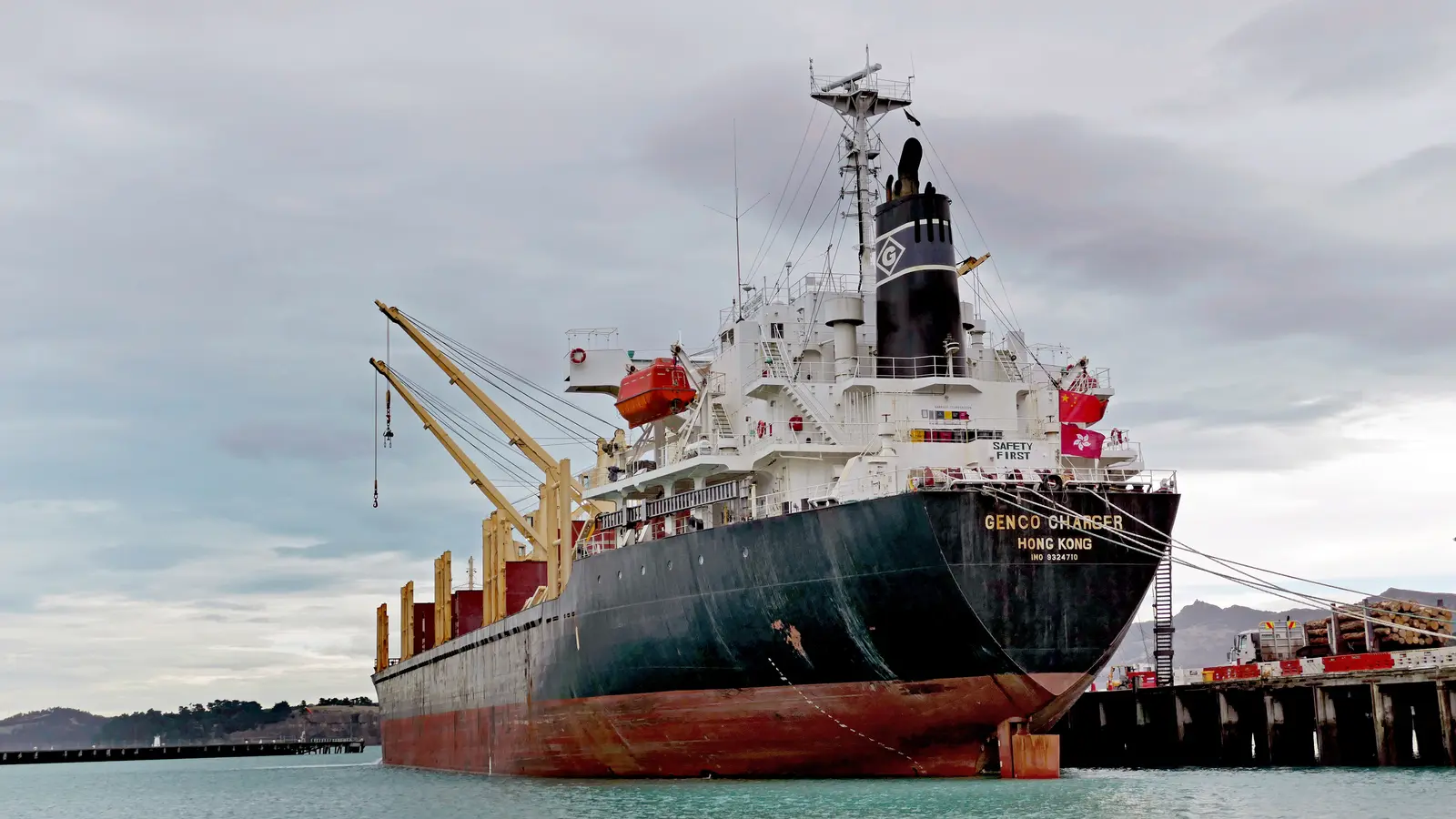
Featured image: Genco Charger, photographed by Bernard Spragg. NZ via Wikimedia Commons, CC0 1.0. Cropped and converted to WebP by Tide Signal News. The photograph predates the 2026 transaction and is used as an illustrative image.