Container shipping 2027 could face a sharp supply-demand reversal as accelerating vessel deliveries collide with the release of effective capacity if more liner services return from Cape of Good Hope diversions to the shorter Suez Canal route.
BIMCO’s latest container-market outlook says supply pressure is mounting. Reporting on the analysis indicates that vessel capacity is expected to grow 9% in 2027, while a broader normalisation of Suez routing could leave offered capacity as much as 10% above vessel demand in the more supply-heavy scenario.
Why could container shipping weaken in 2027? Because the physical fleet is expanding rapidly at the same time that a return to Suez would shorten voyages and release ships currently absorbed by longer Cape routings. More ships plus fewer voyage days means materially more effective capacity competing for cargo.
BIMCO Warns Supply Pressure Is Mounting for Container Shipping in 2027
The new outlook was published by BIMCO on 23 September 2026 under the headline Container Shipping Market Overview & Outlook – September 2026, with the organisation summarising the market as one where supply pressure is mounting.
The full BIMCO report is member-exclusive, but figures reported by Seatrade Maritime show the direction of the analysis clearly.
BIMCO expects vessel capacity to grow 4.6% in 2026 and then accelerate to 9% in 2027.
That would happen against a market where the containership orderbook remains exceptionally large. Seatrade’s reporting on the BIMCO outlook puts the orderbook at around 42% of the existing 34 million TEU fleet.
The risk is not simply that more ships are being delivered.
The more powerful issue is that those deliveries could arrive at the same time as the network needs fewer ships to move the same volume of cargo.
Why a Suez Return Can Release Container Capacity Without Adding a Single Ship
The Red Sea crisis changed container-market supply by forcing many Asia–Europe services around the Cape of Good Hope.
A Cape diversion adds sailing distance and vessel days. To maintain a weekly service, a liner operator may need more ships in the rotation than it would require on the shorter Suez route.
That means the physical fleet and the effective fleet are not the same thing.
Suez return → shorter voyages → fewer vessel days required → effective capacity released
If a significant number of services return to Suez during 2027, ships that are currently tied up maintaining longer Cape rotations can become available for other employment or allow carriers to operate the same network with fewer vessels.
BIMCO’s scenario therefore treats Suez normalisation as a potential supply shock, not simply a routing improvement.
Tide Signal has already analysed the short-term operational side of the same transition in Suez Canal Shipping Returns — Why Faster Asia–Europe Transits Could Trigger the Next Port Congestion Wave. That article focuses on vessel bunching and berth pressure; this page focuses on the 2027 fleet supply-demand balance.
How Large Could the Capacity Imbalance Become?
According to Seatrade’s report on the BIMCO analysis, a return of Red Sea and Suez operations toward pre-war routing patterns could leave vessel demand as much as 10% below offered capacity.
That is a large gap for a liner market.
Container shipping does not need every available ship to become idle before freight rates weaken. Pressure begins earlier, when carriers have more slots to sell than cargo owners need to buy.
The commercial chain can look like this:
A 9% Increase in Vessel Capacity Would Be Difficult to Absorb
The supply side matters even if Suez normalisation remains incomplete.
BIMCO expects vessel capacity to grow faster than demand in both of the scenarios discussed in the latest analysis.
The reason is the delivery pipeline.
Container lines and tonnage providers placed a very large volume of newbuilding orders during the strong post-pandemic earnings cycle. Those ships do not arrive when the order is signed. They arrive years later — potentially into a very different freight market.
By 2027, the problem is therefore one of timing:
- large numbers of new ships continue entering the fleet;
- recycling remains subdued;
- Suez normalisation could release more effective capacity;
- cargo growth may not accelerate quickly enough to absorb the additional slots.
This is why headline fleet growth of 9% matters more than the number alone suggests.
If route normalisation simultaneously reduces average sailing distance, the effective increase in supply can feel larger than physical fleet growth by itself.
Why the Container Market Is Still Supported in 2026
The 2027 warning comes after a comparatively stronger 2026 environment.
BIMCO data cited by Seatrade shows global container volumes rising 5.1% during the first seven months of 2026 compared with the same period in 2025.
Head-haul and regional volumes increased 6.3%, while back-haul volumes did not grow.
That distinction matters because head-haul cargoes are the trades that usually determine the amount of revenue-generating vessel capacity required.
At the same time, several disruptions have absorbed or constrained effective supply:
- Cape of Good Hope diversions have lengthened voyages;
- Asian port congestion has delayed vessel rotations;
- Panama Canal constraints have affected some network choices;
- Middle East disruption has reduced reliability and increased operational friction;
- blank sailings have removed scheduled weekly slots.
Those conditions can support rates even while the physical containership fleet is growing.
The mechanism is already visible in Tide Signal’s Container Shipping Rates 2026 hub, which tracks how congestion, blank sailings, route length and capacity management alter the usable supply of vessel space.
Congestion Is Currently Hiding Part of the Supply Growth
A containership waiting outside Shanghai, Singapore or a major European gateway still appears in the global fleet statistics.
But while it is delayed, it completes fewer voyages and produces fewer usable weekly slots.
That is why port congestion can temporarily tighten a market even during periods of rapid fleet expansion.
If congestion eases in 2027 at the same time as Suez voyages become shorter, two forms of capacity can return together:
- port-delay capacity — ships spend less time waiting;
- route-distance capacity — ships spend fewer days at sea.
The combination would intensify the pressure created by newbuilding deliveries.
For the operational evidence behind that mechanism, see Asia Port Congestion 2026 and Tide Signal’s guide to Port Delays and Commercial Risk.
What Could 10% Excess Capacity Mean for Container Freight Rates?
Freight rates are driven by more than the nominal size of the fleet.
But when offered capacity persistently exceeds vessel demand, the balance of negotiating power normally shifts toward cargo owners.
Carriers may then face:
- lower vessel utilisation;
- greater competition for spot cargo;
- pressure on general rate increases;
- more aggressive contract negotiations;
- weaker premium-service pricing;
- and greater difficulty passing through cost increases.
The effect would not be uniform across every trade.
A route with strong cargo growth, severe congestion or disciplined capacity management can remain firm even while the global market weakens.
But broad oversupply makes it harder for carriers to defend high rates across the network.
Why Today’s High Transpacific Rates Do Not Contradict the 2027 Risk
The current market can look completely different from the forward supply-demand picture.
In September 2026, Transpacific spot rates have surged amid high bunker costs, pre-Golden Week cargo demand and capacity management.
That is a near-term market.
The BIMCO warning is about what happens when the fleet is materially larger in 2027 and the disruptions currently absorbing ships begin to unwind.
Tide Signal’s Transpacific Container Rates 2026 analysis covers the current Asia–US price spike. The 2027 issue is different: whether structural fleet growth eventually overwhelms the temporary forces keeping effective supply tight.
How Can Container Lines Defend the Market?
Oversupply does not mean carriers are powerless.
Liner companies have several tools for reducing effective supply.
1. Blank sailings
Carriers can cancel individual voyages to remove weekly slots from the market.
This is one of the fastest ways to respond when bookings weaken, although repeated cancellations can damage schedule reliability and customer confidence.
2. Slow steaming
Lower sailing speeds absorb more vessel days and reduce the amount of effective capacity produced by the fleet.
Slow steaming can also reduce fuel consumption, although the economic case depends on bunker prices, network design and service requirements.
3. Ship recycling
Older, less efficient vessels can be demolished.
However, BIMCO’s outlook highlights continued subdued recycling as part of the supply problem. If older tonnage stays in service while new ships arrive, net fleet growth remains high.
4. Idling and lay-up
Carriers can temporarily remove ships from commercial deployment, although this becomes expensive if the imbalance persists.
5. Service redesign
Lines can change rotations, add ports, create new loops or deploy larger vessels on selected trades.
This can absorb tonnage, but it does not create cargo demand by itself.
The Orderbook Is the Structural Problem
Temporary disruptions can disappear quickly.
Ships already ordered cannot.
A containership orderbook equal to roughly 42% of the existing fleet, as reported in the latest BIMCO coverage, represents a major pipeline of future supply.
Not every ordered TEU will enter the market without offset:
- some older ships will eventually be recycled;
- some vessels may operate more slowly;
- trade growth will absorb part of the new capacity;
- new services may require additional ships;
- port and canal disruption may continue absorbing tonnage.
But the starting point remains unusually supply-heavy.
That is why the Suez question matters so much: route normalisation would remove one of the biggest mechanisms currently keeping ships occupied for longer.
Gemini Is Already Moving More Services Back Through Suez
This is not a purely theoretical 2027 scenario.
On 14 September 2026, Maersk and Hapag-Lloyd announced that four additional Gemini services — AE5, AE11, AE12 and ME2 — would move from Cape of Good Hope routing to the trans-Suez corridor.
They joined AE15 and AE19, which were already using Suez.
Maersk said the change would provide more efficient transit times, while making clear that further routing decisions remain dependent on stability in the Red Sea and the wider Middle East.
Hapag-Lloyd issued the corresponding update under its own service names, confirming the same transition toward the Red Sea route.
What the 2027 Outlook Means for Containership Owners
The risk is different for liner operators and non-operating owners, but both are exposed to the supply cycle.
If liner companies need fewer ships to maintain the same network, charter demand for additional tonnage can weaken.
That can affect:
- time-charter rates;
- charter duration;
- employment prospects for older ships;
- residual asset values;
- scrapping decisions;
- and appetite for further newbuilding orders.
Modern, fuel-efficient tonnage may retain an advantage because operators still need to manage bunker cost and emissions performance.
Older ships can become the marginal capacity — the vessels most exposed when the market no longer needs every available hull.
What It Means for Shippers and Cargo Owners
For cargo owners, greater capacity can improve negotiating leverage.
If more slots compete for the same cargo volume, shippers may gain:
- more choice between carriers;
- lower spot-rate pressure;
- stronger contract negotiations;
- more flexibility on routing and service selection;
- and potentially less urgency to book far in advance.
But cheaper freight is not guaranteed.
Fuel prices, canal tolls, security surcharges, port congestion and geopolitical shocks can still raise the final transport cost even in a vessel-oversupply environment.
The 2027 market could therefore produce an unusual combination: weak base freight economics for carriers alongside high operating-cost volatility.
What Could Prevent the Oversupply Scenario?
Several developments could absorb more capacity than currently expected.
Stronger cargo growth
If global trade and head-haul volumes expand faster than forecast, more of the delivered fleet can be absorbed.
Continued Red Sea disruption
If security conditions prevent a broader Suez return, longer Cape voyages would continue absorbing vessel days.
Persistent port congestion
Delays can keep effective capacity tighter than fleet statistics imply.
Higher recycling
A faster exit of older ships would reduce net fleet growth.
More slow steaming
Lower speeds can absorb capacity and reduce fuel consumption.
Carrier capacity discipline
Blank sailings, service suspensions and deployment changes can remove slots from weak trades.
What Tide Signal Is Watching Next
- Additional Suez announcements: whether more major East–West services leave Cape routing.
- Red Sea security: whether carriers consider the route stable enough for broader structural changes.
- 2027 delivery schedule: whether scheduled containership deliveries arrive on time.
- Recycling: whether weak market conditions finally trigger meaningful demolition of older ships.
- Blank sailings: whether cancellation levels rise as carriers defend utilisation.
- Port congestion: whether Asian and European delays release or continue absorbing capacity.
- Freight benchmarks: whether spot-rate weakness begins appearing before the physical supply surge peaks.
- Charter rates: whether containership time-charter markets begin pricing weaker future demand for tonnage.
The biggest container-market story of 2027 may therefore not be a collapse in cargo demand.
It may be the moment when capacity that has been hidden by distance and disruption returns to the market at the same time as a large newbuilding wave.
Container Shipping 2027: Frequently Asked Questions
Will container shipping be oversupplied in 2027?
BIMCO expects vessel capacity to grow faster than demand in its 2027 scenarios. In a wider Suez-return scenario, reporting on the BIMCO analysis says offered capacity could be as much as 10% above vessel demand. The exact outcome remains conditional on routing, cargo growth, recycling, congestion and carrier capacity management.
How fast is container vessel capacity expected to grow in 2027?
BIMCO’s September 2026 outlook, as reported by Seatrade Maritime, expects container vessel capacity to increase by about 9% in 2027 after approximately 4.6% growth in 2026.
Why would a return to the Suez Canal increase container capacity?
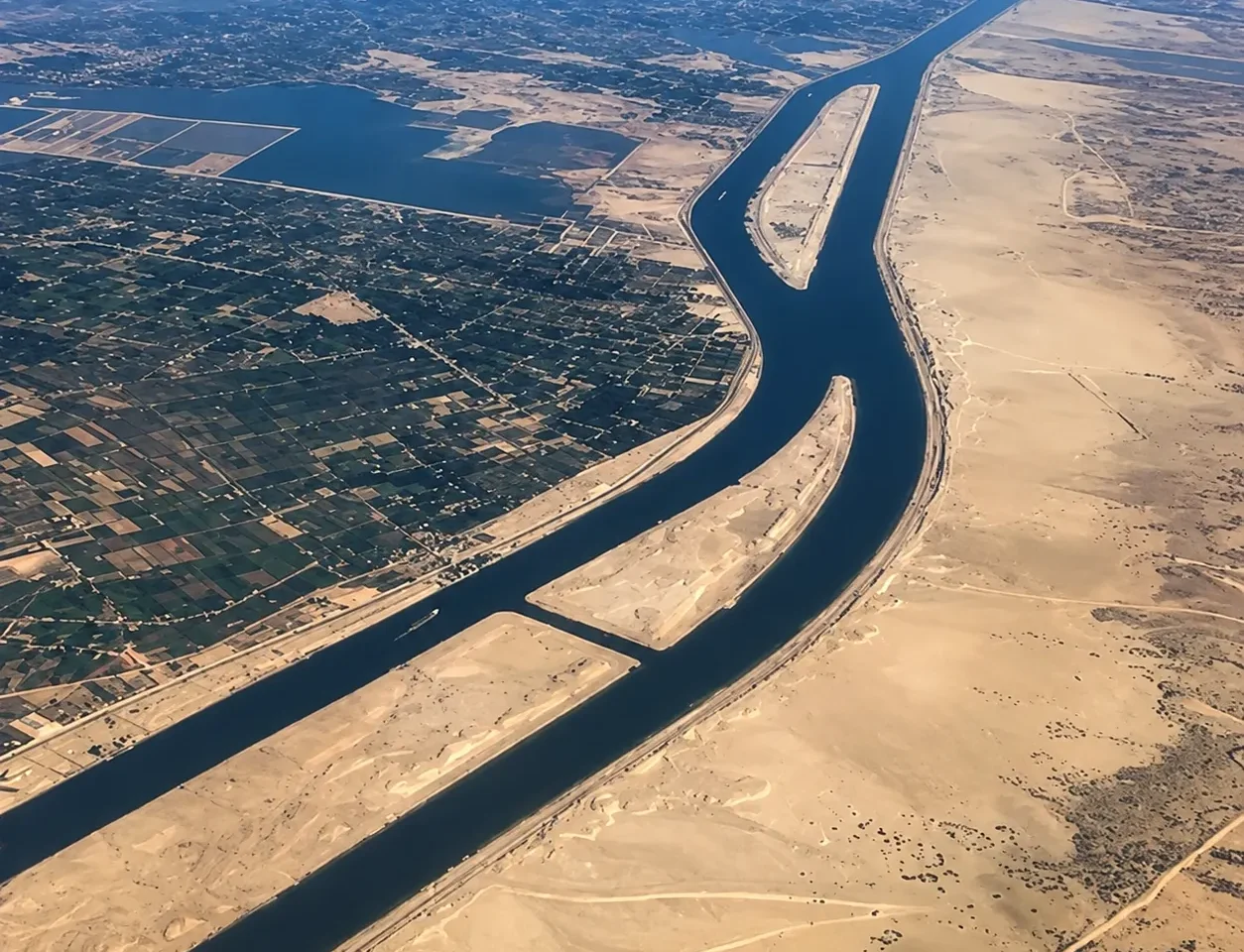
Suez routing shortens many Asia–Europe voyages compared with sailing around the Cape of Good Hope. Shorter rotations require fewer vessel days, releasing effective capacity even if the physical size of the fleet does not change.
How large is the containership orderbook?
Seatrade’s reporting on BIMCO’s September outlook puts the orderbook at around 42% of the current 34 million TEU fleet, highlighting the scale of scheduled future supply.
Could container freight rates fall in 2027?
Greater offered capacity relative to cargo demand would normally increase downward pressure on freight rates, but actual prices will also depend on fuel costs, congestion, security disruption, blank sailings, trade growth and carrier deployment decisions.
Are Maersk and Hapag-Lloyd already returning to Suez?
Yes, selected Gemini services have already moved back to trans-Suez routing. On 14 September, the partners announced structural changes to four additional services, while stressing that future routing remains dependent on Red Sea security and regional stability.
Sources and Verification
- BIMCO — Container Shipping Market Overview & Outlook, September 2026 — official 23 September market-analysis page; BIMCO describes the outlook as “Supply pressure is mounting”. Full analysis is member-exclusive.
- Seatrade Maritime — Suez return could leave box capacity 10% above demand, says BIMCO — detailed public reporting of BIMCO’s 2026–27 capacity growth, orderbook, volume and Suez scenario figures.
- Maersk — Structural changes to AE5, AE11, AE12 and ME2 Gemini services — official confirmation that four additional Gemini services are transitioning from Cape routing to trans-Suez.
- Hapag-Lloyd — Routing update for NE4, SE1, SE2 and IEX — corresponding Gemini routing update and implementation dates.
- Seatrade Maritime — Suez returns raise bunching fears — operational context on shorter trans-Suez voyage times and the risk of vessel bunching during the transition.