Shipowners are making one of the biggest bets on crude-oil transportation in decades. Signal Group data show 217 VLCCs ordered in 2026, more than double its comparable 2025 count, while the wider supertanker investment wave has moved above $20 billion.
The numbers are striking. But the real tanker-market story is not simply that owners are ordering more ships.
It is why they are willing to commit more than $100 million per vessel today for ships that may not enter service until 2029 or 2030.
The industry is buying future capacity while paying extraordinary prices for capacity available today.
That difference between today’s freight market and tomorrow’s shipbuilding cycle is the key to understanding the 2026 VLCC boom.
Why Are VLCC Orders Surging in 2026?
There is no single explanation.
The VLCC newbuilding boom sits at the intersection of exceptional freight earnings, an ageing fleet, changing crude-trade routes, geopolitical disruption and rising asset values.
Signal Group’s Week 35 tanker-market analysis puts the broader 2026 crude-tanker order count at 279 vessels, including 217 VLCCs.
At the same time, recycling has remained remarkably weak. Strong earnings and high values for older vessels are giving owners little incentive to remove vintage tonnage from the fleet.
That creates one of the most important tensions in the tanker market:
The first four stages are already visible.
The fifth will only become fully visible when the new ships begin delivering.
Longer Crude Routes Are Changing the Economics
The strongest investment argument behind new VLCC orders is not simply that the world will consume more oil.
It is that some of that oil may have to travel farther.
As buyers diversify crude sourcing away from the Middle East and increase exposure to Atlantic Basin producers, cargoes moving from regions such as Brazil, Guyana and other Atlantic origins toward Asia can generate substantially more tonne-mile demand.
Two VLCC cargoes may each contain roughly two million barrels of crude.
But if one cargo travels thousands of nautical miles farther, the vessel remains occupied for longer.
Hormuz Has Changed the Meaning of Vessel Supply
The Strait of Hormuz disruption has demonstrated that physical fleet size and commercially usable fleet size are not the same thing.
A VLCC can exist inside the global fleet while still being effectively unavailable for a specific cargo.
To perform a fixture, the vessel needs to be:
- in the correct geographical position;
- available inside the required laycan;
- acceptable to the charterer;
- insurable for the intended voyage;
- commercially approved by the owner;
- operationally capable of performing the route; and
- acceptable under prevailing security and sanctions conditions.
Tide Signal’s Strait of Hormuz live shipping status tracks exactly this distinction: a route can remain physically navigable while becoming dramatically more difficult, expensive or unattractive commercially.
For the latest market context, see Tide Signal’s shipping stocks 2026.
VLCC Earnings Above $500,000 a Day Changed the Investment Conversation
The ordering wave is occurring against an extraordinary spot-market backdrop.
Recent market reporting has placed some VLCC spot earnings above $500,000 per day, compared with roughly $132,000 per day before the latest conflict-driven escalation.
But markets do not need every ship to earn the headline number for the number to matter.
Freight at extreme levels changes the value of immediate earning capacity.
Why Can a Used VLCC Cost More Than a New One?
One of the clearest signs of the current tanker cycle is the premium attached to vessels that can trade immediately.
Signal Group’s market analysis shows the assessed value of a five-year-old VLCC at around $151.1 million, compared with approximately $130.2 million for a newbuilding benchmark.
That may appear irrational until delivery timing is included.
| Asset | Main advantage | Main disadvantage | Commercial value |
|---|---|---|---|
| Newbuilding VLCC | New specification, longer remaining life, latest design | May not deliver until 2029–2030 | Exposure to the future market |
| 5-year-old VLCC | Prompt or near-prompt earning capability | Older asset with shorter remaining life | Exposure to today’s freight market |
| 20-year-old VLCC | Lower capital cost and potential strong earnings | Vetting, efficiency, maintenance and commercial limitations | Highly dependent on trading acceptance |
Why 217 VLCC Orders Does Not Mean Every Database Shows 217
This distinction is important.
Signal Group data show 217 VLCC orders in 2026.
Allied Shipbroking, using a different market dataset, has reported 164 VLCC orders.
That difference does not automatically mean one source is wrong.
Shipping orderbook databases can differ because of:
- cut-off dates;
- contract-confirmation timing;
- options versus firm orders;
- vessel-size classification;
- yard reporting practices; and
- database methodology.
The Existing VLCC Fleet Is Already Old
Heavy ordering would normally immediately raise concerns about future oversupply.
But approximately one-fifth of the existing VLCC fleet is already more than 20 years old.
Age alone does not make a tanker commercially unusable.
But as ships move deeper into their operating lives, several factors become increasingly important:
- maintenance cost;
- dry-docking requirements;
- vetting acceptance;
- fuel efficiency;
- charterer restrictions;
- insurance;
- emissions performance;
- class requirements; and
- remaining economic life.
This means future fleet growth should not be calculated simply as:
A better commercial framework is:
New deliveries − removals − commercially marginal tonnage = effective fleet growth
The difficult part is that nobody yet knows what each variable will look like when the major 2029–2030 delivery wave reaches the market.
Why Are Old VLCCs Not Being Scrapped?
Normally, an ageing fleet and strong newbuilding orderbook should eventually increase demolition activity.
But recycling remains one of the missing supply responses in the current tanker market.
Signal Group reports that scrap benchmarks for VLCCs and Suezmaxes are up only around 9% year on year, while assessed values for 20-year-old ships have risen dramatically more.
The logic is straightforward.
An old tanker will not be sold for demolition if its expected remaining trading income is materially more attractive.
The Tanker Market Is Running on Two Different Clocks
Moves in hours and days. Cargo programmes, attacks, owner sentiment, weather, vessel positions and security restrictions can reprice freight almost immediately.
Moves in years. A ship ordered during the extraordinary 2026 market may not enter service until 2029 or 2030.
Atlantic Crude Could Be the Structural Bull Case
The case for VLCC investment does not require today’s geopolitical disruption to last forever.
The more structural argument is the growth of longer crude trades from the Atlantic Basin toward Asia.
If crude supply growth from producers such as Brazil and Guyana increasingly serves Asian refiners, the average voyage can become longer.
Longer voyages absorb more vessel time.
More vessel time means greater tonne-mile demand even if the number of barrels transported does not increase by the same percentage.
Ship-to-Ship Transfers Can Increase Vessel Intensity
The current Gulf disruption has also increased the importance of ship-to-ship transfer structures.
If crude is transported through a sensitive area, transferred offshore and then loaded onto another vessel for the long-haul leg, the logistics chain becomes more complex.
Additional stages can introduce:
- waiting time;
- positioning requirements;
- weather exposure;
- transfer windows;
- additional vessel-days; and
- greater coordination between ships and shore teams.
This does not mean every STS movement automatically increases VLCC demand.
But it demonstrates again why the number of ships in the world fleet alone does not describe the amount of transport capacity actually available.
The $25 Million VLCC Voyage Was an Early Warning
Tide Signal has already documented how extreme scarcity and security exposure can transform individual voyage economics.
A reported Iraqi crude fixture reached as much as $25 million for a single VLCC voyage, illustrating how quickly freight can detach from historical assumptions when commercially acceptable tonnage becomes scarce.
Read the full breakdown: The $25 Million VLCC Voyage: How Hormuz Risk Repriced Iraqi Crude Freight .
Could the VLCC Orderbook Eventually Crash Freight Rates?
It could.
A large orderbook is a genuine future supply risk.
But the order count alone cannot determine the outcome.
New ships replace capacity that the market actually loses.
Older tonnage exits, Atlantic-to-Asia crude expands, voyage distances remain long and commercially restricted fleets continue absorbing effective supply.
Deliveries rise faster than transport demand.
Geopolitical disruption eases, voyage distances shorten, old ships remain active and the 2029–2030 delivery wave arrives into a more normal freight market.
The central question is therefore not whether 217 is a large number.
It clearly is.
The question is whether the global crude tanker market of 2029 and 2030 will require the vessel-days those ships provide.
The Real Signal: Owners Are Betting Beyond the Current Crisis
Delivery timing changes the meaning of the current ordering boom.
A vessel delivered in 2030 is not primarily a trade on what happens in Hormuz next week.
It is a capital decision about the structure of crude transportation through much of the next decade.
Owners placing those orders are effectively making several assumptions:
- oil will continue moving at significant scale by sea;
- VLCCs will remain essential to long-haul crude transportation;
- Atlantic-to-Asia trade will remain commercially important;
- part of today’s ageing fleet will eventually need replacement; and
- large crude carriers will remain economically relevant well into the 2030s.
Whether all those assumptions prove correct is still unknown.
But the capital is already being committed.
What the Tanker Market Should Watch Next
$20 billion is the headline. Vessel-days are the real story.
If crude travels farther, ships stay occupied longer and ageing tonnage leaves the mainstream fleet, today’s extraordinary ordering wave may prove to be necessary renewal. If voyage distances shorten while old ships continue trading and large numbers of newbuildings arrive, the same investment wave could become tomorrow’s excess capacity.
Related Tide Signal Analysis
VLCC Orders 2026 FAQ
How many VLCCs have been ordered in 2026?
Signal Group’s 2026 tanker-market data show 217 VLCC orders. Allied Shipbroking has reported a lower count of 164, reflecting differences in database methodology and timing.
How many VLCCs were ordered in 2025?
Signal Group’s comparable figure was 93 VLCCs during 2025, meaning its 2026 count has already more than doubled the previous year’s total.
How much does a new VLCC cost in 2026?
Current market benchmarks are around $130 million, although actual contract prices vary by shipyard, specification, propulsion package, environmental features and delivery date.
How much oil can a VLCC carry?
A typical VLCC can carry roughly two million barrels of crude oil, although actual cargo quantity varies by vessel design, draft restrictions and operating conditions.
Why are VLCC orders increasing?
The main drivers include exceptionally strong freight earnings, an ageing global fleet, expectations for longer Atlantic-to-Asia crude trades, high secondhand values and the need for future fleet renewal.
Why can a used VLCC cost more than a newbuilding?
A modern secondhand VLCC can begin earning immediately, while a new ship ordered today may not deliver for several years. During a strong freight market, immediate earning capacity can command a substantial premium.
Are VLCC rates really above $500,000 per day?
Some recent spot-market indications have exceeded $500,000/day during the extreme 2026 tanker rally. That does not mean every VLCC earns that level; actual TCE depends on the route, fixture terms and voyage costs.
Could the VLCC orderbook create oversupply?
Yes. The risk depends on how quickly new ships deliver, how many older vessels leave the market, how crude trade routes evolve and whether tonne-mile demand remains strong when the major delivery wave reaches the fleet.
Why does fleet age matter?
Around one-fifth of the existing VLCC fleet is estimated to be more than 20 years old. Older ships may face higher maintenance costs, tighter vetting acceptance, weaker efficiency and greater commercial restrictions, creating potential replacement demand.
Why are 2029 and 2030 important?
A number of newly ordered VLCCs are scheduled for delivery around those years. The eventual freight impact therefore depends on tanker demand several years from today’s exceptional market conditions.
Primary Sources & Further Reading
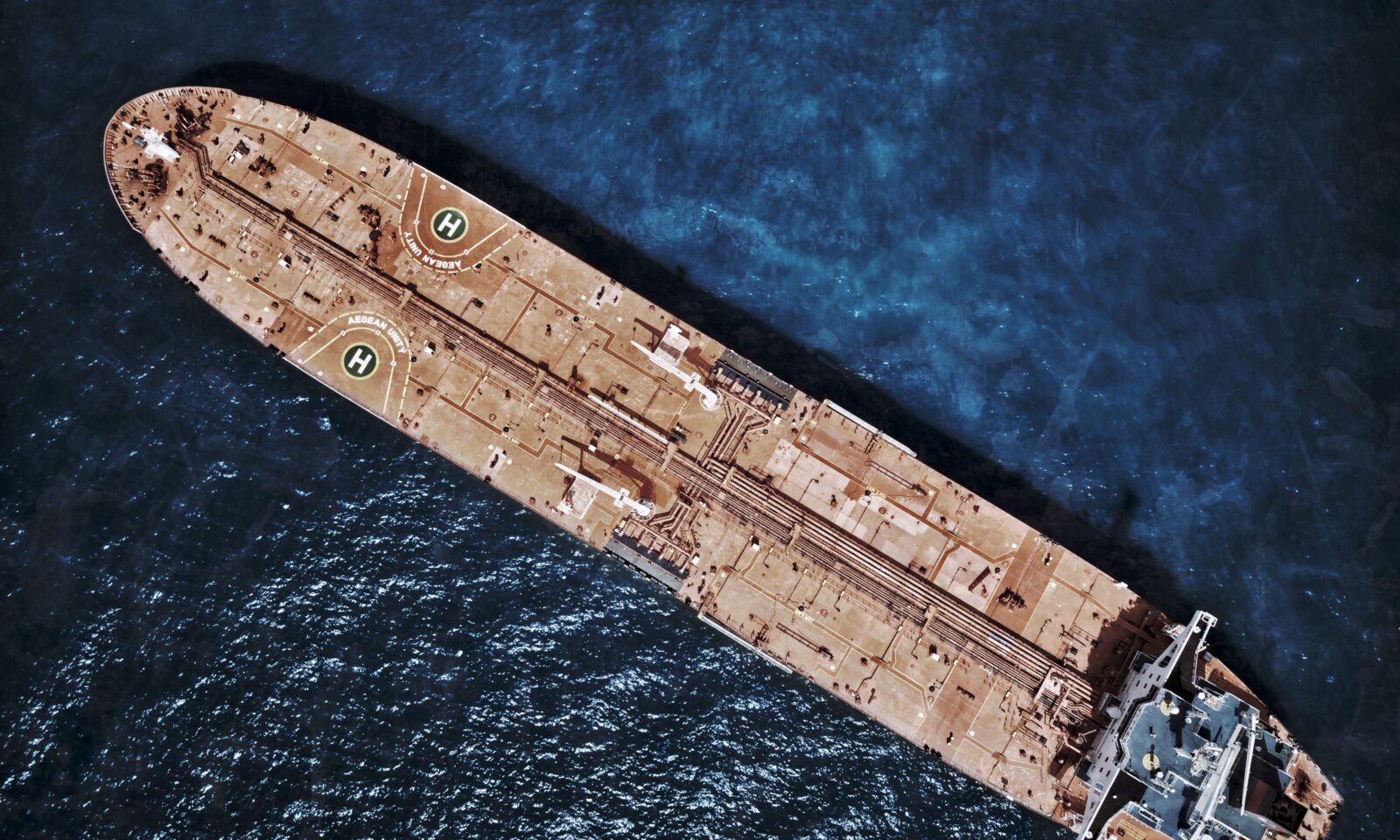
Photo by George Bek, sourced via Pexels.