Vision Marine is building a practical bridge between vessel spaces and digital information, combining 3D vessel capture, technical documentation, equipment mapping and purpose-built maritime applications for yachts, commercial vessels and focused marine projects.
Founded in Athens by Merchant Navy Officer Efraim Chronopoulos, Vision Marine starts with a clear operational problem: valuable vessel information is often available, but scattered across photographs, folders, drawings, emails and separate systems. Its model brings selected spaces and records together in a structured digital environment designed around the people who need to review, present or use them.
A Maritime Technology Company Built Around the Vessel
The maritime industry does not lack software, imagery or technical records. The deeper problem is that those elements often remain disconnected. A vessel may have thousands of photographs, manuals, drawings, certificates and equipment records, yet a manager ashore may still struggle to understand exactly where something is located, how a space is arranged or which document belongs to a specific asset.
Vision Marine approaches that problem from the vessel outward. Instead of starting with a generic platform and asking the client to adapt, the company begins by defining the vessel, the selected areas, the intended users and the final purpose of the information. Capture, documentation and software are then combined only where they add practical value.
The result is not one fixed product. A yacht broker may need a controlled digital presentation for prospective clients. A technical manager may need remote access to selected machinery spaces before arranging attendance. A refit team may require a structured before-and-after project record. An owner may want documents, images and equipment references organised into one clearer digital delivery.
3D Vessel Capture Creates the Spatial Foundation
Traditional vessel photography is useful, but it often removes the relationship between one image and the next. A photograph may show a pump, valve, passageway or yacht interior without making it clear how the viewer arrived there, what sits nearby or how the space connects with the rest of the vessel.
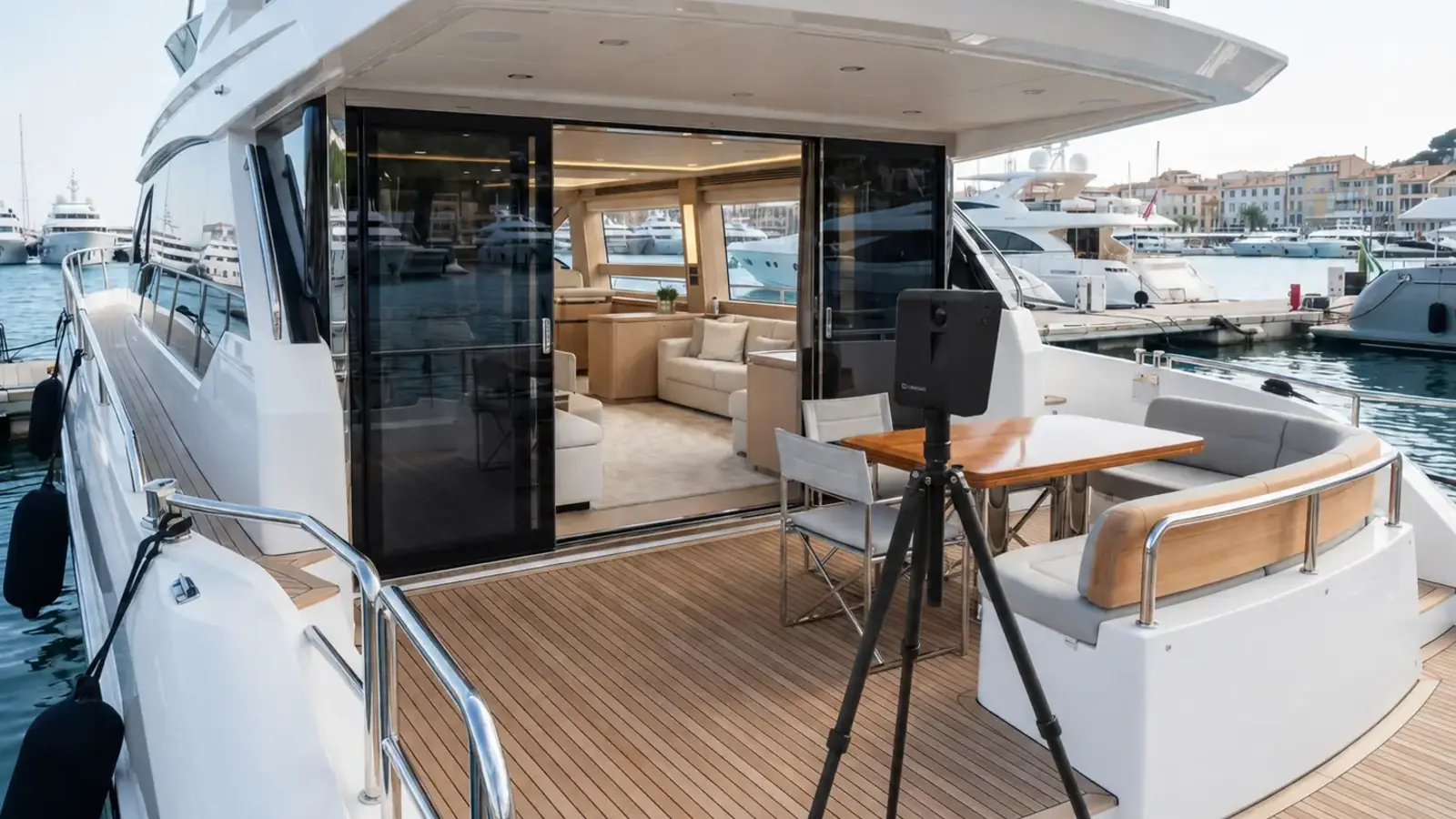
Vision Marine uses 3D vessel capture and virtual walkthroughs to preserve that spatial context. Selected interiors, engine rooms, bridge areas, machinery spaces, decks or refit zones can be recorded as an interactive digital environment that allows approved viewers to move through the space remotely.
That has commercial and technical value. For yacht sales and charter, it helps prospective clients understand layout and selected spaces before an onboard visit. For owners and managers, it creates a common visual reference for discussion. For technical teams, it can improve preparation by showing equipment position, access routes and the surrounding environment before attendance.
The capture scope remains deliberate. Vision Marine can focus on selected spaces where visual context matters most instead of treating every project as a full-vessel technology deployment. This makes the service relevant to smaller, clearly defined requirements as well as wider documentation projects.
From a Walkthrough to Structured Vessel Documentation
The larger value appears when the captured space is connected with useful information. A digital walkthrough becomes more than a visual tour when the user can identify an item of equipment, open its supporting manual, understand an access point or review material linked to a particular area.
Vision Marine’s service model brings together selected documents, manuals, drawings, notes, photographs, scans and existing vessel material. Those records can be structured around the spaces and assets they support, helping reduce the separation between what the user sees and the information needed to understand it.
This does not mean replacing every established ship-management, PMS or class system. The company’s positioning is more focused: create a clearer digital layer around a specific vessel requirement and make that layer useful for review, orientation, presentation, documentation or handover.
Interactive walkthroughs of selected yacht interiors, technical areas and operational spaces for clearer remote understanding.
Exterior vessel context, deck overview, marina positioning and progress footage for presentation or project records.
Manuals, drawings, notes, photographs and project material organised into a more controlled and usable digital delivery.
Equipment, access points and technical references positioned directly within the correct vessel and spatial context.
Purpose-built environments for equipment registries, document dashboards, vessel information and defined project workflows.
Structured documentation across initial condition, progress, completion and final delivery stages.
Equipment Mapping Adds Technical Context
Equipment lists and technical documents are most effective when users understand where each item belongs. An equipment name or serial number inside a spreadsheet does not always provide enough context for someone preparing work, reviewing a vessel remotely or joining a project for the first time.
Through equipment mapping and linked references, Vision Marine can position selected machinery, systems, access points and supporting information inside the vessel environment. This can be applied to engine rooms, bridge areas, machinery zones, deck equipment and other technical spaces where location and access matter.
For a manager, captain, engineer or service team, the practical benefit is faster orientation. The user can review the relevant area, understand what sits around the equipment and prepare questions or attendance requirements before stepping onboard. For handover work, the same approach can retain a clearer connection between the completed project, the space and its supporting records.
Four Areas Where the Model Creates Value
Give selected clients a clearer private view of the yacht’s layout, interiors and exterior presentation before arranging an onboard visit.
Provide owners, managers, crew and project stakeholders with one shared visual reference before a visit, meeting or decision.
Record initial condition, agreed progress stages and completion in one structured project history.
Help technical teams review equipment position, access routes and available references before attending the vessel.
The company’s full use-case model follows a simple principle: the starting point may be a walkthrough or visual record, but the value comes from organising that material for a real job. Presentation, technical review, project documentation and handover each require a different combination of capture, information and access.
A Stronger Digital Presentation for Yachts
High-value yachts are still frequently presented through a collection of photographs, brochures and short videos. Those assets remain important, but they do not always give a remote client a clear understanding of flow, scale and the relationship between spaces.
Vision Marine can combine selected 3D walkthroughs, drone footage and existing vessel material into a controlled digital presentation. For brokers and owners, this creates a stronger first-stage experience before the physical viewing. The client can understand the vessel more clearly, while access remains limited to the intended audience.
The service is not positioned as a replacement for professional photography, brokerage expertise or the onboard inspection. It strengthens the presentation layer around them. The aim is to create better-informed enquiries and give serious prospects a clearer reason to progress to the next step.
Clearer Records Before, During and After Refit Work
Refit and repair projects generate large amounts of material: initial-condition photographs, contractor notes, specifications, progress images, changes, approvals, completion evidence and handover records. When those files are separated across messages and folders, it becomes difficult to maintain a coherent project history.
Vision Marine’s refit and handover approach records the vessel at defined stages. Selected areas can be captured before work begins, reviewed during agreed progress points and documented again at completion. Supporting notes and records can then remain associated with the relevant space or project stage.
For owners, shipyards, project managers and contractors, this creates a clearer shared reference. It does not remove the need for contracts, surveys, engineering reports or formal acceptance. It improves the organisation and visibility of the material surrounding those processes.
Custom Maritime Apps Extend the Delivery
Some projects need more than a walkthrough or structured folder. A vessel owner may want a focused equipment registry. A technical team may need a document dashboard. A refit project may benefit from a controlled workspace built around its own workflow.
Vision Marine can extend a project through purpose-built maritime applications. These are not presented as generic enterprise platforms. They are scoped around defined vessel information, documentation, equipment or project requirements.
This creates a route for clients to start with a focused capture project and add functionality where the need becomes clear. The commercial logic is straightforward: begin with the smallest useful digital layer, prove how it supports the vessel or project, and expand only when the additional structure has a practical purpose.
How Vision Marine Works
This workflow prevents technology from becoming the project objective. The company first defines what the client must understand, review, present or hand over. The capture method and digital structure follow that requirement.
Maritime Experience at the Core
Vision Marine was founded by Efraim Chronopoulos, a Merchant Navy Officer with practical experience in vessel operations, onboard workflows and technical documentation.
The company’s wider delivery model brings together maritime professionals, experienced seafarers, software developers and technical specialists. That combination is central to its positioning: technology should be shaped around the vessel, the people using it and the operational or commercial purpose of the final information.
Seagoing experience matters because vessels are not ordinary buildings and technical projects are not marketing exercises. Access limitations, safety procedures, crew workload, confidentiality, system boundaries and operational timing all influence how information can be captured and delivered.
Vision Marine’s approach is therefore built around focused scopes and realistic claims. It aims to improve visibility and organisation without presenting a walkthrough as a class survey, an equipment map as a maintenance system or a digital record as an engineering assessment.
Vision Marine’s capture, documentation and software services support presentation, orientation, project records and controlled information access. They do not replace statutory surveys, class requirements, approved drawings, engineering measurements, the vessel’s Safety Management System or professional technical judgement.
Why the Vision Marine Model Matters
Maritime digitalisation is often discussed in terms of large platforms, real-time data and fleet-wide transformation. Those areas have value, but they can make the first step feel unnecessarily complex for an owner or project team with a specific problem.
Vision Marine offers a more direct entry point. Capture the space that matters. Organise the material connected to it. Give the relevant stakeholders clear access. Then add documentation or software capability only where it improves the final result.
For a yacht owner, that could mean a stronger private presentation. For a technical manager, it could mean clearer preparation before attendance. For a refit team, it could mean a structured record from initial condition to completion. For a commercial-vessel project, it could mean connecting selected equipment and technical references to the environment where they are actually used.
The technology is visible, but the objective is practical: clearer vessel spaces, better-organised technical material and more useful digital delivery.
Start with the vessel and the real requirement.
Vision Marine works with owners, managers, brokers, captains, technical teams, shipyards and project stakeholders to define focused digital scopes for yachts, commercial vessels and maritime projects.
Company Information
Company profile note: This profile is based on information and materials supplied by Vision Marine and published on the company’s official website. Tide Signal has not independently verified client outcomes, performance results or proprietary technical claims.
Featured image: A 3D camera positioned aboard a yacht for spatial capture and virtual walkthrough work. Official Vision Marine company visual, prepared for Tide Signal News in a 1600×900 editorial format.