Two seafarers have been rescued and 22 remain missing after the Panama-flagged bulk carrier Ocean Winner sank in the Bay of Bengal while sailing from India to Singapore. A multi-ship search-and-rescue operation remains under way, while the cause of the casualty has not been established.
Developing story
This report reflects confirmed information available on 23 August 2026. The rescue status may change. Tide Signal will update this article when maritime authorities release verified information.
What Happened to the Ocean Winner?
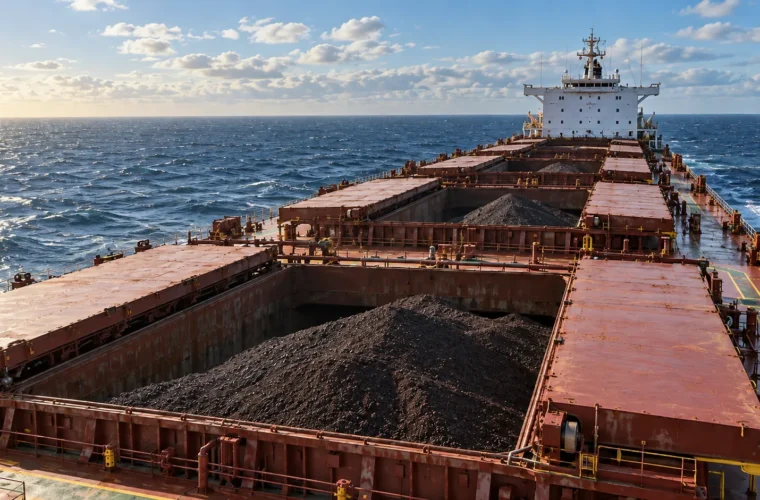
The Ocean Winner sinking occurred after maritime authorities lost communication with the 72,928-dwt bulk carrier on 22 August. The vessel had departed Paradip on India’s east coast late on 20 August with a cargo of iron ore and was bound for Singapore.
The Indian Coast Guard said the ship had 24 crew members on board: 20 Chinese nationals, three Myanmar nationals and one Bangladeshi national. Two people were subsequently recovered alive from separate liferafts. As of the latest confirmed update, the remaining 22 seafarers had not been located.
The ship went down in the Bay of Bengal, reported at approximately 240 nautical miles from Paradip. The cause was not immediately known. There has been no verified finding of structural failure, machinery failure, cargo liquefaction, collision, fire or severe weather as the cause of the loss.
Latest confirmed status
How the Search and Rescue Operation Developed
India’s Maritime Rescue Coordination Centre in Sri Vijaya Puram received information at 11:48 on 22 August that communication with Ocean Winner had been lost. The request for search-and-rescue assistance came from Victory Star Group Co Ltd, according to the Coast Guard account carried by Indian media.
The rescue centre activated the International SafetyNET system and diverted the nearby tanker Aisopos to search for the ship, its liferafts and survivors. The tanker recovered two crew members from separate liferafts at about 20:00.
Indian Coast Guard ships Varad and Anmol were sent to the search area, while Vijit deployed from Sri Vijaya Puram to reinforce the operation. The Indian Navy also joined the response, and other merchant ships in the area were alerted to assist.
The recovery of survivors from two different liferafts gives search planners confirmed reference points, but a wide offshore search remains difficult. Drift changes with wind, waves and current, while the time since abandonment expands the area that aircraft and ships must cover.
The international maritime search-and-rescue system is built around coordinated rescue centres and cooperation between ships, aircraft and neighbouring authorities. The IMO’s 1979 SAR Convention provides the framework for organising that response when people are in distress at sea.
Ocean Winner Vessel Particulars
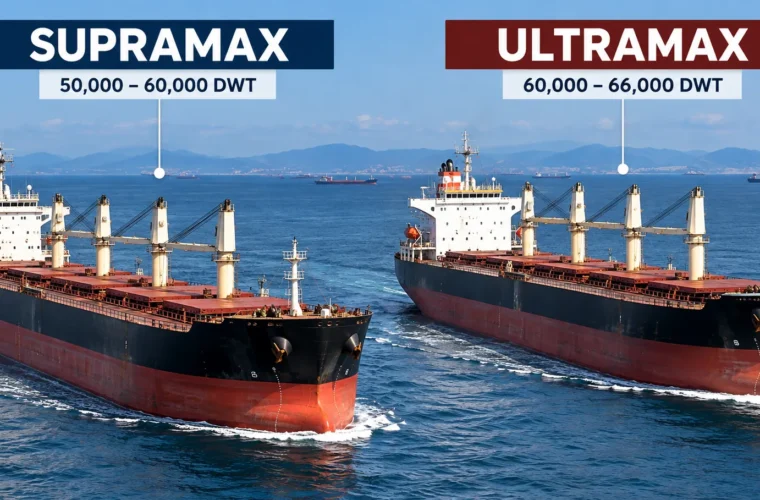
Ocean Winner, IMO 9145530, was a Panama-flagged Panamax bulk carrier built in 1998. Public vessel databases list the ship at 225 metres in length, 32.26 metres in beam and 72,928 tonnes deadweight.
| Vessel | Ocean Winner |
|---|---|
| IMO number | 9145530 |
| Ship type | Panamax bulk carrier |
| Flag | Panama |
| Year built | 1998 |
| Deadweight | 72,928 dwt |
| Length overall | 225 metres |
| Beam | 32.26 metres |
| Voyage | Paradip, India to Singapore |
Deadweight is the ship’s total carrying capacity for cargo, fuel, ballast, fresh water, stores and other variable weights; it is not the same as the quantity of cargo on board. Tide Signal’s guide to gross tonnage, net tonnage and deadweight explains the distinction.
Early reports have published conflicting figures for the exact iron-ore quantity loaded. For that reason, Tide Signal is treating the cargo type as confirmed but not presenting one cargo-weight figure as established fact until an authoritative statement or cargo record is available.
Loss of AIS Contact Is a Signal, Not a Cause
Several reports describe the ship as having “disappeared” from tracking systems. That wording should be handled carefully. Automatic Identification System data can stop for many reasons, including power loss, antenna or equipment failure, damage, poor satellite reception or manual action. A missing AIS position does not explain why a ship sank.
Investigators will need to reconstruct the sequence using more than public tracking websites. Relevant evidence may include the vessel’s voyage data recorder, GMDSS traffic, satellite communications, engine and alarm records, weather and wave information, cargo documents, loading records, survivor testimony and data held by the manager, flag state and coastal authorities.
The essential question is not simply when the AIS transmission stopped. It is what was happening to the ship immediately before communication was lost, whether a distress message was transmitted and how much time the crew had to abandon the vessel.
Why the Iron Ore Cargo Will Be Examined
Iron ore is a major dry-bulk commodity, but the exact cargo description matters. Certain fine-particle bulk cargoes can present a liquefaction risk if their moisture content is too high. Movement and vibration can cause a wet cargo to lose shear strength, potentially creating a free-surface effect and a rapid loss of stability.
The International Maritime Solid Bulk Cargoes Code sets mandatory requirements for cargo information, testing, loading, trimming and safe carriage. The IMO identifies improper cargo distribution, loss or reduction of stability and cargo reactions among the principal hazards associated with solid bulk shipments. Its specific iron ore fines schedule was developed to address liquefaction risk.
There is currently no evidence that cargo liquefaction caused the Ocean Winner sinking. Mentioning the hazard does not establish a theory of causation. Investigators will first need to confirm the cargo’s exact Bulk Cargo Shipping Name, moisture certificates, Transportable Moisture Limit where applicable, stockpile exposure, loading sequence, trimming and the vessel’s departure stability condition.
The ship’s age will also attract attention, but age alone is not a finding. A 28-year-old vessel may remain seaworthy when properly surveyed, maintained and operated. Investigators must examine actual structural condition, class and survey history, hatch-cover and watertight integrity, machinery status, maintenance records and any defects reported before departure.
What the Casualty Investigation Must Establish
Because the ship was lost, the casualty meets the IMO definition of a “very serious marine casualty”. Under the mandatory Casualty Investigation Code, a formal marine safety investigation is required for a total loss. The investigation is intended to determine causes and prevent recurrence, not to assign civil or criminal liability.
The main areas likely to require examination include:
- Timeline: departure, last normal report, alarms, loss of propulsion or power, distress communications and abandonment.
- Hull and watertight integrity: structural condition, flooding path, hatch covers, ballast spaces and damage progression.
- Stability and loading: cargo distribution, ballast condition, departure draughts, longitudinal strength and stability calculations.
- Cargo condition: declaration, moisture testing, loading history, trimming and compliance with the IMSBC Code.
- Machinery and electrical systems: propulsion, generators, bilge alarms, pumps, emergency power and recorded defects.
- Weather and sea state: actual conditions encountered rather than general regional forecasts alone.
- Emergency response: muster, distress alerting, lifeboat and liferaft deployment, EPIRB or SART activation and survival equipment.
The investigation will also need to reconcile the ship’s last known position with the location of recovered liferafts and any debris. That reconstruction can help estimate the time and place of abandonment and guide the continuing search.
Why the Ocean Winner Sinking Matters Beyond One Voyage
This casualty combines three issues that matter across commercial shipping: the survival of seafarers, the integrity of ageing dry-bulk tonnage and the safe carriage of high-density cargoes.
For owners and managers, the incident will bring attention to maintenance history, emergency preparedness and the speed at which shore organisations react when scheduled communications stop. For charterers and cargo interests, it reinforces the importance of accurate cargo declarations, loading oversight and clear operational responsibility. For crews, it is another reminder that abandonment and survival equipment must work under the worst possible conditions, not only during drills.
Public vessel data and breaking-news reports can describe the ship and the voyage, but they cannot establish causation. The most responsible conclusion at this stage is limited: Ocean Winner sank, two seafarers were rescued, 22 remained missing at publication, and a major search was continuing.
Tide Signal view
The urgent story is the search for the missing crew. The technical story comes later. Until survivor accounts, cargo records and official investigation evidence are available, claims about liquefaction, structural failure, weather or human error would be speculation—not analysis.
Ocean Winner Sinking: Frequently Asked Questions
Where did Ocean Winner sink?
The bulk carrier sank in the Bay of Bengal, reported at approximately 240 nautical miles from Paradip on India’s eastern coast.
How many crew members were on Ocean Winner?
There were 24 crew members: 20 Chinese nationals, three Myanmar nationals and one Bangladeshi national.
How many people have been rescued?
Two crew members were rescued alive from separate liferafts. The search for the remaining 22 seafarers was continuing at the time of publication.
What cargo was Ocean Winner carrying?
The vessel was carrying iron ore from Paradip to Singapore. Early reports conflict on the exact cargo quantity, so Tide Signal is not treating one published tonnage figure as confirmed.
What caused Ocean Winner to sink?
The cause is unknown. No authority has confirmed cargo liquefaction, structural failure, machinery failure, collision, fire or weather as the cause.
Was Ocean Winner an old ship?
The vessel was built in 1998 and was 28 years old. Age will form part of the factual background, but it does not by itself establish why the ship was lost.
Sources and Further Reading
- Reuters: Panama-flagged cargo ship sinks off eastern India
- The New Indian Express: Rescue operation and Coast Guard details
- VesselFinder: Ocean Winner vessel particulars, IMO 9145530
- International Maritime Organization: IMSBC Code and solid bulk cargo safety
- International Maritime Organization: SAR Convention
- International Maritime Organization: Casualty Investigation Code
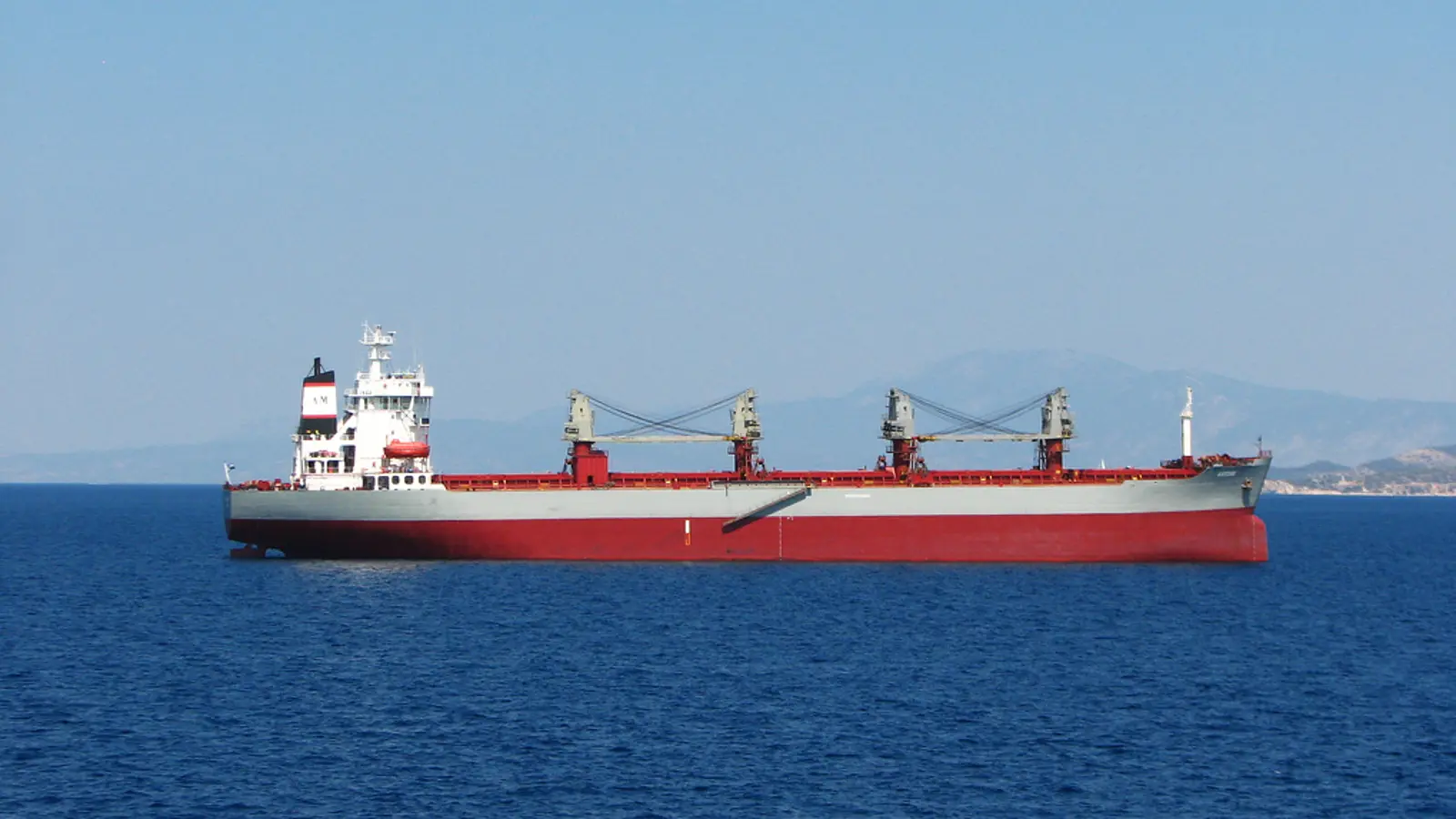
Featured image: The Greece-flagged bulk carrier Antonis at sea, photographed by fdecomite via Wikimedia Commons, CC BY-SA 2.0. Representative image; the vessel shown is not Ocean Winner. Cropped, resized and converted to WebP by Tide Signal News; the adapted image is distributed under the same licence.