Iran blacklists 45 tankers it says breached its Strait of Hormuz transit arrangements, threatening fines, detention and cargo confiscation as observable commercial traffic through the waterway remains approximately 90% below normal.
The measure extends beyond the vessels named on the list. Iran’s newly formed Persian Gulf Strait Authority said ships conducting ship-to-ship transfers with blacklisted tankers could also face action, turning the announcement into a wider counterparty, cargo and compliance risk for Gulf shipping.
Developing story
This report reflects confirmed information available on 24 August 2026. Iran has announced the list and threatened penalties, but the alleged violations have not been independently established. AIS-based traffic data may not capture vessels operating without visible transmissions.
Iran Tanker Blacklist: What Has Been Announced
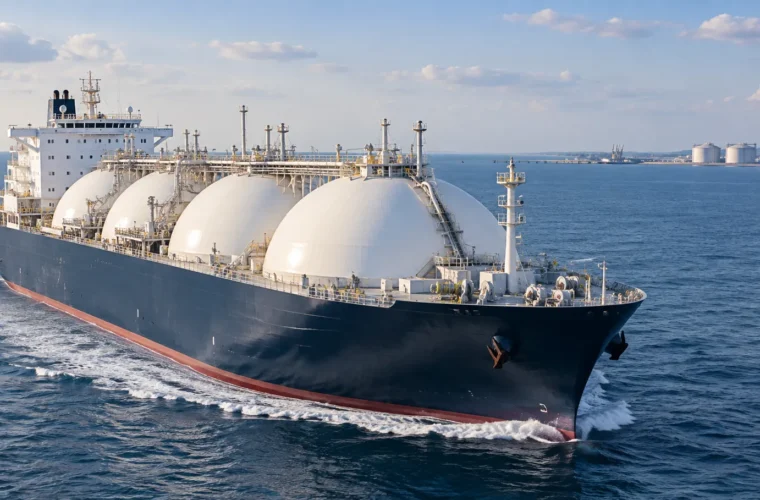
Iran said the 45 tankers had failed to comply with its rules for navigating the Strait of Hormuz. According to Reuters, the list covers crude, product, LNG and LPG carriers and includes vessels associated with international operators including ADNOC Logistics & Services, Bahri, Navig8, Klaveness Ship Management, Stolt Tankers and Sinokor.
The Persian Gulf Strait Authority said listed ships could face fines, detention and confiscation of cargo. It also warned cargo interests to verify a vessel’s compliance position before fixing or loading it and said operators could apply to have vessels removed from the list.
The authority has not publicly set out a complete, independently verifiable account of the alleged violations. Being named by Iran does not by itself establish that a ship breached an internationally recognised maritime rule. The commercial significance comes from the operational consequences if Iranian forces attempt to enforce the measure.
Hormuz risk snapshot
Sources: Reuters reporting based on the Iranian announcement, Kpler vessel tracking and UKMTO incident data. AIS-silent transits may not be captured.
Only Four Commodity Vessels Crossed on Sunday
Fewer than 20 commodity vessels crossed the Strait of Hormuz over the weekend, according to Kpler data reported by Reuters. Four vessels were detected on Sunday, compared with 13 on Saturday and 16 on Friday.
For the week ending 21 August, 89 vessels were detected exiting the strait and 103 entering it. Observable traffic remained approximately 90% below the pre-conflict baseline.
The figures require an important caveat. Ships operating in conflict areas may interrupt or limit public AIS transmissions, meaning vessel-tracking services cannot identify every transit. Detected vessel numbers are also not the same as cargo volumes. Even so, the sustained decline shows how sharply owner confidence and commercially workable vessel availability have deteriorated.
Tankers represented 45% of the remaining traffic. Of those tanker movements, 56% involved vessels carrying crude, petroleum products or chemicals, while 24% involved LPG carriers. UKMTO has recorded 23 projectile incidents causing vessel damage since 6 July.
For the wider strategic context, Tide Signal’s guide to maritime chokepoints explains why even a partial restriction at Hormuz can affect energy security, vessel positioning and freight markets far beyond the Gulf.
The STS Clause Creates a Wider Counterparty Risk
The most commercially important element of Iran’s announcement may be its treatment of ship-to-ship transfers.
STS operations are a routine part of legitimate tanker trading. They allow cargoes to be consolidated, divided, redirected or transferred between vessels when a conventional terminal call is impractical. During a chokepoint disruption, smaller tankers may move cargo through a restricted area and transfer it to larger vessels waiting outside the highest-risk zone.
Iran’s warning attempts to extend the blacklist through that operational chain. A vessel that has not itself breached an Iranian transit arrangement could face scrutiny because it receives cargo from, transfers cargo to or otherwise trades with a listed tanker.
That creates unresolved questions. Iran has not explained how far back it will examine a ship’s history, whether a transfer completed before the listing creates exposure, or whether the risk follows the vessel, the cargo, the owner or the charterer.
For a practical explanation of the operation itself, see Tide Signal’s guide to ship-to-ship operations and tanker transfers.
What the STS warning changes
- Screening: checks may need to cover recent operational counterparties, not only ownership and sanctions status.
- Cargo provenance: a cargo’s previous carrier may become relevant to voyage acceptance.
- Charterparty warranties: parties may seek specific representations covering listed vessels and STS history.
- Insurance: underwriters may request more detail about cargo chains and transfer partners.
- Operational delay: uncertainty alone can pause a fixture, payment or transfer before formal enforcement occurs.
Why the Blacklist Is a Chartering Problem
The new measure could alter how owners and charterers allocate risk in Gulf fixtures. Existing war-risk and sanctions clauses may not directly address detention triggered by a previous transfer with a vessel on an Iranian list.
Potential disputes include additional insurance premiums, deviation costs, waiting time, alternative loading arrangements, replacement tonnage, loss of hire and liability for confiscated cargo.
Owners may seek stronger warranties on cargo origin, intended counterparties and planned STS activity. They may also seek an express right to reject any ship, location or operation connected with the blacklist. Charterers are likely to resist open-ended liability where the Iranian criteria remain unclear or where a vessel is listed after the fixture is concluded.
The central contractual question is whether this is treated as a war risk, a sanctions event, an unsafe-place issue or a due-diligence failure. The answer may differ between fixtures and will depend on the specific charterparty wording.
Insurance Exposure Without Physical Damage
War-risk insurance remains central to Hormuz trading, but the blacklist introduces loss scenarios that do not require a missile strike or physical casualty. Detention, delay, confiscation, loss of hire and voyage interruption can generate substantial exposure even when the ship remains undamaged.
P&I clubs, hull insurers and specialist war-risk underwriters may require more information about the vessel’s intended route, recent trading history, cargo interests, STS counterparties and contractual allocation of detention risk.
Insurance may remain technically available while becoming commercially prohibitive. Higher premiums, larger deductibles, additional warranties or restricted cover can remove a vessel from the workable pool of tonnage without any formal prohibition on the voyage.
How the Risk Could Reprice Tanker Markets
The freight effect is not determined only by how many cargoes remain available. It also depends on the number of ships that are correctly positioned, acceptable to the charterer, insurable for the voyage and clear of sanctions or counterparty concerns.
That effective supply can shrink rapidly. Owners may reject Gulf exposure, banks may refuse payment routes, insurers may change terms and charterers may reject ships with complicated trading histories. Waiting time, shuttle movements and offshore transfers can further reduce usable capacity.
VLCC employment may increasingly depend on cargo consolidation and the availability of large vessels prepared to wait outside the highest-risk area. Aframax and Suezmax tankers could be used for shuttle movements or alternative loading structures. LNG and LPG shipping face an additional constraint because specialised tonnage cannot be replaced as easily as conventional crude carriers.
Tide Signal’s analysis of the reported $25 million VLCC voyage showed how war risk and limited acceptable tonnage can move voyage economics far beyond normal benchmarks. The new blacklist could tighten that acceptable pool further even without another physical attack.
The same interaction between security and commercial availability was examined in Tide Signal’s report on the ADNOC vessel attacks and Hormuz chartering risk.
What Owners and Charterers Must Check
| Check | Commercial relevance |
|---|---|
| Iran list status | A named vessel may face detention, fines or cargo action. |
| Recent STS history | Transfers with a listed tanker could create secondary exposure. |
| Cargo chain | Previous carriers and cargo origin may affect acceptance. |
| Charterparty clauses | Determine who carries delay, deviation and detention costs. |
| Insurance approval | Cover terms may decide whether the voyage remains economic. |
| Security guidance | Flag, UKMTO/JMIC, insurer and company assessments remain essential. |
Public vessel-tracking data should not be treated as a complete operating picture. Voyage decisions must remain grounded in company security assessments, flag-state and coastal-state instructions, insurer approval, charterparty terms and the master’s professional judgement.
What Has Not Yet Been Confirmed
There is no independently established finding that every named tanker breached an internationally recognised navigation rule. Iran has not fully explained the legal criteria behind the list, the evidence supporting each listing or how STS-linked enforcement will operate.
It is also not yet clear whether the authority will consistently attempt to enforce the threatened penalties, whether removal procedures will be transparent or whether previous transfers can create retrospective exposure.
The observed transit figures do not capture AIS-silent movements and should not be presented as a complete count of every ship or every barrel crossing the strait.
Tide Signal view
The blacklist makes Hormuz risk relational. A ship’s exposure may now depend not only on its flag, owner, route or cargo, but on the vessels with which it has recently traded. That can shrink the commercially acceptable fleet before Iran detains a single additional tanker.
Iran Tanker Blacklist: Frequently Asked Questions
How many tankers has Iran blacklisted?
Iran’s Persian Gulf Strait Authority announced a non-compliance list covering 45 tankers, including crude, product, LNG and LPG carriers.
What penalties has Iran threatened?
The authority said named vessels could face fines, detention and cargo confiscation. It also warned that vessels conducting ship-to-ship transfers with blacklisted tankers could face action.
Is the Strait of Hormuz closed?
The strait should not be described simply as legally closed. Some vessels continue to transit, but detected commodity-vessel traffic remains approximately 90% below pre-conflict levels.
Why does the STS warning matter?
It may extend the risk beyond the original 45 ships. A vessel could face scrutiny because it transferred cargo to or from a listed tanker, even if it was not originally named.
What should shipping companies monitor next?
Operators should monitor changes to Iran’s list, any attempted enforcement, UKMTO/JMIC security guidance, insurer requirements, charterparty wording and the treatment of recent STS counterparties.
Sources and Further Reading
- Reuters: Iran blacklists tankers and threatens fines, detention and cargo confiscation
- Reuters: Fewer than 20 commodity vessels transit Hormuz over the weekend
- UK Maritime Trade Operations: Current maritime security reporting and advisories
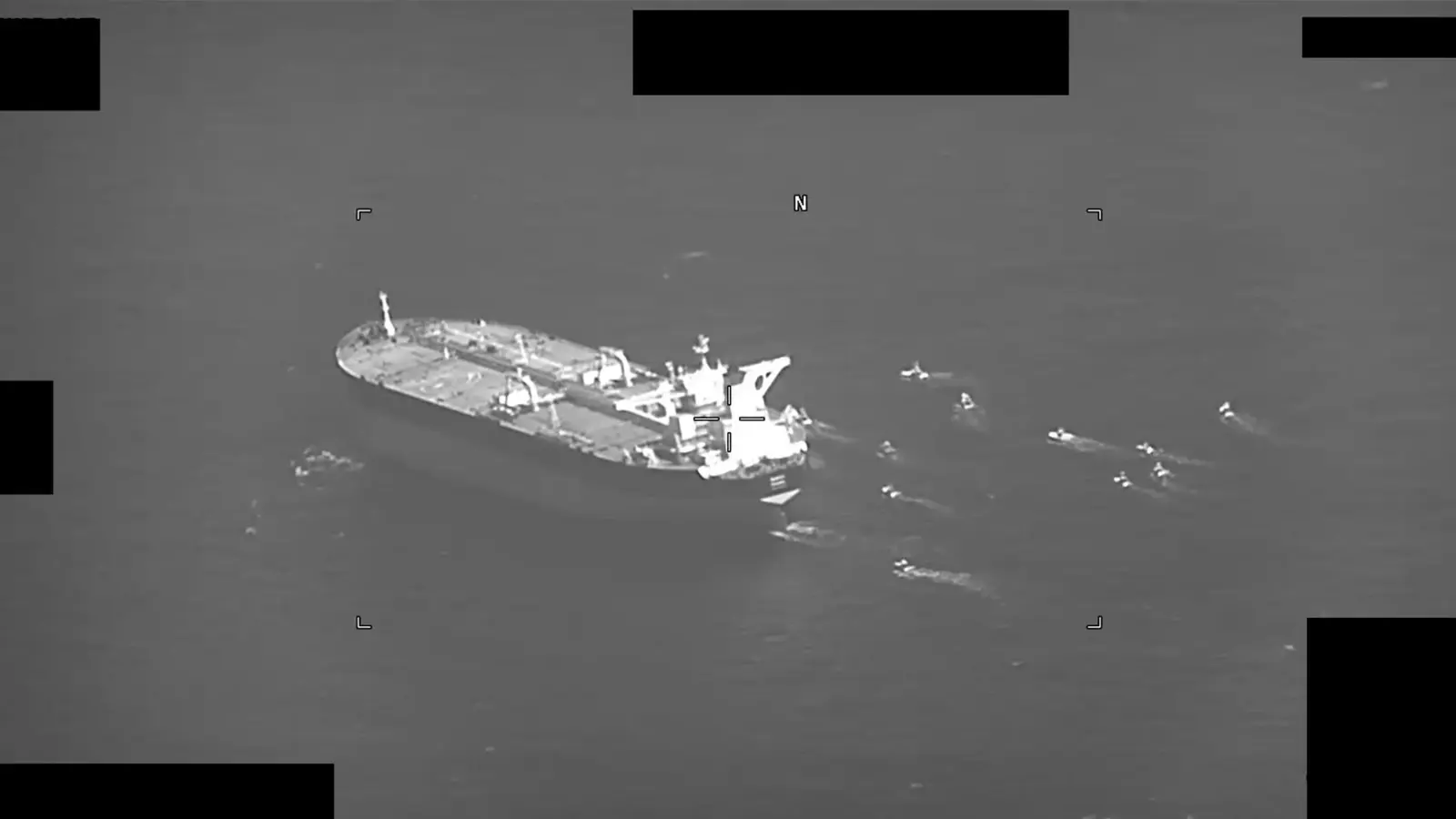
Featured image: U.S. naval forces operating near the Strait of Hormuz on 11 April 2026 during mine-clearance preparations. U.S. Central Command photo by NAVCENT Public Affairs via DVIDS. Public domain. File image; it does not depict the blacklist announcement described in this article. Cropped, resized and converted to WebP by Tide Signal.