Academy / Regulation / Operations
Ballast Water Treatment Systems: Main Types Explained
Ballast Water Treatment Systems are not just environmental equipment. They affect compliance, port operations, crew workload, discharge planning and the vessel’s ability to manage ballast legally.
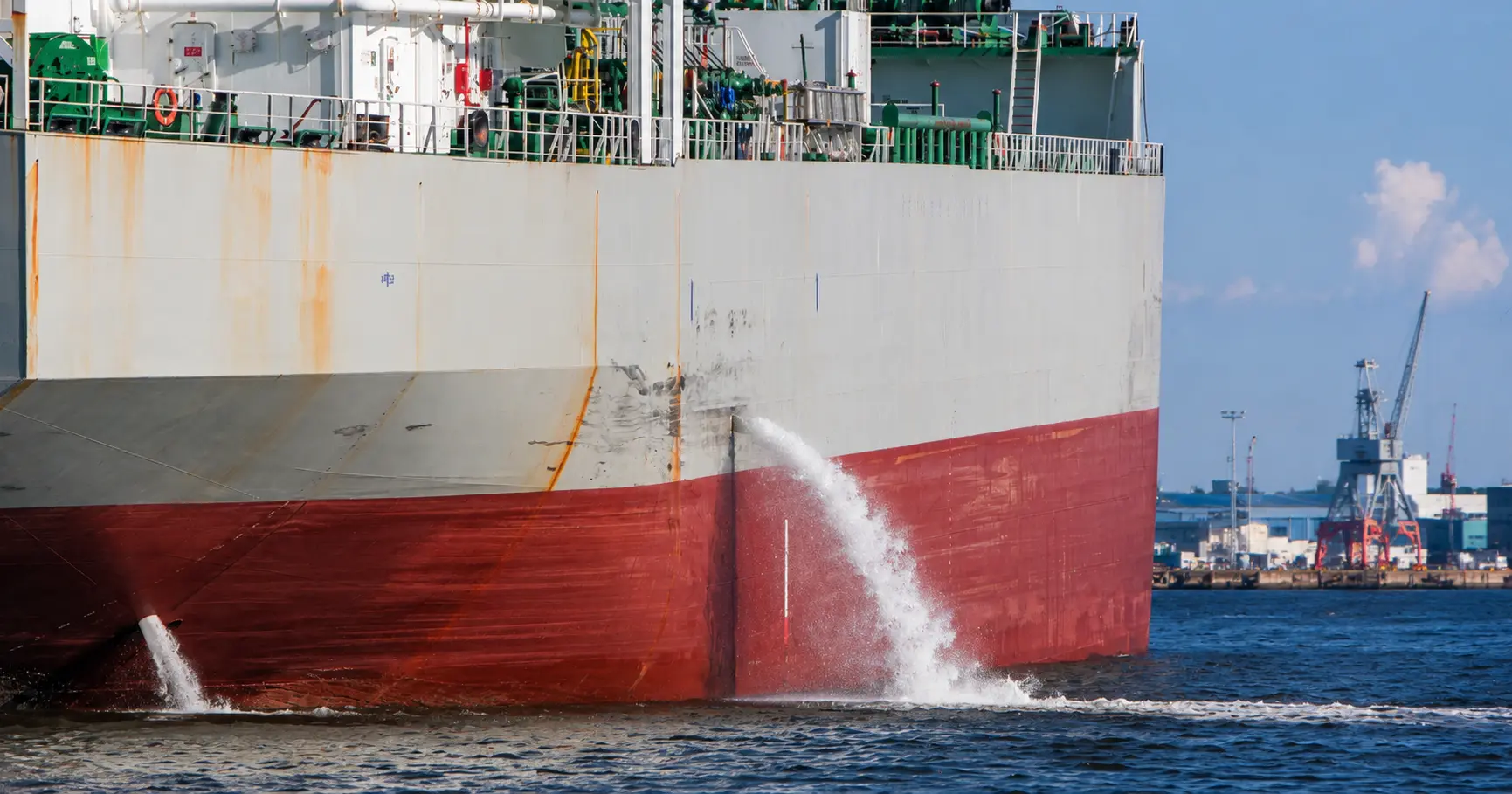
Ballast water is essential for ship stability, trim and safe operations. But when ballast water is taken in one region and discharged in another, it can transfer aquatic organisms and pathogens to new environments.
This is why ships use Ballast Water Treatment Systems, commonly called BWTS. Their purpose is to treat ballast water before discharge so that the vessel can meet ballast water management requirements.
For shipowners, managers and crews, ballast water treatment is not only a regulatory issue. It is also an operational issue. A system that fails, alarms, clogs or cannot treat at the required flow rate can affect cargo operations, port calls and compliance exposure.
BWTS Snapshot
- Main purpose: reduce the transfer of harmful aquatic organisms through ballast water.
- Main regulation: IMO Ballast Water Management Convention.
- Key standards: D-1 covers ballast water exchange; D-2 covers treated ballast water discharge performance.
- Main technologies: filtration, UV, electrochlorination, chemical dosing, ozone, deoxygenation and heat.
- Operational focus: filters, flow rate, alarms, TRO, neutralisation, holding time, sampling and record keeping.
Regulation Snapshot: D-1 and D-2
The IMO Ballast Water Management Convention requires ships to manage ballast water according to approved procedures and standards. The practical regulatory discussion usually starts with two terms: D-1 and D-2.
Swipe the table left/right on mobile.
| Standard | Meaning | Practical Effect | Operational Risk |
|---|---|---|---|
| D-1 | Ballast water exchange. | The vessel exchanges ballast water according to approved procedures. | Depends on voyage route, weather, safety and exchange area. |
| D-2 | Ballast water performance standard. | The vessel treats ballast water to meet discharge limits. | Depends on BWTS performance, water quality, crew use and maintenance. |
Under the Convention, ships are required to carry a Ballast Water Management Plan and a Ballast Water Record Book. In practice, this makes ballast water management a documentation issue as well as a machinery issue.
A BWTS is not only a compliance item. It is a live operational system that must work when the vessel needs to ballast or deballast.
Main Types of Ballast Water Treatment Systems
Most BWTS use a combination of physical separation and disinfection. The most common first step is filtration. After that, the system may use UV light, electrochlorination, chemical dosing, ozone or another treatment method.
Swipe the table left/right on mobile.
| BWTS Type | Main Method | Strong Point | Main Limitation |
|---|---|---|---|
| Filtration + UV | Filter removes larger particles; UV light treats organisms. | No chemical storage and relatively simple operation. | Performance can be affected by turbid or dirty water. |
| Filtration + Electrochlorination | Filter plus generation of active substance from seawater. | Strong option for large ballast flow rates. | Requires TRO control and often neutralisation before discharge. |
| Chemical Dosing | Approved chemical or active substance is dosed into ballast water. | Can be effective in difficult water conditions. | Requires chemical storage, dosing control and safety procedures. |
| Ozone | Ozone oxidises and disinfects organisms. | Powerful treatment method. | More complex system with safety and material considerations. |
| Deoxygenation | Reduces oxygen in ballast water to limit organism survival. | Can also support corrosion reduction in some cases. | Needs sufficient holding time and suitable voyage profile. |
| Heat Treatment | Uses heat to kill or inactivate organisms. | No chemical dosing. | High energy demand and less common in modern installations. |
Filtration + UV Treatment
UV-based systems usually combine a filter with ultraviolet treatment. The filter removes larger organisms, sediment and particles. The UV reactor then exposes the water to ultraviolet light to inactivate organisms.
This type of system is attractive because it avoids chemical storage and neutralisation in many operating profiles. It can be a clean and practical solution, especially where ballast water quality is suitable.
Swipe the table left/right on mobile.
| Point | Operational Meaning | Crew Attention |
|---|---|---|
| Filter condition | Dirty water can increase backflushing and reduce flow. | Monitor differential pressure and alarms. |
| UV intensity | The system needs sufficient UV dose to treat effectively. | Check lamp status, cleaning system and sensor readings. |
| Water clarity | Turbid water can reduce UV effectiveness. | Be alert in muddy, river or high-sediment ports. |
| Power demand | UV reactors need electrical power during treatment. | Plan generator load during ballast operations. |
Filtration + Electrochlorination
Electrochlorination systems use electricity and seawater to generate an active substance, commonly associated with chlorine-based disinfection. The treated ballast water must be monitored so that discharge remains within permitted limits.
This technology is widely considered strong for vessels with large ballast capacities and high flow rates. It is common in discussions around tankers, bulk carriers and other ships where ballast operations are large and operationally important.
Swipe the table left/right on mobile.
| Point | Operational Meaning | Crew Attention |
|---|---|---|
| TRO monitoring | Total Residual Oxidant levels must be controlled. | Check sensors, calibration and recorded values. |
| Neutralisation | Discharge may require neutralisation before overboard release. | Verify neutralising chemical availability and dosing. |
| Salinity | Low-salinity water can affect generation performance. | Follow system manual for fresh or brackish water operation. |
| Safety | Active substances and by-products require proper handling. | Follow chemical, ventilation and PPE procedures. |
Other Treatment Methods
Not every BWTS is based only on UV or electrochlorination. Some systems use chemical dosing, ozone, deoxygenation, heat or hybrid arrangements.
These methods may be suitable for specific vessel types, water conditions or operational profiles. The key point is not only whether a technology works in theory, but whether it fits the vessel’s real trading pattern.
Swipe the table left/right on mobile.
| Method | Best Understood As | Operational Concern | Typical Caution |
|---|---|---|---|
| Chemical dosing | Direct use of approved disinfectant or active substance. | Storage, dosing, safety and neutralisation. | Crew must manage chemicals correctly. |
| Ozone | Strong oxidation and disinfection. | System complexity and material compatibility. | Safety and by-product control matter. |
| Deoxygenation | Reducing oxygen to limit organism survival. | Holding time and voyage duration. | Less suitable for very short ballast cycles. |
| Heat | Thermal treatment of ballast water. | Energy demand. | Not a mainstream solution for many modern fleets. |
Which BWTS Fits Which Vessel?
There is no single best BWTS for every ship. A system that works well for one vessel may be difficult for another vessel with different ballast capacity, routes, port water quality or crew workload.
Swipe the table left/right on mobile.
| Vessel / Profile | Common Consideration | System Fit | Operational Question |
|---|---|---|---|
| Large tankers | High ballast volumes and large flow rates. | Electrochlorination is often considered practical. | Can the system treat at cargo-operation pace? |
| Bulk carriers | Large ballast needs and variable ports. | UV or electrochlorination depending on size and trade. | How does the system handle muddy or sediment-heavy water? |
| Container ships | Schedule reliability and port rotation. | Reliable automated operation is important. | Will treatment slow port operations? |
| Short-sea vessels | Short voyages and frequent ballast cycles. | Holding-time requirements matter. | Can treatment finish within the voyage profile? |
| Ships calling US ports | USCG type approval may be relevant. | System approval status must be checked carefully. | Is the installed BWMS accepted for the intended trade? |
Fast Selection Rule
- Large ballast flow? Check whether the system can treat at the required operational rate.
- Dirty or turbid ports? Look closely at filtration, UV performance and backflushing behaviour.
- Frequent US calls? Verify USCG type approval requirements.
- Chemical system? Confirm storage, dosing, safety and neutralisation procedures.
- Short voyages? Check whether holding time or treatment sequence fits the schedule.
Crew Attention Points
A BWTS can be type approved and still create problems if it is not operated, maintained and documented correctly. Crew familiarity is therefore central to compliance.
Swipe the table left/right on mobile.
| Area | What Can Go Wrong | What Crew Should Watch | Risk Level |
|---|---|---|---|
| Filters | Clogging, frequent backflush, reduced flow. | Differential pressure, alarms and cleaning cycles. | Medium |
| UV units | Low UV intensity or dirty sleeves. | Lamp hours, cleaning system and sensor values. | Medium |
| TRO control | Incorrect oxidant levels during treatment or discharge. | Sensor status, calibration and recorded readings. | High |
| Neutralisation | Discharge outside permitted limits. | Chemical availability, dosing pump and discharge readings. | High |
| Bypass | Untreated water movement or non-compliant operation. | Follow approved procedures and record properly. | High |
| Record keeping | Weak evidence during PSC or company audit. | Accurate entries, alarms, maintenance and operation records. | High |
Why BWTS Problems Become Operational Problems
A ballast water treatment problem is rarely isolated. If the vessel cannot ballast or deballast as planned, cargo operations may slow down. If discharge is restricted, the port stay may change. If the system alarms repeatedly, the crew may need shore support, service attendance or class guidance.
This is why BWTS performance matters beyond environmental compliance. It can affect the vessel’s schedule, cargo plan, port call and commercial reliability.
Swipe the table left/right on mobile.
| Problem | Possible Operational Effect | Commercial Consequence |
|---|---|---|
| Reduced treatment flow | Ballast or deballast operation takes longer. | Port stay and cargo timing may be affected. |
| System alarm | Crew may need to stop, reset or troubleshoot. | Delay risk and increased shore support workload. |
| High turbidity water | Filter clogging or UV performance issues. | Operational uncertainty in certain ports. |
| Missing chemicals | Neutralisation or dosing may not be possible. | Discharge restrictions and compliance exposure. |
| Poor records | Harder to prove correct operation. | PSC, audit or charterer confidence issue. |
Documentation Matters
Ballast water management is closely tied to documentation. The vessel’s Ballast Water Management Plan, Record Book, certificates, type approval documents and system manuals should be available and consistent with actual onboard practice.
The issue is not only whether the equipment exists. The crew must be able to show how the system is operated, how alarms are handled, how maintenance is recorded and how ballast water operations are entered.
Swipe the table left/right on mobile.
| Document / Record | Why It Matters | Who Usually Needs It |
|---|---|---|
| Ballast Water Management Plan | Shows approved procedures for the vessel. | Master, officers, PSC, class, auditors. |
| Ballast Water Record Book | Records ballast operations chronologically. | PSC, company, inspectors. |
| International BWM Certificate | Shows the vessel’s certification status. | PSC, flag, class, charterers. |
| BWTS manual | Explains operation, maintenance and limitations. | Crew, service engineers, auditors. |
| Alarm and maintenance records | Support evidence of correct system management. | Company, PSC, class, technical department. |
Common Misunderstandings
Swipe the table left/right on mobile.
| Misunderstanding | Better Explanation | Why It Matters |
|---|---|---|
| All BWTS are basically the same. | Different technologies behave differently in real water conditions. | System selection and crew training must match the vessel. |
| Type approval means no operational risk. | Type approval does not remove the need for correct operation and maintenance. | Wrong use can still create compliance problems. |
| UV systems have no operational limitations. | UV can be affected by dirty or turbid water. | Some ports may create more filter or UV workload. |
| Electrochlorination is only a chemical issue. | It is also a monitoring, neutralisation and safety issue. | TRO control and discharge limits matter. |
| BWTS is only for the engine department. | Ballast operations also affect deck, cargo planning and port operations. | Bridge, deck and engine teams must coordinate. |
The Tide Signal View
Ballast water treatment is often discussed as a regulatory requirement, but onboard it becomes a practical operating system.
The best BWTS is not simply the most advanced system. It is the system that fits the vessel’s trading pattern, ballast capacity, port water quality, crew capability and documentation discipline.
For shipowners and managers, the real question is not only whether the vessel has a BWTS installed. The real question is whether the system can be operated reliably during actual port calls.
Final View
Ballast Water Treatment Systems are now a normal part of ship operations. They support environmental compliance, but they also affect cargo operations, port schedules, crew workload and inspection readiness.
Filtration + UV is often valued for chemical-free treatment and simpler operation, but it can be sensitive to dirty water. Filtration + electrochlorination is strong for large ballast volumes, but it requires careful monitoring, TRO control and neutralisation.
The practical lesson is clear: ballast water treatment is not only about installation. It is about operation, maintenance, documentation and knowing the system’s limits before the port call becomes a problem.
Key Takeaways
- BWTS purpose: treat ballast water to reduce the transfer of harmful aquatic organisms.
- D-1: ballast water exchange standard.
- D-2: treated ballast water performance standard.
- Common systems: UV-based systems and electrochlorination systems are among the most discussed options.
- Operational risk: filters, alarms, flow rate, TRO, neutralisation and documentation can affect port performance.
- Best practice: match the BWTS to the vessel’s real trading pattern and train the crew properly.