
The HMM Vale shipping contract has secured long-term employment for eight new 210,000-dwt Newcastlemax bulk carriers in a deal valued at approximately $3.49 billion, creating one of the most significant dry-bulk transportation agreements announced in 2026.
South Korean carrier HMM will deploy the vessels for Brazilian mining group Vale from 2030, with each ship committed for 25 years. The arrangement gives HMM long-duration cargo backing for a major newbuilding programme while securing Vale access to future large-scale iron-ore transportation capacity.
The headline value is substantial. The commercial structure behind it is more important.
Across the eight ships, the agreement represents roughly 200 vessel-years of contracted employment — linking dry-bulk chartering, vessel finance, iron-ore demand and alternative-fuel investment in a single transaction.
The key figure is not simply $3.49bn. Eight vessels employed for 25 years represent approximately 200 vessel-years of cargo-backed capacity. That changes the commercial risk profile of an expensive newbuilding programme long before the ships enter service.
HMM Vale Shipping Contract Covers Eight Newcastlemax Bulkers
The HMM Vale shipping contract covers eight approximately 210,000-dwt Newcastlemax bulk carriers that HMM ordered ahead of their planned deployment from 2030.
Each vessel will be employed for 25 years transporting cargo for Vale. According to current reporting on HMM’s disclosure, payment is due within ten business days following loading on each voyage.
That structure is important. It demonstrates that the transaction is not simply a speculative fleet expansion based on expectations of future freight-market strength. The vessels are being built around a defined long-term cargo relationship.
For anyone analysing the commercial difference between long-term cargo commitments and conventional vessel employment, Tide Signal’s Types of Charter Parties in Shipping guide explains the principal structures used to allocate freight, vessel and operating exposure.
Why $3.49bn of Cargo Backing Matters Before Delivery
Ordering a Newcastlemax is a long-duration capital decision.
Between contract signing and vessel delivery, an owner remains exposed to financing costs, shipyard performance, interest rates, asset values, environmental regulation, fuel technology and the freight market that will exist when the vessel actually begins trading.
Eight ships multiply that exposure.
Securing a large industrial cargo customer before delivery removes one of the central uncertainties: future vessel employment.
That does not eliminate financial risk, but it can provide greater visibility when modelling debt service, capital recovery and fleet earnings.
The relationship between vessel earnings and capital value is examined in Tide Signal’s Ship Finance & Asset Values analysis, while Shipping Finance and Carbon Risk looks at the additional financing exposure created by future emissions regulation.
200 Vessel-Years of Newcastlemax Employment
Eight ships multiplied by 25 years gives the HMM–Vale programme approximately 200 vessel-years of contracted employment.
That figure should not be confused with guaranteed profit.
The $3.49bn contract value represents the scale of the transportation agreement, not HMM’s vessel-level margin.
Public disclosures do not provide enough information to calculate a reliable time-charter-equivalent return because critical variables remain undisclosed.
- Freight-rate formula
- Minimum annual cargo volumes
- Bunker adjustment mechanisms
- Alternative-fuel cost adjustments
- Port-cost allocation
- Carbon-cost allocation
- Performance clauses
- Financing assumptions
- Final vessel-level capital expenditure
This distinction is central to commercial shipping analysis. A large gross freight number can produce very different economics depending on voyage duration, bunker consumption, port costs, commissions and vessel utilisation.
Tide Signal’s Voyage Estimation in Shipping guide explains how operators convert freight revenue and voyage costs into a commercial voyage result, while the Voyage Margin Calculator can be used to test how changes in freight and costs affect voyage profitability.
What Is a Newcastlemax Bulk Carrier?
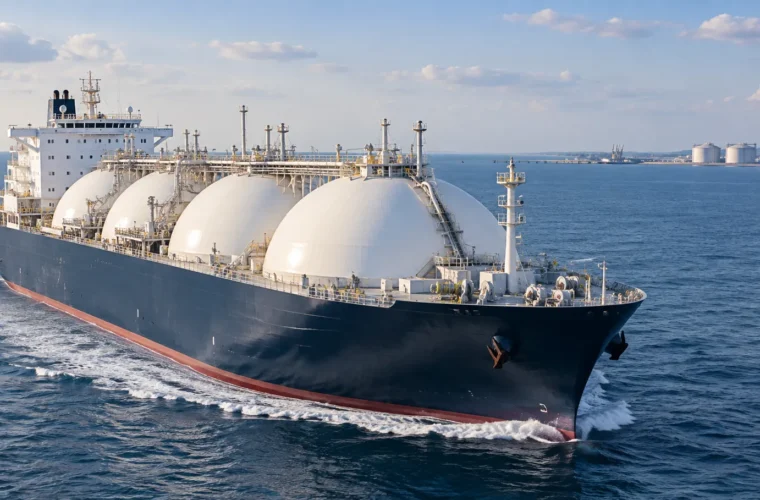
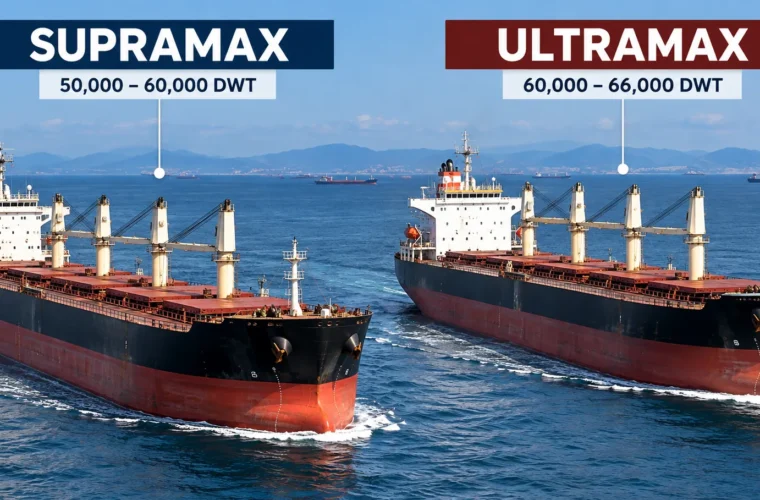
Newcastlemax vessels sit at the upper end of conventional dry-bulk shipping and are commonly associated with large-scale iron-ore and coal transportation.
Modern Newcastlemax tonnage is generally around the 200,000-dwt range. HMM’s new vessels are expected to be approximately 210,000 dwt each.
Their scale makes them particularly relevant to high-volume commodity trades where port infrastructure, draft and cargo availability allow large parcels to be transported efficiently.
Iron-ore flows are especially important because they generate substantial tonne-mile demand for Capesize and Newcastlemax tonnage.
HMM itself describes its large-bulker operations as serving iron ore and coal customers including global steelmakers, power plants and commodity suppliers.
Vale Iron-Ore Shipping and the Brazil–Asia Trade
Vale is one of the world’s largest producers of iron ore and therefore one of the shipping industry’s most important generators of large-bulker demand.
Brazilian iron ore shipped to Asian steelmaking markets creates particularly significant tonne-mile demand because of the distance between loading regions and consuming markets.
For a cargo major, securing long-term access to very large vessels can reduce dependence on repeatedly sourcing capacity from the open freight market.
For a shipowner, the same agreement provides cargo visibility over periods in which dry-bulk freight conditions may change dramatically.
The Baltic Dry Index provides a broad indication of dry-bulk freight-market conditions, but a 25-year transportation contract operates on a fundamentally different time horizon.
HMM and Vale are effectively structuring commercial exposure across multiple future freight cycles rather than relying entirely on the market prevailing when each voyage is fixed.
Does the HMM–Vale Deal Affect the Baltic Dry Index?
Not directly — and not today.
The vessels will begin entering service from 2030. They therefore have no immediate physical effect on today’s Capesize or Newcastlemax vessel supply.
The longer-term implication is more interesting.
Eight new large bulkers are being developed with dedicated cargo backing rather than being ordered purely for open-market employment.
If miners and major commodity interests increasingly use this structure to secure next-generation tonnage, a larger portion of future fleet capacity could enter service already committed under long-duration agreements.
That does not automatically create higher spot rates. Future freight markets will still depend on commodity demand, tonne-mile growth, newbuilding deliveries, vessel efficiency and scrapping.
But it does influence how much modern capacity is commercially available to the open market.
Tri-Fuel Newcastlemaxes: Methanol, Ethanol and Conventional Fuel
The technical specification of the eight vessels is one of the strongest elements of the agreement.
The Newcastlemaxes are planned with propulsion capable of operating on methanol, ethanol and conventional marine fuel.
They will also be designed for potential future conversion to LNG or ammonia and equipped with rotor sails to provide wind-assisted propulsion.
That combination reflects the core problem confronting owners ordering deep-sea ships today: a vessel entering service around 2030 may still be trading well into the 2050s, but there is no certainty over which alternative fuel will dominate that period.
A multi-fuel and conversion-ready design attempts to preserve optionality.
The regulatory pressure behind such investment is discussed in Tide Signal’s IMO Net-Zero Framework Shipping 2026 coverage.
Vale Is Already Building a Multi-Fuel Shipping Strategy
The HMM vessels should not be viewed in isolation from Vale’s wider maritime strategy.
Vale has already entered other long-term agreements for next-generation ore carriers incorporating methanol capability, rotor sails and future LNG or ammonia conversion options.
The miner has also announced ethanol-capable ocean-going vessel projects as part of its broader effort to reduce emissions associated with maritime transportation.
The pattern is significant because large cargo interests can influence vessel technology through long-duration chartering and transportation commitments.
Rather than waiting for owners to independently build alternative-fuel tonnage, a cargo producer can help create the commercial demand needed to support investment in those ships.
Cargo Backing Can Help Finance Future-Fuel Ships
Future-ready vessels can carry higher capital costs and greater technical complexity than conventional newbuildings.
An owner ordering such ships without dedicated employment is making two simultaneous bets: that the technology will remain commercially useful and that future freight markets will generate sufficient earnings to justify the additional investment.
A 25-year cargo commitment changes that calculation.
It does not remove fuel-price, operating-cost or financing risk, but it creates a much longer revenue horizon against which the investment can be assessed.
That is why the HMM–Vale transaction is as much a shipping-finance story as a dry-bulk story.
A similar interaction between public markets, fleet investment and dry-bulk exposure can be seen in Tide Signal’s coverage of Star Bulk’s Athens Listing.
HMM Is Reducing Dependence on Short-Term Bulk Exposure
HMM remains best known internationally as a container carrier, but the group has been expanding its bulk portfolio and seeking longer-duration relationships with major cargo interests.
The strategy is designed partly to create a more stable earnings base and reduce dependence on shorter-term market exposure.
That diversification is particularly relevant because container earnings can move dramatically with capacity, congestion, rerouting, trade policy and global demand.
Readers following that market separately can track Tide Signal’s Container Shipping Rates coverage.
For HMM, building a larger long-term bulk book introduces a different earnings profile alongside its liner exposure.
This Is Not the First HMM–Vale Long-Term Agreement
The $3.49bn contract substantially expands an existing commercial relationship.
HMM and Vale previously concluded two separate 10-year transportation agreements with a combined reported value of approximately KRW 1.0665 trillion.
The latest contract is therefore better viewed as an escalation of a strategic relationship than as an isolated fixture.
Repeat long-term contracts can be commercially important because they indicate a relationship extending beyond individual voyages into fleet planning and dedicated transportation capacity.
Is the HMM Vale Agreement a Time Charter?
The publicly available information does not justify describing the latest contract simply as a conventional time charter.
Current disclosures describe a long-term transportation or shipping arrangement under which HMM will employ the vessels for Vale cargo.
Detailed charterparty wording and the complete allocation of commercial costs have not been publicly disclosed.
That distinction matters because the allocation of bunkers, port expenses, vessel operating costs and market exposure differs substantially between charter structures.
Tide Signal’s Voyage Charter vs Time Charter guide explains those commercial differences in detail.
Why the 2030 Delivery Date Matters
The vessels are not arriving into today’s freight market.
They are ships designed for the commercial and regulatory environment of the next decade.
A vessel beginning a 25-year employment programme in 2030 could remain active into the mid-2050s.
During that period, carbon pricing, fuel infrastructure, emissions standards, charterer requirements and financing criteria could all change substantially.
That creates a difficult fleet-planning decision today: how does an owner order a ship several years before delivery without knowing which propulsion pathway will prove most competitive throughout its operating life?
HMM’s answer appears to be flexibility rather than a single-fuel commitment.
What HMM and Vale Have Not Disclosed
Several commercially important details remain unavailable.
- Exact freight or revenue formula
- Minimum annual cargo volumes
- Daily-equivalent vessel earnings
- Bunker escalation provisions
- Alternative-fuel price mechanisms
- Allocation of future carbon costs
- Vessel performance guarantees
- Financing structure for the newbuildings
- Final vessel capital cost
- Expected project margin or return on invested capital
Without those details, attempting to divide the headline contract value into a theoretical daily rate would risk producing a misleading result.
Commercial operators evaluating individual fixtures should instead consider freight, voyage time, bunker consumption, port costs and commission together. Tide Signal’s Laycan in Shipping guide also explains how contractual timing affects voyage execution and commercial exposure.
HMM–Vale Deal: Commercial Impact
The Bigger Signal for Dry-Bulk Shipping
The significance of the HMM Vale shipping contract is not simply that two major companies agreed a $3.49bn transportation programme.
It shows how future dry-bulk fleet renewal can be structured.
A large cargo producer commits long-term volume. A carrier commits capital to technically advanced ships. The vessels are designed with several possible fuel pathways rather than one irreversible propulsion choice.
Cargo backing then supports an investment that may otherwise carry substantially greater market and technology risk.
For HMM, the result is long-term employment and a larger non-container earnings base.
For Vale, it is access to modern Newcastlemax capacity aligned with a broader push toward lower-emission maritime transportation.
For the wider market, it provides a useful preview of how the next generation of large bulk carriers may increasingly be financed and employed.
Baltic Dry Index 2026 — Current dry-bulk market conditions and freight indicators.
Voyage Estimation in Shipping — Freight, voyage costs, TCE and commercial methodology.
Voyage Charter vs Time Charter — Who carries freight, bunker and market risk.
Types of Charter Parties in Shipping — Main vessel employment structures explained.
Ship Finance & Asset Values — How earnings and market cycles influence vessel values.
Shipping Finance and Carbon Risk — How emissions exposure is changing vessel finance.
HMM Vale Shipping Contract: Frequently Asked Questions
How much is the HMM Vale shipping contract worth?
The long-term transportation agreement is valued at approximately KRW 4.7 trillion, or about $3.49 billion at reported exchange rates.
How many vessels are included?
Eight new Newcastlemax bulk carriers are expected to operate under the agreement.
How large are the HMM Newcastlemax vessels?
Each vessel is expected to have approximately 210,000 dwt of deadweight capacity.
When will the vessels enter service?
Deployment is expected to begin from 2030 as the ships are delivered.
How long is the HMM–Vale contract?
Each vessel is scheduled for 25 years of employment.
What fuels will the Newcastlemax bulkers use?
The ships are planned with capability for methanol, ethanol and conventional fuel and will also be designed for future LNG or ammonia conversion. Rotor sails will provide additional wind-assisted propulsion.
Will the deal affect today’s dry-bulk freight rates?
No direct immediate impact is expected because the ships will not begin entering service until 2030. The longer-term significance concerns fleet supply, dedicated cargo capacity and the structure of future Newcastlemax employment.
Can the $3.49bn value be converted into a daily charter rate?
Not reliably from the public information available. Key variables such as cargo volumes, freight adjustment mechanisms, voyage costs and fuel-cost allocation have not been disclosed.
- Seatrade Maritime News — HMM $3.5bn Vale iron-ore shipping agreement
- Seoul Economic Daily — HMM regulatory filing and contract details
- HMM — Previous long-term Vale contract and bulk fleet strategy
- HMM — Official bulk shipping operations and fleet information
- Vale — Long-term chartering and next-generation multi-fuel ore carrier strategy
Tide Signal distinguishes confirmed contract information from commercial analysis. Freight formulas, cargo-volume commitments, vessel-level margins and several contractual mechanisms have not been publicly disclosed.