Houthi attacks disrupted Saudi energy facilities and wounded 73 people on Tuesday, adding a new layer of risk to a Middle East shipping system already under pressure from reduced traffic through the Strait of Hormuz and heightened security concerns across the Red Sea.
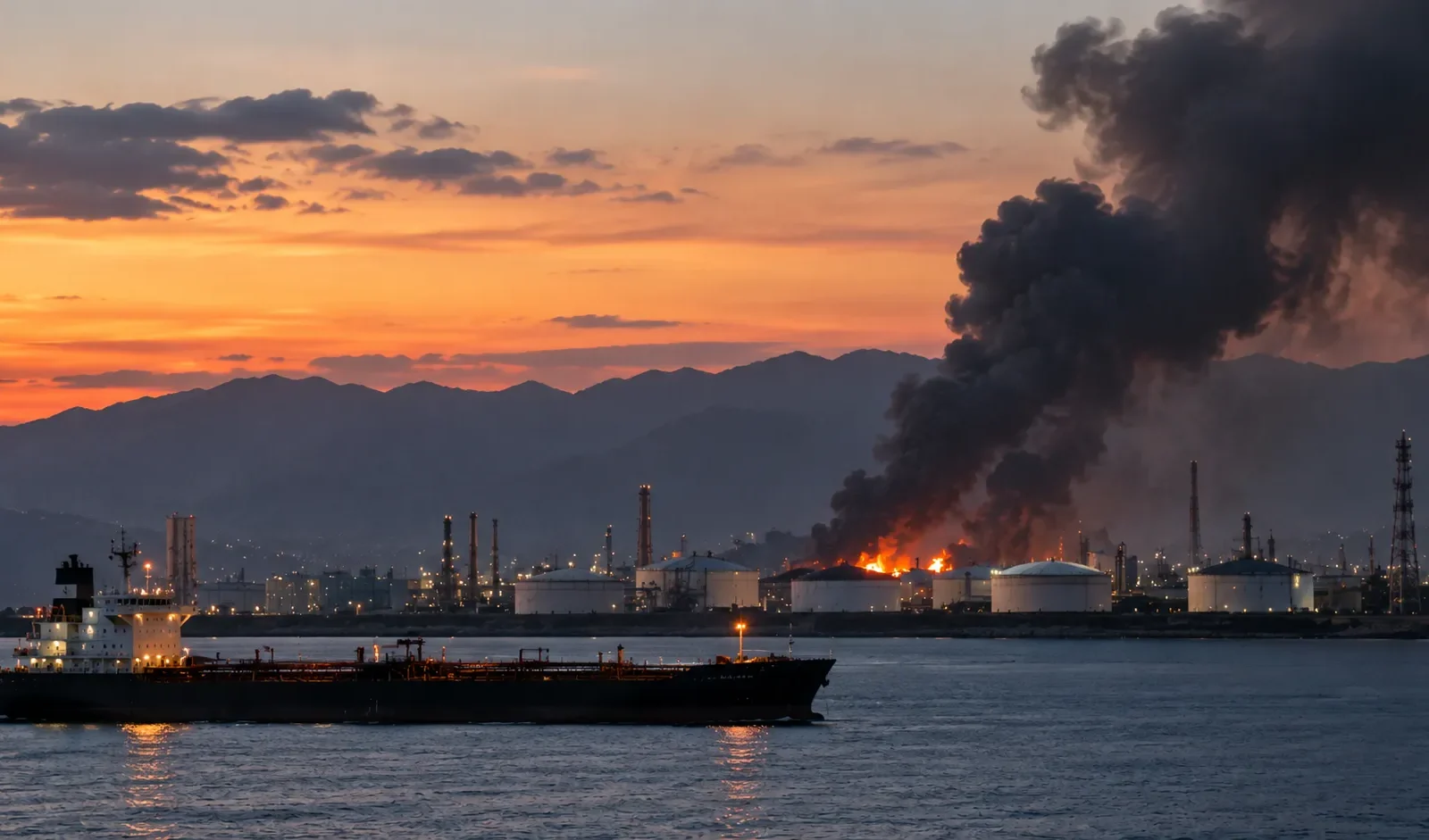
The strikes affected southern Saudi Arabia, including Jazan, Najran, Abha and Khamis Mushait, according to Saudi authorities and reporting by Reuters. Fires were reported and operations at some energy facilities were temporarily suspended while emergency teams responded.
For shipping, the immediate issue is not a confirmed port closure or vessel attack. None has been announced.
The commercial concern is broader: Saudi Arabia’s Red Sea energy infrastructure has become increasingly important as Gulf exporters look for alternatives to routes exposed to disruption around the Strait of Hormuz.
Any sustained threat to western Saudi energy facilities would therefore add risk to a corridor that has become more strategically valuable precisely because conditions in the Gulf remain unstable.
The shipping risk lies in the geography. Saudi Red Sea infrastructure becomes more valuable when Hormuz traffic is constrained. If threats increase around Jazan, Yanbu or Bab el-Mandeb at the same time as Gulf traffic remains disrupted, shipowners and cargo interests lose some of the flexibility normally provided by alternative export routes.
Houthi Attacks Saudi Energy Facilities in the South
The latest Houthi attacks on Saudi energy facilities struck a number of locations across the kingdom’s south, including Jazan, Najran, Abha and Khamis Mushait.
Saudi authorities said fires broke out and some energy operations were temporarily halted while emergency services responded.
At least 73 people were reported wounded, including civilians.
The attacks mark another escalation in regional infrastructure risk at a time when shipping companies are already dealing with reduced predictability across both the Gulf and Red Sea trading systems.
No Confirmed Saudi Port Closure or Merchant-Vessel Attack
For shipowners, charterers and operators, the distinction between an infrastructure attack and an actual maritime closure is critical.
As of the latest confirmed reporting, Saudi authorities have not announced the closure of a major commercial port as a direct result of the attacks.
There has also been no confirmed report of a merchant vessel being struck in connection with Tuesday’s Saudi attacks.
That means the development should not be presented as an immediate shutdown of Saudi Red Sea shipping.
The risk is forward-looking: whether repeated attacks begin to affect port access, terminal operations, owner approvals, insurance conditions or cargo nominations.
Aramco Jazan Reports Require Caution
Some reporting has linked the attacks to Saudi Aramco infrastructure in Jazan.
However, that detail requires careful treatment.
Reuters said it could not independently verify the reported link to specific Aramco facilities, and Saudi Aramco had not publicly confirmed the damage at the time of reporting.
Tide Signal therefore does not treat damage to a specifically identified Aramco installation as confirmed.
The confirmed point is narrower: Saudi authorities acknowledged attacks affecting energy facilities and temporary operational disruption in the south of the kingdom.
Why Jazan Matters to Shipping
Jazan sits on Saudi Arabia’s Red Sea coast, giving the region strategic importance far beyond the immediate local damage caused by an attack.
Saudi western-coast infrastructure forms part of the broader network that allows the kingdom to move energy away from the Persian Gulf and toward Red Sea export routes.
That flexibility matters whenever traffic through the Strait of Hormuz becomes more difficult or risky.
Tide Signal is tracking those conditions separately in its Strait of Hormuz shipping traffic monitor, where vessel movements have remained well below normal conditions during the wider regional confrontation.
The commercial problem is therefore not simply whether Jazan itself remains operational.
It is whether simultaneous threats begin to affect both major energy-export directions available to Gulf producers.
Red Sea Risk Returns to the Energy Equation
For much of the shipping market, the Red Sea and Strait of Hormuz risks have been analysed separately.
That separation becomes harder when instability affects both corridors at the same time.
The Strait of Hormuz remains the principal maritime outlet for a large share of Gulf oil and LNG exports. The Red Sea, meanwhile, provides access to alternative Saudi infrastructure and forms the route toward the Suez Canal and Mediterranean.
If security deteriorates on both sides of the Arabian Peninsula, owners face fewer routing alternatives and cargo interests have less flexibility to manage disruption.
That can influence:
- tanker nominations;
- port and terminal approvals;
- war-risk insurance;
- crew and owner risk assessments;
- voyage routing;
- bunker planning;
- freight premiums;
- and ultimately cargo availability.
War-Risk Premiums Could Become the Next Shipping Pressure Point
War-risk insurance is one of the first commercial mechanisms through which geopolitical tension reaches vessel economics.
A ship does not need to be physically damaged for its voyage cost to change.
If underwriters perceive a higher probability of attack around a port, anchorage or trading route, additional premiums can increase rapidly.
Owners may then seek reimbursement through charterparty clauses, demand higher freight, require additional security procedures or refuse certain voyages altogether.
Tide Signal’s recent coverage of Gulf shipping losses and war-risk exposure shows how quickly physical attacks can move from security events into insurance, chartering and vessel-availability decisions.
Saudi Red Sea Infrastructure Matters More When Hormuz Slows
The timing of the attacks is particularly important.
Commodity-vessel traffic through the Strait of Hormuz has remained depressed during the current Middle East confrontation.
Reuters reported only seven commodity-vessel transits through the strait on Monday, down from eight the previous day, using Kpler data. The figures may understate actual traffic because some vessels could be operating with AIS transmissions reduced or disabled.
The one-day change from eight vessels to seven is not commercially significant by itself.
The broader reduction in traffic is.
That is why attacks affecting Saudi Red Sea energy infrastructure deserve greater shipping attention than they would under normal Gulf conditions.
Oil Prices Rise as Supply Risk Expands
Oil prices moved higher as markets assessed the possibility of a longer and more geographically dispersed Middle East disruption.
Brent traded around the upper-$90s per barrel during Tuesday’s session, reaching multi-week highs as concerns increased over energy infrastructure, tanker security and prolonged restrictions on regional shipping.
The price reaction does not prove that Saudi production or exports have suffered a major physical loss.
Instead, it reflects a wider risk premium: traders are pricing the possibility that multiple points in the Middle East energy system could remain exposed simultaneously.
That distinction matters for tanker markets because oil prices, cargo flows and freight rates do not necessarily move in the same direction.
What It Could Mean for Tanker Owners
For tanker owners, the immediate consequences will depend on whether the attacks remain isolated infrastructure incidents or develop into a sustained campaign affecting ports and export facilities.
If no major terminal operations are disrupted, the direct effect on tanker supply and demand may remain limited.
If attacks begin to influence nominations or owner approvals, the effects could become more material.
Potential consequences include longer waiting times, changes in loading programmes, diversion to alternative terminals, higher insurance costs and stronger freight requirements for voyages perceived as carrying additional risk.
The effect could be amplified if vessels simultaneously avoid or limit operations through Hormuz.
Bab el-Mandeb Becomes Part of the Same Risk Map
Saudi Red Sea exports eventually feed into the same broader maritime system that includes the Bab el-Mandeb and the route toward the Suez Canal.
That makes Houthi military activity especially relevant to shipowners.
A vessel loading on Saudi Arabia’s western coast may avoid Hormuz entirely, but it does not avoid the strategic geography of the Red Sea.
If risk around Bab el-Mandeb increases, owners can face another decision: accept the war-risk exposure or divert around the Cape of Good Hope.
That decision adds voyage time, bunker consumption and vessel-day demand.
For operators, those additional costs are precisely the variables modelled in a voyage estimation before employment is accepted.
The Market Should Not Assume a Saudi Export Shutdown
It is equally important not to overstate Tuesday’s events.
There has been no confirmed broad shutdown of Saudi crude or product exports associated with the latest Houthi attacks.
There has been no confirmed closure of Jazan, Yanbu or other major Saudi Red Sea ports as a consequence of the strikes.
And the available reporting does not establish a quantified loss of Saudi oil production or export capacity.
The market impact therefore remains primarily a risk and optionality story, rather than a confirmed large-scale supply outage.
What Shipping Companies Will Watch Next
- Whether Saudi authorities report prolonged disruption at specific energy installations
- Whether Jazan or other western-coast terminals face operating restrictions
- Any change in tanker nominations or loading schedules
- War-risk premium changes for Saudi Red Sea calls
- Owner or charterer restrictions for Jazan, Yanbu or nearby areas
- Any renewed Houthi threat against commercial shipping
- Traffic levels through Bab el-Mandeb
- Traffic levels through the Strait of Hormuz
- Whether oil-product or crude export volumes begin to decline
Houthi Attacks Saudi Energy Facilities: Commercial Takeaway
The latest attacks do not yet amount to a shutdown of Saudi Red Sea shipping.
But they materially widen the geography of energy-security risk.
When Hormuz is functioning normally, Saudi Arabia’s western infrastructure offers strategic redundancy.
When Gulf shipping is already under pressure, threats to Red Sea energy facilities matter more because they reduce confidence in the alternatives.
For tanker owners, charterers, traders and insurers, the next question is therefore not simply whether Tuesday’s fires are extinguished.
It is whether the attacks remain isolated — or begin to alter port operations, insurance costs, cargo nominations and owner willingness to call at Saudi Red Sea terminals.
Is the Strait of Hormuz Open? — Current vessel traffic and shipping conditions.
Gulf Shipping Losses & War-Risk Exposure — Insurance and commercial implications of the regional escalation.
Voyage Estimation in Shipping — How routing, bunkers and voyage time affect commercial returns.
Frequently Asked Questions
What happened to Saudi energy facilities?
Saudi authorities reported attacks affecting energy facilities and several southern cities on 8 September 2026. Fires and temporary operational disruption were reported.
How many people were injured?
At least 73 people were reported wounded.
Was Saudi Aramco’s Jazan facility confirmed as hit?
Reports have linked the attacks to Aramco infrastructure in Jazan, but Aramco had not confirmed the specific damage and Reuters said it could not independently verify that detail at the time of reporting.
Were Saudi ports closed?
No broad Saudi port closure had been confirmed in connection with the attacks at the time of publication.
Was a merchant ship attacked?
No merchant-vessel attack was confirmed as part of Tuesday’s strikes on Saudi territory.
Why does this matter for shipping?
Saudi Red Sea infrastructure provides an important alternative route when Gulf shipping through the Strait of Hormuz is disrupted. Greater security risk on the western coast could affect tanker routing, insurance, owner approvals and cargo nominations.
Tide Signal distinguishes confirmed infrastructure disruption from unverified reports concerning specific facilities. No broad Saudi port closure or merchant-vessel attack was confirmed in connection with these strikes at the time of publication.